Top Luxury Villa Interior Trends in India 2026
The New Language of Indian Luxury Something profound is shifting inside India's most prestigious vi...

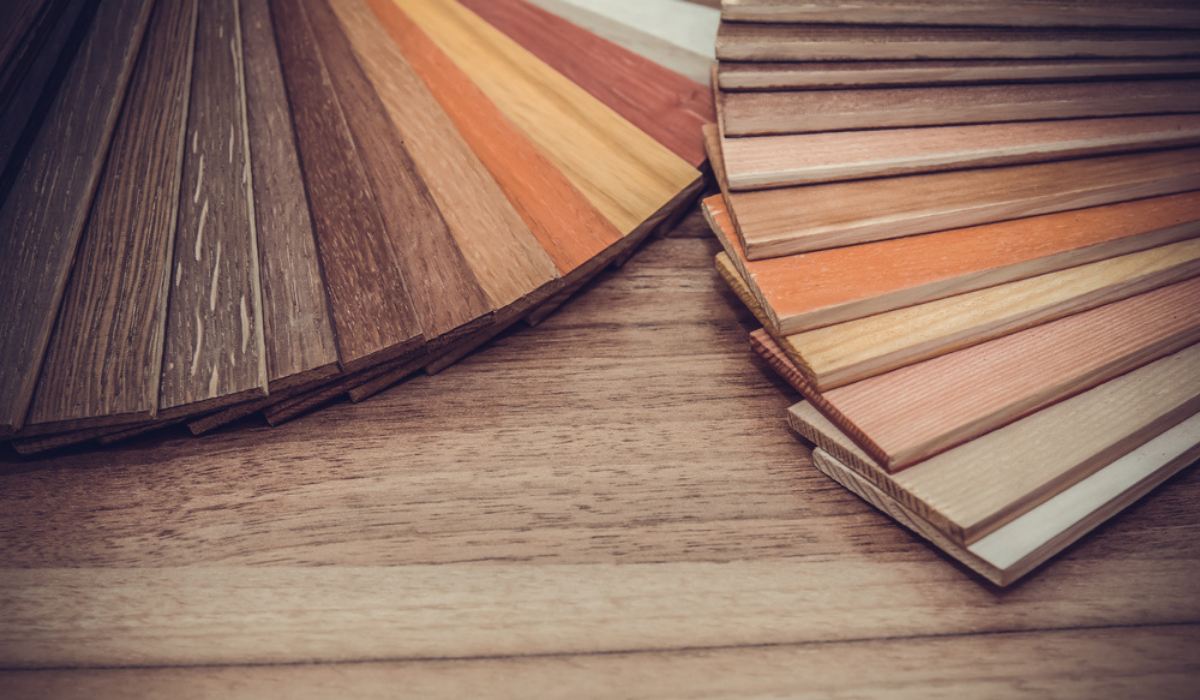
Before comparing teak wood and cedar wood, it is important to understand a common misconception that often influences buying decisions. Many people assume that the terms "hardwood" and "softwood" describe the actual hardness of the timber. In reality, these terms refer to the type of tree from which the wood is harvested. Hardwood generally comes from broad-leaved deciduous trees, while softwood is obtained from coniferous trees. This means that a softwood can sometimes be stronger than certain hardwoods, depending on its species and growing conditions.
Teak is classified as a premium hardwood and has earned a worldwide reputation for its exceptional strength, dimensional stability, and natural durability. Cedar, although technically a softwood, possesses natural oils that make it resistant to insects, fungal decay, and moisture. This is one of the reasons cedar has remained a preferred material for outdoor structures, garden furniture, pergolas, and storage chests for generations.
For luxury furniture, however, structural performance is just as important as natural resistance. Dining tables, carved beds, wardrobes, luxury sofa frames, and handcrafted cabinets require wood that can withstand years of continuous use without losing its strength or stability. Hardwood species like teak are particularly suited for these applications because of their density, excellent load-bearing capacity, and ability to hold intricate carvings and detailed craftsmanship.
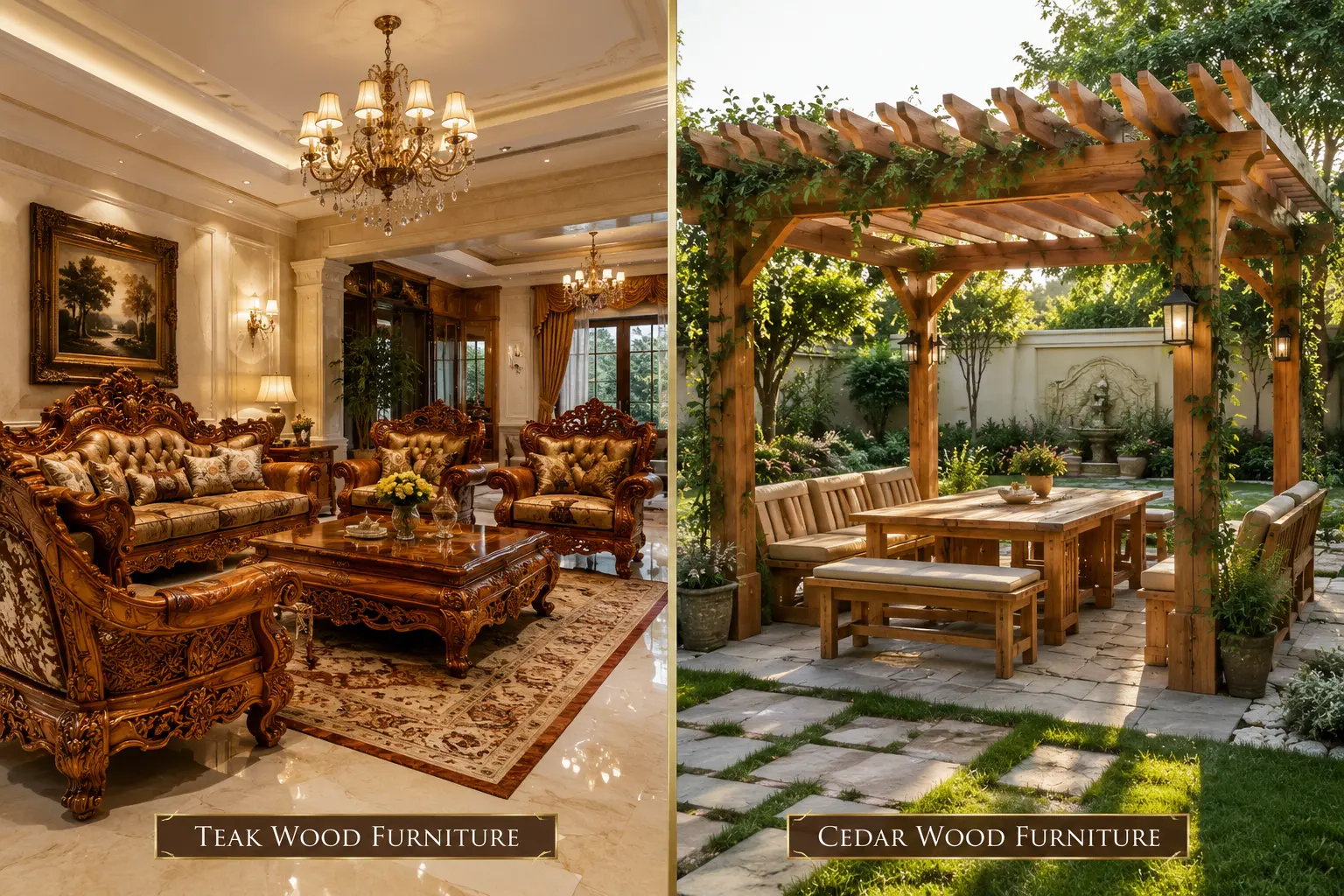
Cedar offers its own advantages where lighter weight and natural weather resistance are priorities. It is easier to work with, has a pleasant natural aroma, and performs exceptionally well in outdoor environments where exposure to moisture and insects is common. This makes cedar an excellent choice for garden furniture, fencing, gazebos, pergolas, and outdoor decorative structures.
Rather than asking whether hardwood is always better than softwood, buyers should evaluate how and where the furniture will be used. A luxury indoor dining table has different performance requirements than a garden bench or patio chair. Understanding these differences allows homeowners, architects, and interior designers to choose a material that balances durability, appearance, maintenance, and long-term value.
Ultimately, the quality of furniture depends not only on whether the wood is classified as hardwood or softwood but also on responsible timber selection, proper seasoning, skilled craftsmanship, precision joinery, and professional finishing. These factors collectively determine how well the furniture performs over decades of everyday use.
Choosing the right wood for indoor furniture involves much more than selecting the most expensive material. Every room has distinct functional requirements, and understanding the strengths of teak and cedar helps ensure your investment aligns with both your lifestyle and interior design goals.
Teak has long been recognised as one of the finest woods for luxury indoor furniture because it combines exceptional durability with timeless elegance. Its dense grain, natural oils, and dimensional stability make it ideal for furniture that experiences daily use. Luxury beds, dining tables, wardrobes, display cabinets, coffee tables, bookshelves, entertainment units, and handcrafted sofa frames benefit greatly from teak's structural strength. The wood also responds exceptionally well to detailed hand carving, making it a preferred choice for classical, Victorian, French, Italian, and traditional luxury furniture.
Another advantage of teak is its ability to age gracefully. Over time, its colour develops a deeper and richer appearance while maintaining its structural integrity. Properly maintained teak furniture often lasts for several generations, making it an attractive option for homeowners seeking heirloom-quality pieces rather than short-term furniture replacements.
Cedar, on the other hand, offers different benefits for interior applications. Its lighter weight makes it suitable for decorative furniture, storage units, window seating, room dividers, and wardrobes where ease of movement is desirable. Cedar is also valued for its pleasant fragrance, which has traditionally made it a popular material for wardrobes and storage chests, as its natural oils help repel insects and protect clothing and linens.
Interior designers frequently combine both woods within larger projects. Teak is selected for primary furniture pieces that require superior strength and visual impact; cedar may be incorporated into complementary elements where its lighter weight and aromatic properties provide additional advantages.
For buyers investing in premium interiors, the decision should ultimately depend on how the furniture will be used. If durability, intricate craftsmanship, and long-term value are the primary objectives, teak remains the preferred choice. If lightweight construction, natural aroma, and decorative functionality are more important, cedar offers an excellent alternative for selected indoor applications.
Teak has earned a global reputation as one of the finest hardwoods for premium furniture, but its popularity has also led to widespread misuse of the name. Today, many products marketed as "teak furniture" may actually be manufactured from lower-grade hardwoods, engineered wood, or inexpensive timber finished with teak-colored stains. For luxury furniture buyers, understanding how to identify genuine teak is essential before making a significant investment.
The first indicator of authentic teak is its natural grain. Genuine teak displays a straight or slightly wavy grain with a rich, warm golden-brown color that gradually matures into a deeper honey or medium brown shade over time. Unlike artificially stained wood, real teak has natural variations in texture and color that make every furniture piece unique. These subtle imperfections are a hallmark of solid wood rather than a manufacturing defect.
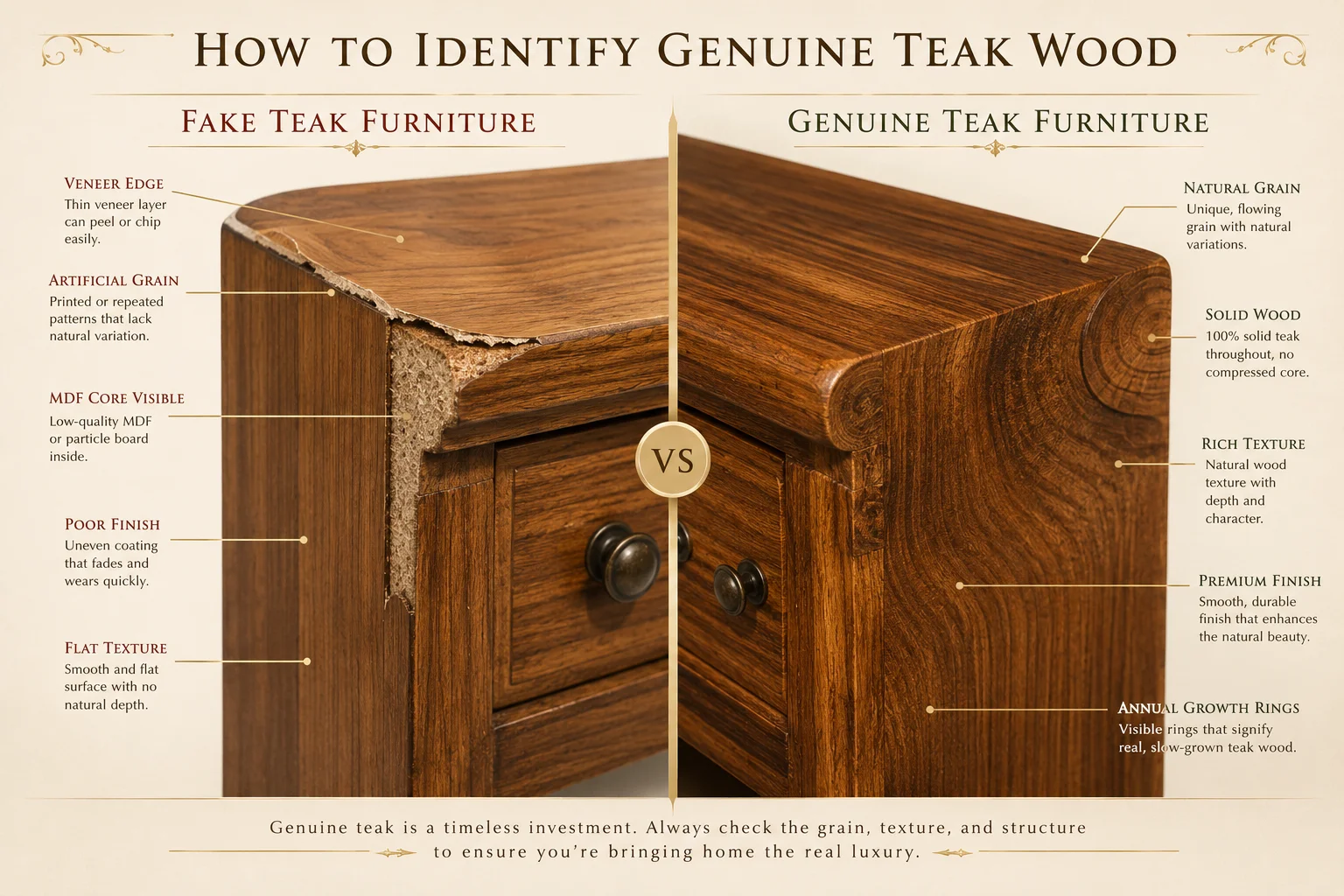
Another distinguishing feature is the wood's natural oil content. Teak contains natural oils and silica that provide exceptional resistance against moisture, termites, fungal decay, and changing weather conditions. When you touch unfinished teak, the surface often feels slightly smooth or oily compared to many other hardwoods. These natural oils are one of the primary reasons teak has been used for centuries in luxury furniture, shipbuilding, and high-end architectural applications.
Weight is another useful indicator. Solid teak furniture is noticeably heavier than furniture made from engineered wood, MDF, or lightweight substitutes. While weight alone cannot confirm authenticity, a substantial feel often reflects the density and durability associated with premium hardwood construction.
Buyers should also request detailed information about the wood's origin. Reputable manufacturers are transparent about whether they use plantation teak, Indonesian teak, Indian teak, or other legally sourced teak varieties. They should also explain how the timber has been seasoned before production, as properly seasoned teak offers greater dimensional stability and long-term performance.
When purchasing wooden furniture online, ask for close-up photographs of the wood grain, unfinished components, and construction details instead of relying only on polished product images. Professional manufacturers are usually happy to provide additional photographs or videos because they take pride in the quality of their materials and craftsmanship. You can also request information about the furniture's joinery, finishing system, and customization options to better understand the manufacturing process.
Finally, remember that genuine teak furniture is an investment rather than a budget purchase. While its initial cost may be higher than many alternative woods, authentic teak offers exceptional durability, low maintenance, and outstanding longevity. Well-crafted teak furniture can serve families for decades and often becomes an heirloom passed from one generation to the next. Choosing a trusted manufacturer who openly shares information about material sourcing, craftsmanship, and quality standards is the most reliable way to ensure that your investment delivers lasting value.
The look and appeal of luxury furniture are probably the most important factor anyone will consider when making a choice, as furniture design can help define a whole lot with its look and appeal. Cedarwoods have a nice and subtle natural appearance, accenting your outdoor furniture space with light brown, soft red, and gray tones. Outdoor furniture will be used less carefully and conservatively, which makes cedar a good choice of wood, owing to its ability to accept stains, paints, sealers, or even left in its raw sandy finishing to preserve its natural scent, look, and feel. Cedar’s aromatic nature puts it at low risk of damage from the weather or pests, and as it often has a rustic look – even adds a lot to the ambiance of a relaxing evening.
Naturally, Teak is a hardwood; thus, it is heavier and denser compared to cedar. Teak wood, which is used for the manufacturing of teak furniture, etc., is exclusively grown in supervised teak plantations, in regions, popularly in Indonesia and other parts of Asia, which makes it more scarce and expensive in other parts of the world. The scarcity of teak makes it a valuable, elite, and exclusive choice of wood. Teak can either be oiled to appear darker and finer or left in the natural state to age and, in some cases, turn a patina gray color.
When buyers decide to invest in teak furniture, they often discover that teak is available in several varieties. Terms such as Burma Teak, Indonesian Teak, and Plantation Teak are commonly used by manufacturers and retailers, but understanding the differences between them helps buyers evaluate quality more confidently. While each variety belongs to the teak family, factors such as growing conditions, age, density, natural oil content, and responsible forestry practices influence the final characteristics of the timber.
Burma Teak, originating from Myanmar, has traditionally been regarded as one of the finest teak varieties available. Its mature growth, high natural oil content, tight grain structure, and exceptional durability have made it the preferred choice for luxury yachts, heritage buildings, royal residences, and premium handcrafted furniture. However, strict international regulations and limited availability have significantly reduced its supply, making authentic Burma Teak one of the most expensive hardwoods in the world.
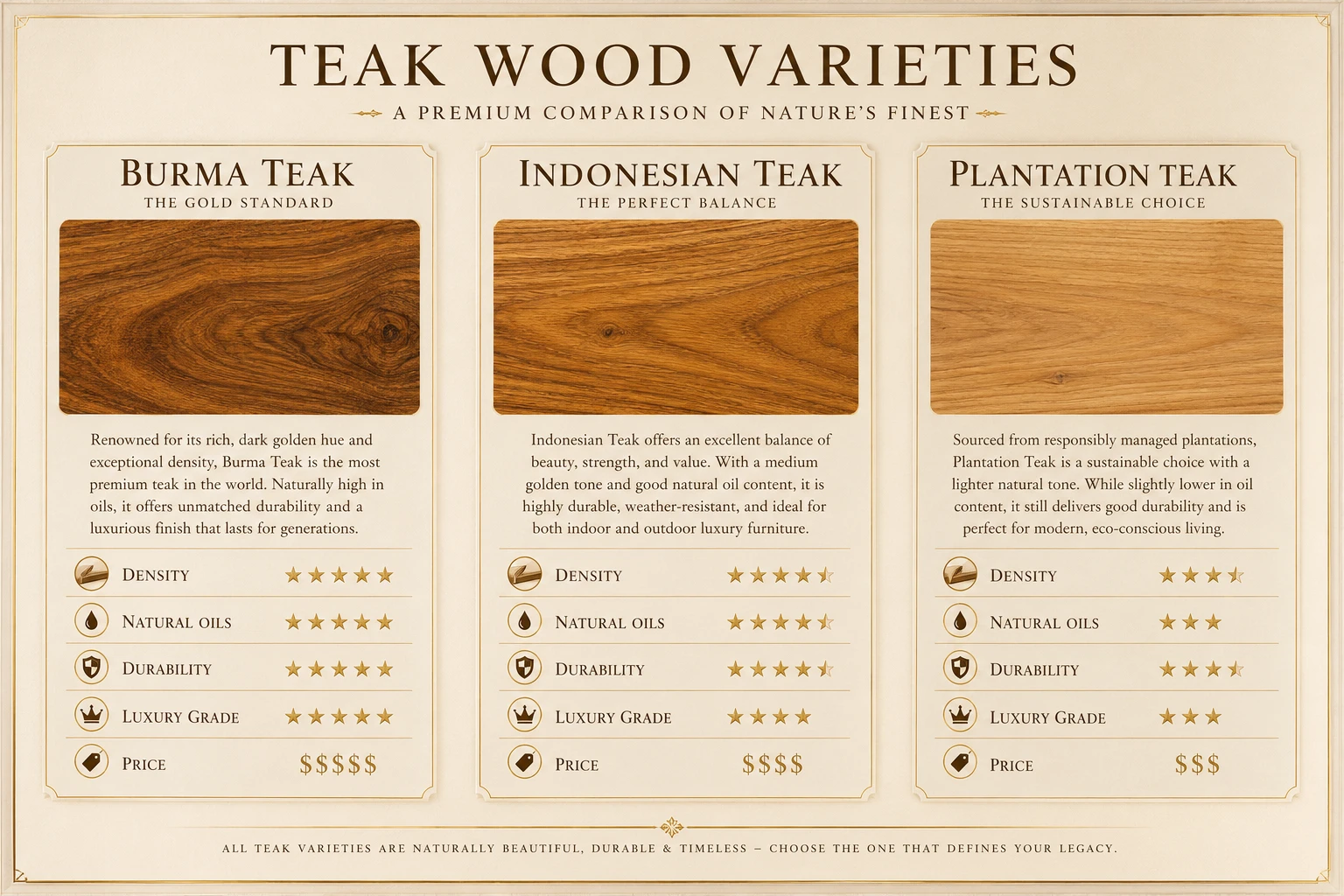
Indonesian Teak has become a highly respected alternative, particularly because it is cultivated under well-managed forestry programmes. It offers excellent stability, attractive grain patterns, and reliable durability, making it suitable for both luxury indoor furniture and high-quality outdoor applications. Furniture manufacturers appreciate Indonesian teak because it performs exceptionally well during carving, shaping, and finishing while maintaining consistent quality across large production projects.
Plantation Teak is now the most widely available option for modern furniture manufacturing. Grown in India, Indonesia, Costa Rica, Ghana, and several other tropical regions, plantation teak is harvested through sustainable forestry practices that ensure continuous regeneration of timber resources. While plantation-grown trees are generally younger than naturally grown forests, properly seasoned plantation teak still provides outstanding strength, dimensional stability, and long service life when manufactured by experienced craftsmen.
Rather than choosing furniture solely based on the origin of the timber, buyers should evaluate the overall manufacturing quality. Proper seasoning, precision joinery, expert hand carving, premium finishing, and strict quality control often influence the durability of furniture more than the geographic origin of the wood itself. A beautifully crafted dining table made from well-seasoned plantation teak will frequently outperform poorly manufactured furniture made from more expensive timber.
For most homeowners, architects, and interior designers, the best value comes from selecting a trusted manufacturer who openly explains the source of the wood, seasoning methods, construction techniques, and finishing process. High-quality teak, regardless of its origin, can provide decades of beauty and reliable performance when supported by exceptional craftsmanship.
Besides looks and appeal, it is important to buy furniture that is easy to maintain and durable.
One of the most overlooked aspects of furniture manufacturing is the seasoning process. Buyers often compare wood species, finishes, or designs but rarely ask whether the timber has been properly seasoned before production. In reality, seasoning plays a vital role in determining how well furniture performs throughout its lifetime, regardless of whether it is made from teak, cedar, or another premium wood species.
Freshly harvested timber naturally contains a high percentage of moisture. If this moisture is not carefully reduced before manufacturing, the wood continues to dry after the furniture has been assembled. As moisture escapes, the timber may shrink, twist, warp, or develop surface cracks. These changes can affect drawers, doors, tabletops, carved panels, and structural joints, reducing both the appearance and durability of the finished product.
Professional furniture manufacturers use carefully controlled seasoning methods to stabilise timber before production begins. Natural air seasoning gradually dries the wood over an extended period, while kiln drying uses precisely controlled temperature and humidity to achieve consistent moisture levels within a shorter timeframe. Both methods can produce excellent results when carried out correctly, provided the timber reaches a moisture content appropriate for the environment in which the furniture will be used.
Luxury handcrafted furniture demands even greater attention to seasoning because intricate carvings and precision joinery rely on dimensional stability. Fine decorative details can develop cracks if the wood continues to shrink after production, while poorly seasoned timber may cause joints to loosen over time. Proper seasoning ensures that handcrafted details remain sharp, elegant, and structurally secure for many years.
Climate also influences the importance of seasoning. Furniture manufactured for humid coastal regions, dry climates, centrally air-conditioned villas, or international export markets requires carefully controlled moisture levels to minimise movement after installation. Experienced manufacturers understand these environmental variations and prepare their timber accordingly before construction begins.
When purchasing premium furniture, buyers should ask how the timber has been seasoned, how long the seasoning process takes, and what quality-control measures are followed before manufacturing. Although seasoning remains invisible once the furniture is complete, it is one of the strongest indicators of long-term quality. Beautiful craftsmanship deserves an equally stable foundation, and properly seasoned timber provides exactly that.
It can be another factor, but both teak and cedar are woods that last for a very long time when left outdoors all year long. Sun, sleet, rain, winds, or snow are no issues for teak wood. In terms of finish, stains, sealers, and paints are the best and most popular options, as finishing sometimes serves as both protection and beautifier. Teak wood naturally secretes teak oil, which helps it condition and protect itself from harsh weather conditions. Teak’s self-protection and weather-resistance ability also make it a preferred choice for shipbuilding timber. In terms of finishing, additional teak oil and leaving it in its natural state are the two most popular finishes.
Climate is one of the most important yet frequently overlooked factors when selecting wooden furniture. A material that performs exceptionally well in one environment may require additional care in another. Understanding how teak and cedar respond to different weather conditions helps homeowners, architects, hotel owners, and international buyers select furniture that delivers lasting performance regardless of location.
Teak is widely regarded as one of the most climate-resistant hardwoods available. Its naturally occurring oils and dense grain structure provide outstanding protection against moisture, humidity, heavy rainfall, insects, and fungal decay. These characteristics allow teak furniture to perform exceptionally well in tropical regions, coastal cities, high-humidity environments, and poolside settings where many other wood species gradually deteriorate. Properly maintained teak also withstands strong sunlight and seasonal temperature fluctuations without significant structural movement.
Cedar also performs well outdoors but offers different advantages. Its natural aromatic oils provide excellent resistance to insects and decay, while its lighter weight makes it easier to move and install. Cedar is particularly suitable for pergolas, gazebos, garden seating, fencing, and decorative outdoor structures where lightweight construction is beneficial. However, because cedar is softer than teak, it may be more susceptible to dents and surface wear in areas with heavy daily use.
For interior applications, both woods perform well under stable indoor conditions. Homes with central air conditioning generally provide an ideal environment for both teak and cedar, provided the furniture has been properly seasoned before manufacture. In extremely dry climates, maintaining moderate indoor humidity can help minimise excessive moisture loss from natural wood, while in humid regions adequate ventilation supports long-term stability.
International buyers should also consider shipping conditions. Furniture travelling across multiple climate zones experiences changing temperature and humidity throughout transportation. Experienced manufacturers compensate for these variations through proper seasoning, moisture control, protective packaging, and suitable finishing systems before dispatch.
Ultimately, there is no universal answer that applies to every project. Teak remains the preferred choice for luxury indoor furniture, coastal homes, high-end outdoor living spaces, and premium hospitality projects where durability is the highest priority. Cedar continues to be an excellent option for outdoor structures, garden furniture, and decorative applications where lighter weight and natural weather resistance are valued. Selecting the right wood according to the intended environment ensures that furniture retains both its beauty and structural integrity for many years.
Choosing the right wood is not simply about selecting the most expensive material. Every piece of furniture has different structural requirements, daily usage patterns, and environmental exposure. While both teak and cedar have earned an excellent reputation in the furniture industry, they perform differently depending on the application. Understanding where each wood excels allows buyers to make smarter long-term investments while ensuring that every furniture piece delivers the expected balance of beauty, durability, and functionality.
For luxury indoor furniture, teak remains the preferred choice among manufacturers, architects, and interior designers. Its exceptional strength and dimensional stability make it ideal for king-size beds, dining tables, wardrobes, display cabinets, bookshelves, coffee tables, TV units, and handcrafted sofa frames. Since these furniture pieces are expected to support significant weight and withstand daily use for many years, teak's dense grain and natural durability provide an important advantage.
Teak is also highly valued for handcrafted furniture featuring intricate carvings. Its consistent grain structure allows skilled artisans to create detailed floral motifs, scrollwork, classical mouldings, and decorative panels with remarkable precision. This is one of the reasons why premium French, Victorian, Italian, Baroque, Neoclassical, and traditional Indian luxury furniture is often manufactured from teak.
Cedar performs particularly well in applications where lightweight construction and natural weather resistance are more important than maximum structural strength. Garden benches, pergolas, gazebos, patio seating, balcony furniture, planter boxes, storage chests, and decorative outdoor structures benefit from cedar's natural resistance to insects and decay. Its pleasant aroma and moisture resistance also make cedar an excellent choice for wardrobes, blanket chests, and linen storage where natural protection against insects is appreciated.
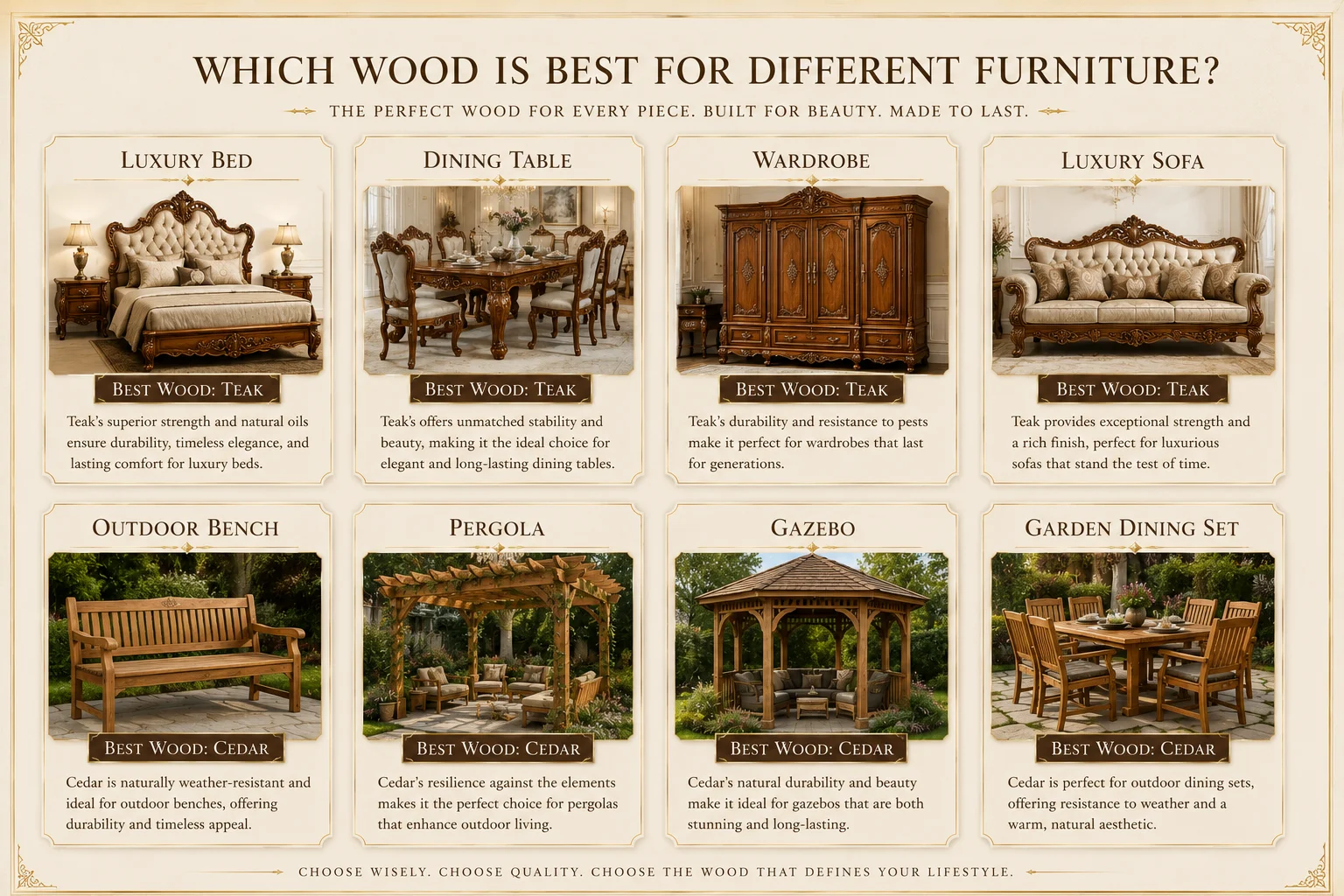
For commercial projects such as luxury hotels, boutique resorts, villas, restaurants, and heritage properties, manufacturers often recommend combining different wood species according to the intended use. High-traffic furniture such as reception desks, dining tables, executive office furniture, luxury bedroom sets, and statement pieces are frequently crafted from teak for maximum longevity, while cedar may be selected for landscape structures, garden installations, or decorative exterior features.
Rather than searching for one wood that suits every application, buyers should evaluate each project individually. Selecting the right material for the right purpose not only improves performance but also maximises the value of the investment. When combined with expert craftsmanship, proper seasoning, and high-quality finishing, both teak and cedar can deliver exceptional results in the environments where they perform best.
One of the most common questions buyers ask is whether teak furniture is truly worth its premium price. At first glance, teak often costs considerably more than cedar and many other wood species. However, evaluating furniture solely by its purchase price rarely reflects its actual long-term value. Luxury furniture should be viewed as a lasting investment rather than a short-term expense.
Several factors contribute to teak's higher market value. It grows slowly, requires decades to mature, and contains natural oils that provide outstanding resistance to moisture, termites, fungal decay, and weathering. These characteristics reduce the need for frequent repairs, refinishing, or replacement, allowing well-crafted teak furniture to remain functional and attractive for generations with proper care.
When calculating value over time, durability becomes a major advantage. A premium teak dining table, handcrafted bed, or wardrobe can continue serving a family for several decades, whereas lower-quality furniture often requires replacement after only a few years of regular use. The longer service life significantly reduces the overall cost of ownership while preserving the furniture's appearance and structural integrity.
Teak also retains its visual appeal remarkably well. As the wood matures, it develops a rich and elegant character that many homeowners and designers find even more attractive than its original appearance. This natural ageing process contributes to its timeless appeal and helps handcrafted teak furniture remain relevant despite changing interior design trends.
Another important consideration is craftsmanship. Luxury teak furniture is rarely mass-produced. It is often handcrafted by experienced artisans using traditional joinery techniques, carefully seasoned timber, premium hardware, and high-quality finishing systems. These manufacturing standards contribute just as much to the furniture's long-term performance as the wood itself.
Cedar remains an excellent choice for buyers whose priorities include lightweight outdoor furniture, decorative garden structures, or projects where budget considerations are important. It offers excellent natural weather resistance and attractive aesthetics while remaining more economical than teak for many applications.
Ultimately, the best choice depends on your priorities. If your goal is to purchase furniture that combines exceptional durability, timeless design, intricate craftsmanship, and long-term value, teak continues to justify its premium price. For buyers seeking heirloom-quality furniture that can enhance luxury homes, villas, hospitality projects, and executive interiors for decades, teak remains one of the most rewarding investments.
Choosing between teak wood and cedarwood ultimately depends on where the furniture will be used, the level of durability you expect, your design preferences, and your long-term investment goals. Both woods offer unique advantages, but they serve different purposes within residential, commercial, and hospitality projects.
If your priority is luxury indoor furniture, heirloom-quality craftsmanship, intricate hand carving, and exceptional structural strength, teak remains one of the finest choices available. Its natural oils, dimensional stability, resistance to moisture and termites, and ability to age beautifully have made it the preferred material for premium furniture manufacturers for generations. From elegant dining tables and luxurious bedroom sets to handcrafted sofas and statement furniture, teak continues to deliver unmatched longevity and timeless appeal.
Cedar, on the other hand, is an excellent choice for outdoor applications where lightweight construction, natural weather resistance, and aromatic properties are important. Garden benches, pergolas, gazebos, patio furniture, and decorative outdoor structures benefit greatly from cedar's ability to withstand changing weather conditions while requiring relatively simple maintenance.
Beyond selecting the right wood species, buyers should also evaluate the manufacturer's expertise, timber sourcing, seasoning process, construction methods, joinery, finishing quality, packaging, warranty, and after-sales support. These factors often determine the real quality of the finished furniture far more than the wood species alone.
Whether you are furnishing a luxury home, villa, boutique hotel, resort, executive office, or commercial project, investing in well-crafted solid wood furniture provides lasting value, superior performance, and timeless elegance. Carefully comparing materials, understanding their strengths, and choosing a trusted manufacturer will help ensure that your furniture remains beautiful, functional, and structurally sound for decades.
At Royalzig Luxury Furniture, every handcrafted piece is created with carefully selected timber, skilled craftsmanship, and meticulous attention to detail. By combining traditional woodworking techniques with modern manufacturing standards, we create bespoke luxury furniture designed to enhance exceptional interiors and become treasured pieces for generations to come.
