Top Luxury Villa Interior Trends in India 2026
The New Language of Indian Luxury Something profound is shifting inside India's most prestigious vi...

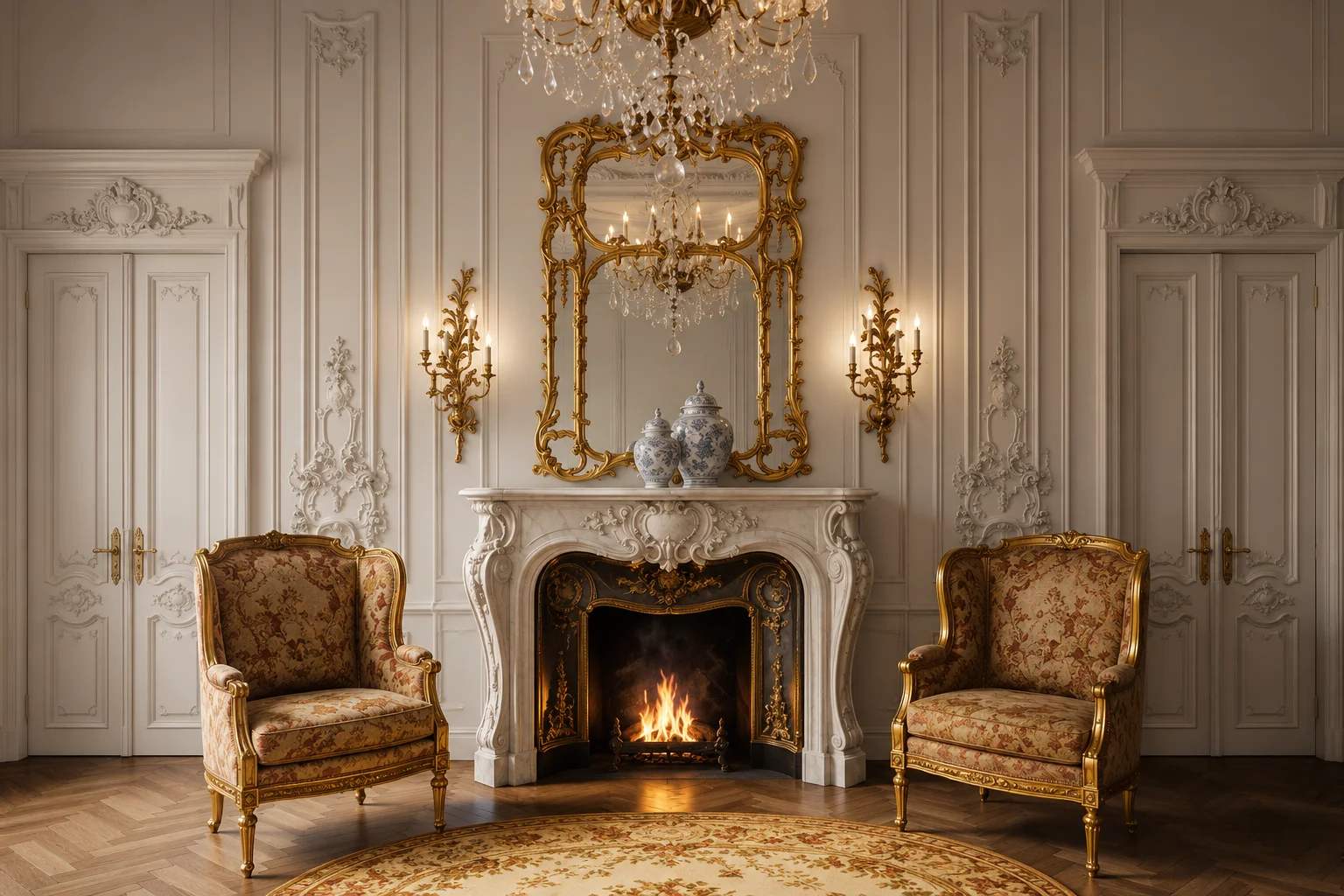
There are so many types of furniture based on their design, type of wood and type of work done over woods:
1. Hand Carved Furniture
2. Contemporary Furniture
3. Modern Furniture
Here we will talk about Hand Carved Furniture.
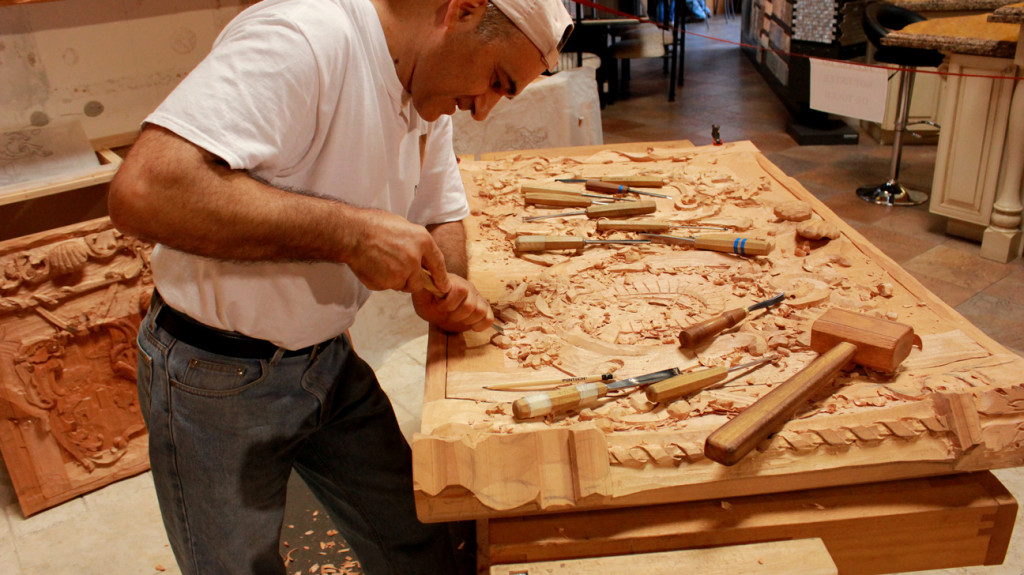
Hand Carved Furniture is such a type of furniture in which Natural Human Hand Carving is used to create all the Design and Carving. It is really hard to imagine the amount of work that went into creating hand-carved furniture.
The modern misunderstanding of “hand carving” appears to be more or less universal. I recently performed a search on the keyword “hand-carved headboard” which returned 40 results. Only two of the items offered were actually hand-carved Headboards, all other 38 result was machine-carved.
Ask any craftsman in Saharanpur why teak wood sits at the top of the list, and the answer rarely changes: it's the wood that rewards patience. Teak, known locally as Sagwan, carries natural oils through its grain that most other hardwoods simply don't have. These oils aren't a cosmetic feature — they're what allows a hand-carved teak chair or dining table to survive decades of humid summers and cold winters without warping, cracking, or inviting termites to move in.
Walk through any furniture market and you'll find Sheesham, mango wood, and rubber wood marketed as "luxury" alternatives. They carve well enough and look attractive when fresh, but none of them hold their shape the way teak does once humidity swings hit. Teak's tight, straight grain also gives carvers something rare — a surface that takes deep, sharp detail without splintering along the edges. That's why the finest acanthus leaves, cabriole legs, and rosette medallions in heritage-style furniture almost always start as a block of teak.
There's also the matter of how teak ages. Cheaper woods darken unevenly or need frequent refinishing. Teak develops a soft, honey-gold patina over the years that deepens its character rather than dulling it. Colonial-era teak furniture from a century ago is still being restored and resold today, which says more about its structural ceiling than any marketing claim could.
From a sourcing standpoint, teak used in serious manufacturing comes from managed plantations rather than wild forest felling — something that matters to buyers who care about where their furniture comes from. A piece made from properly seasoned, plantation-grown teak isn't just durable; it's a more defensible choice for anyone building a sustainable luxury home.
For a manufacturer, choosing teak over a softer, cheaper substitute is rarely the easier path. It carves slower, costs more, and demands more skill from the artisan. But it's the difference between furniture that gets handed down and furniture that gets replaced.
Q - Which wood is best for hand-carved furniture?
Ans - When we are talking about hand-carved furniture, the best Indian wood for hand-carved furniture is Teak Wood formally known as Sagawan Wood, because teak wood’s rases do not come out that is teak wood is the best wood for hand carving furniture. Royalzig Luxury Furniture Manufacturer always used Teak Wood for Hand Carved Furniture.
Q - How Hand Carved furniture are made step-by-step?
Ans - When it comes to how made hand carved furniture the 1st thing has to decide by the craftsmen is to choose suitable timber size for a piece of particular furniture after that, they will start cutting the timber into different frames size according to the furniture.
Most people who admire a finished hand-carved console table never see the weeks of preparation that happen before a single chisel touches the wood. That invisible stage is often what separates furniture that lasts from furniture that splits within a year of reaching a humid coastal home.
The first job is seasoning. Freshly cut teak holds a significant amount of internal moisture, and if it's carved while still "green," the wood shrinks unevenly as it dries — opening cracks along carved details and loosening joints. Workshops in Saharanpur season timber for weeks, sometimes months, combining controlled air-drying with kiln drying to bring moisture content down to a stable level before a saw ever touches it.
Once the wood is ready, the design phase begins. For a custom order, this usually starts as a hand-drawn sketch showing proportions, carving motifs, and overall silhouette — whether that's a Louis XVI armchair or a Victorian-style bed headboard. Many manufacturers follow this with a digital or 3D rendering so the client can approve scale and detail before any wood is cut. This step matters more than people realize — a carving pattern that looks right on paper can look completely different at full size on a six-foot bedframe.
Tool preparation is its own small ritual. Traditional Saharanpur carvers still rely on a set of hand chisels, gouges, and mallets, each shaped for a specific depth or curve, alongside fine rasps and sandpaper for finishing passes. A master carver might use thirty or more individual tools across a single ornate panel. None of this is rushed — a detailed panel of acanthus scrollwork can take a trained artisan several days of carving alone, before rubbing, joinery, and finishing even begin. It's this unhurried groundwork, not just the visible carving, that decides whether a piece survives one generation or several.
Here comes the main part of Hand Carved Furniture- “Carving” after the 1st phase a wood timber transformed into the frames and now designing part starts which are carving. All the design of hand-carved furniture is created in this phase.
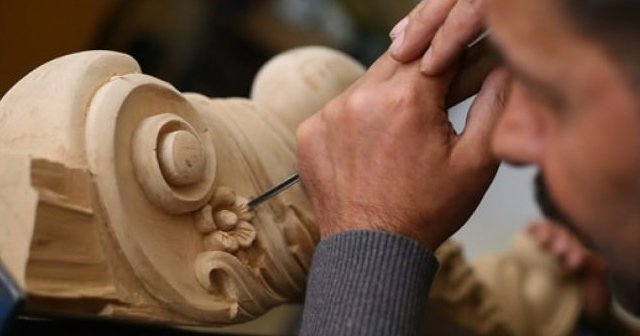
The earlier point about searching "hand-carved headboard" and finding mostly machine-made results isn't an isolated case. CNC routers and laser engravers have gotten good enough at mimicking the look of hand carving that most buyers — even careful ones — can't tell the difference from a product photo alone. The differences only show up once you know where to look.
Machine carving works by routing the same digital pattern into wood after wood, which is why mass-produced "carved" furniture often looks slightly flat, with edges that are too uniform and details that repeat identically across every panel. Hand carving, by contrast, carries small variations from piece to piece because no two strokes from a human hand are ever perfectly identical. Those variations aren't a flaw — they're the signature of the work.
| Aspect | Hand-Carved Furniture | Machine-Carved Furniture |
|---|---|---|
| Detail depth | Deep, varied relief with natural shadow lines | Shallower, uniform depth throughout |
| Production time | Days to weeks per panel | Minutes to hours per panel |
| Cost | Higher — reflects artisan labor | Lower — reflects automation |
| Customization | Fully customizable motifs and sizing | Limited to pre-programmed patterns |
| Longevity | Often improves with age and restoration | Typically replaced rather than restored |
| Authenticity | Each piece is unique | Identical across units |
Neither approach is "wrong" for every budget. Machine-carved furniture has a place for buyers who want a classical look at an accessible price. But if the goal is heirloom furniture — a piece meant to sit in a villa or palace-style interior for decades — hand carving delivers the depth, weight, and individuality that photographs alone can't fully capture. Some manufacturers blend the two: rough shaping is machine-assisted for efficiency, while all fine detail work is finished entirely by hand. Asking a manufacturer directly which carving stages are done by hand and which aren't is one of the simplest ways to know exactly what you're paying for before you order.
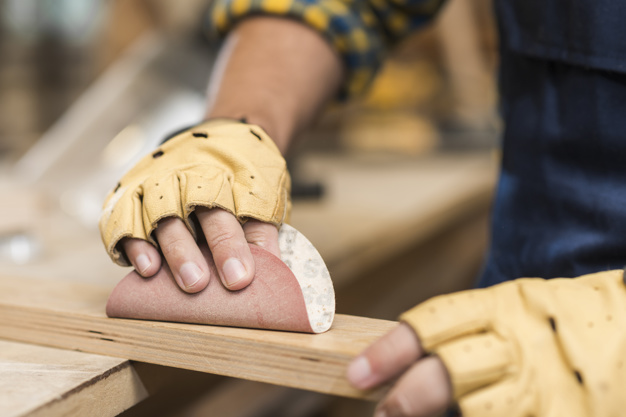
After the second phase, now the wood timber is transformed into the beautifully carved frame segments now rubbing has to be done because after carving there will be so many stitches and wood rashes and unsmooth spaces are remain in the frame so to remove them rubbing will be done, after rubbing the wood timber is now transformed into smooth beautiful frame segments. Now joint comes into the place. All Segments will be joint together and here a beautiful hand-carved furniture base is ready.
After rubbing Fabric and Cushion has to be done, this is the best part of furniture manufacturing to choose the best suitable color and suitable fabric for a piece of the particular furniture.

The coloring is the final phase of hand-carved furniture.
Trends in interior design move fast. Color palettes go in and out of favor within a few years, and entire furniture styles can feel dated within a decade. Antique and heritage-style furniture is one of the few categories that has consistently sat outside that cycle.
Part of the reason is proportion. French, Italian, and Victorian furniture design evolved over centuries of refinement, with cabriole legs, balanced symmetry, and carved ornamentation worked out long before anyone was thinking about seasonal trends. A well-proportioned Louis XVI chair or a carved Victorian bed headboard simply reads as "correct" to the eye in a way that's hard to explain but easy to notice, regardless of decade.
There's also the emotional weight antique-style furniture carries. It signals permanence in a way flat-pack modern furniture rarely can. Palaces and heritage homes across Europe and India have furnished their most important rooms with carved wood furniture for centuries, and that visual language has quietly carried over into how luxury villas, five-star hotels, and boutique resorts furnish their own signature spaces today. A carved console table in a hotel lobby, or a hand-carved four-poster bed in a villa suite, isn't trying to look current — it's trying to look established, and that's precisely the effect heritage furniture has always delivered.
Modern interior designers also use antique-style pieces deliberately as contrast. A heavily carved teak armoire placed inside an otherwise minimal, contemporary room creates a focal point that neither a fully modern nor fully traditional interior could achieve alone. That flexibility — fitting equally well into a restored heritage haveli or a brand-new villa — is part of why demand for genuinely hand-carved antique-style furniture keeps growing rather than fading, even as everything else in interior design keeps changing around it.
Buyers rarely get to watch furniture being made, so most purchase decisions come down to a handful of physical checks that can be done on a showroom floor or even from close-up photographs.
Start with the wood itself. Genuine teak has a straight, fairly tight grain and a noticeably heavier feel in hand than Sheesham, mango wood, or rubber wood of the same size. If a "teak" piece feels unusually light, that's worth questioning. Next, look closely at the carved details, especially in recessed areas like the inside of a scroll or the underside of a leaf motif. Hand carving leaves slightly uneven tool marks and varying depth even within a single motif — machine carving, even good machine carving, tends to look identical from one repeated element to the next.
Joinery is another reliable indicator. Genuine craftsmanship uses traditional wood joinery — mortise and tenon joints, dowels, sometimes hand-cut dovetails — rather than relying purely on screws, staples, or modern brackets hidden under upholstery. Turn a chair over or open a drawer fully if the seller allows it; joinery tells you more about long-term durability than the finish does.
Quick buyer checklist:
A reputable manufacturer will never hesitate to answer these questions directly. Hesitation, vague answers, or a refusal to show carving in progress is usually the clearest red flag a buyer can get before placing an order.
Ordering custom hand-carved furniture from India — especially for buyers outside the country — can feel like an opaque process if a manufacturer doesn't walk clients through it clearly. In practice, it follows a fairly consistent sequence from first conversation to final delivery.
It usually begins with a design consultation, where the buyer shares reference images, room dimensions, and the style they're working toward — whether that's a Louis XVI dining set or a more restrained Neo-Classic bedroom collection. From there, the manufacturer prepares drawings or 3D renderings so the client can confirm proportions and carving motifs before committing. Material selection happens alongside this — choosing the teak grade, finish tone, and fabric or upholstery if the piece needs it.
Production runs through the stages covered earlier — seasoning, frame-cutting, carving, rubbing, joinery, and finishing — but export orders add a few extra steps. Quality inspection happens at multiple checkpoints, not just at the end, since a flaw caught mid-carving is far cheaper to fix than one discovered after assembly. Once approved, furniture is carefully packed, often partially disassembled and individually wrapped, padded, and crated to survive long sea freight without damage.
For container shipping, experienced manufacturers consolidate pieces to make the most of container space, handle the necessary documentation, and coordinate with freight forwarders on the buyer's side. Some also offer white-glove installation support or detailed assembly guidance for the receiving end, particularly for larger pieces like four-poster beds or sectional sofas that travel disassembled.
Buyers working with overseas manufacturers for the first time should ask specifically about lead times, packing methods, and who handles customs documentation — these details affect total cost and delivery timeline far more than the furniture price itself.
Saharanpur's reputation in hand-carved wood furniture goes back generations, and it's one of the reasons international buyers and interior designers keep sourcing from this region specifically rather than furniture hubs elsewhere.
Cost is part of the story, but not the whole of it. Skilled hand-carving labor in India remains more accessible than in many Western manufacturing markets, which means buyers can commission genuinely hand-carved, fully customized furniture at a price point that would only buy machine-made equivalents elsewhere. That price advantage exists alongside, not instead of, quality — generations of carving knowledge passed down within Saharanpur's artisan families mean the skill base runs deep, not just in a handful of workshops.
Customization is the other major draw. Designers working on villa or hospitality projects often need furniture sized or styled to match a specific room, not a standard catalog dimension. Manufacturers with strong in-house carving teams can adjust proportions, carving motifs, and finishes to match a designer's brief directly — something far harder to get from mass-market furniture brands.
Export-readiness matters too. Manufacturers who regularly ship internationally understand global packing standards, container logistics, and the documentation overseas buyers need, removing a major friction point for importers and wholesale buyers. Combined with credentials like ISO certification, this gives international clients a level of operational trust that a purely local workshop, however skilled, often can't yet offer. Put together — skilled labor, real customization, and export reliability — this is why Saharanpur continues to attract long-distance luxury furniture orders, not just from India's own markets, but from villa owners, hoteliers, and designers across the world.
Hand-carved teak furniture is built to last decades, but that lifespan depends partly on how it's cared for — especially in carved areas, where dust and moisture collect more easily than on flat surfaces.
Routine cleaning should stay simple. A soft, dry cloth, or a soft-bristled brush for carved recesses, is usually enough for regular dusting. Avoid harsh chemical cleaners or excessive water, which can strip natural oils from the wood over time and dull the carving's natural finish. For deeper cleaning, a barely damp cloth followed immediately by drying is safer than anything that leaves moisture sitting in the grain.
Humidity is the biggest long-term threat to any wood furniture, carved or not. Extreme swings — very dry winters followed by humid monsoons — cause wood to expand and contract, which can eventually stress joints and fine carved details. Keeping indoor humidity reasonably stable, and keeping furniture a sensible distance from direct AC vents or heating sources, goes a long way toward preventing this.
Waxing and polishing should happen periodically rather than constantly. A quality furniture wax applied every few months, worked gently into carved details with a soft brush, helps maintain the wood's natural sheen and offers a light protective layer. Over-polishing, especially with silicone-based sprays, can build up residue in carved grooves over time, so a less frequent, careful application tends to work better than a heavy weekly routine.
Sunlight is another factor people underestimate. Direct, prolonged sun exposure fades wood tone unevenly and can dry out surface oils faster than normal. Positioning carved furniture away from direct window light, or using UV-filtering window coverings, helps the wood age evenly rather than patchily. With this kind of routine care, well-made hand-carved teak furniture isn't just durable — it's genuinely capable of being passed down rather than replaced.
The phrase "hand-carved" gets used loosely online, and buyers who don't know what to check for often end up with furniture that doesn't match the description, sometimes without realizing it for years.
The most common mistake is trusting wood claims without verification. Sellers occasionally label Sheesham, mango wood, or even MDF with a teak-like finish as "teak" because the term carries premium weight. Asking for botanical confirmation, or requesting close-up photos of the grain and end-grain, helps avoid this before money changes hands.
A second mistake is assuming carved detail in a photo equals hand carving. As covered earlier, machine carving has become convincing enough in photographs that it's genuinely hard to tell without seeing the piece, or carving in progress, directly. Buyers who skip this question entirely are the ones most likely to be surprised by flatter, less detailed carving on arrival.
Weak joinery is another overlooked risk, especially with furniture bought purely on price. Pieces assembled mainly with staples, glue, and thin screws rather than proper mortise-and-tenon or dowel joinery tend to loosen far sooner, particularly after international shipping stresses the frame. Poor polishing is a related issue — a rushed, uneven finish often signals rushed carving and construction underneath it too.
Finally, unseasoned wood is a mistake that doesn't show up immediately, which is exactly what makes it dangerous. Furniture made from green, improperly dried timber can look perfect on delivery and then crack or warp within the first year as it continues drying in a new climate. Asking directly about seasoning time, and favoring manufacturers who are transparent about their process, is one of the simplest ways to avoid paying premium prices for furniture that won't actually last.
Well-made hand-carved teak furniture regularly lasts 50 to 100 years or more with reasonable care. Teak's natural oils resist moisture, pests, and warping far better than most hardwoods, which is why genuine antique teak pieces from a century ago are still being restored and used today rather than discarded.
Teak holds fine carved detail without splintering and resists humidity-driven warping better than Sheesham. Sheesham is denser and harder to carve finely, while teak's natural oils protect it from termites and moisture over decades, making it the stronger long-term choice for detailed, heirloom-quality hand carving.
Genuinely hand-carved antique-style furniture tends to hold or increase its value over time, unlike mass-produced furniture that depreciates quickly. Because it's durable, restorable, and never goes out of design fashion, it functions more like a long-term asset than a typical furniture purchase, especially when made from solid teak.
Check the grain pattern, weight, and color — genuine teak feels heavier and has a tighter, straighter grain than substitutes. Ask the manufacturer for close-up photos of raw, unfinished wood, or request a small sample. Reputable manufacturers won't hesitate to confirm sourcing details directly.
Yes. Most experienced manufacturers can adjust carving motifs, dimensions, wood tone, and upholstery to match a specific room or design brief. This usually starts with sketches or 3D renderings for approval before production begins, which is standard for custom villa, hotel, and designer furniture orders.
Very little day-to-day. Regular dry dusting, occasional light waxing every few months, and keeping the piece away from direct sunlight and extreme humidity swings is usually enough. Carved detail areas just need a soft brush occasionally to prevent dust buildup in the recesses.
