
.jpg)
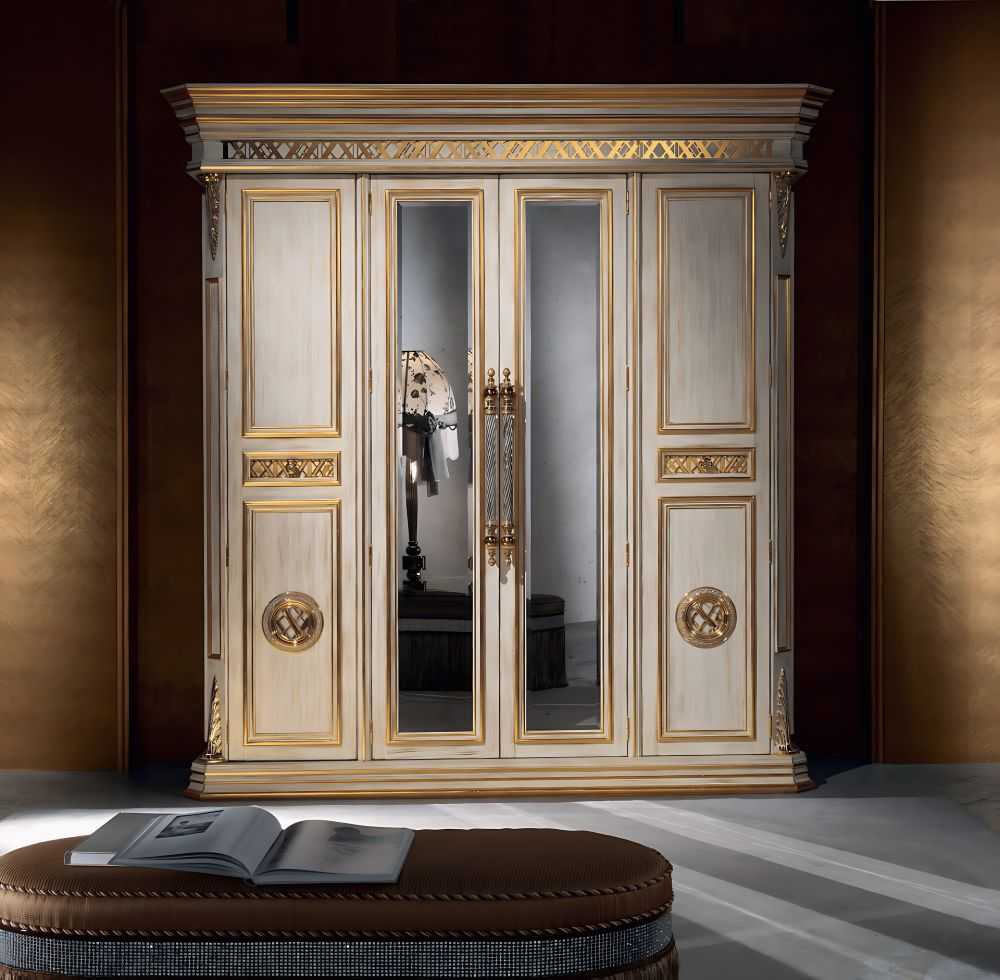
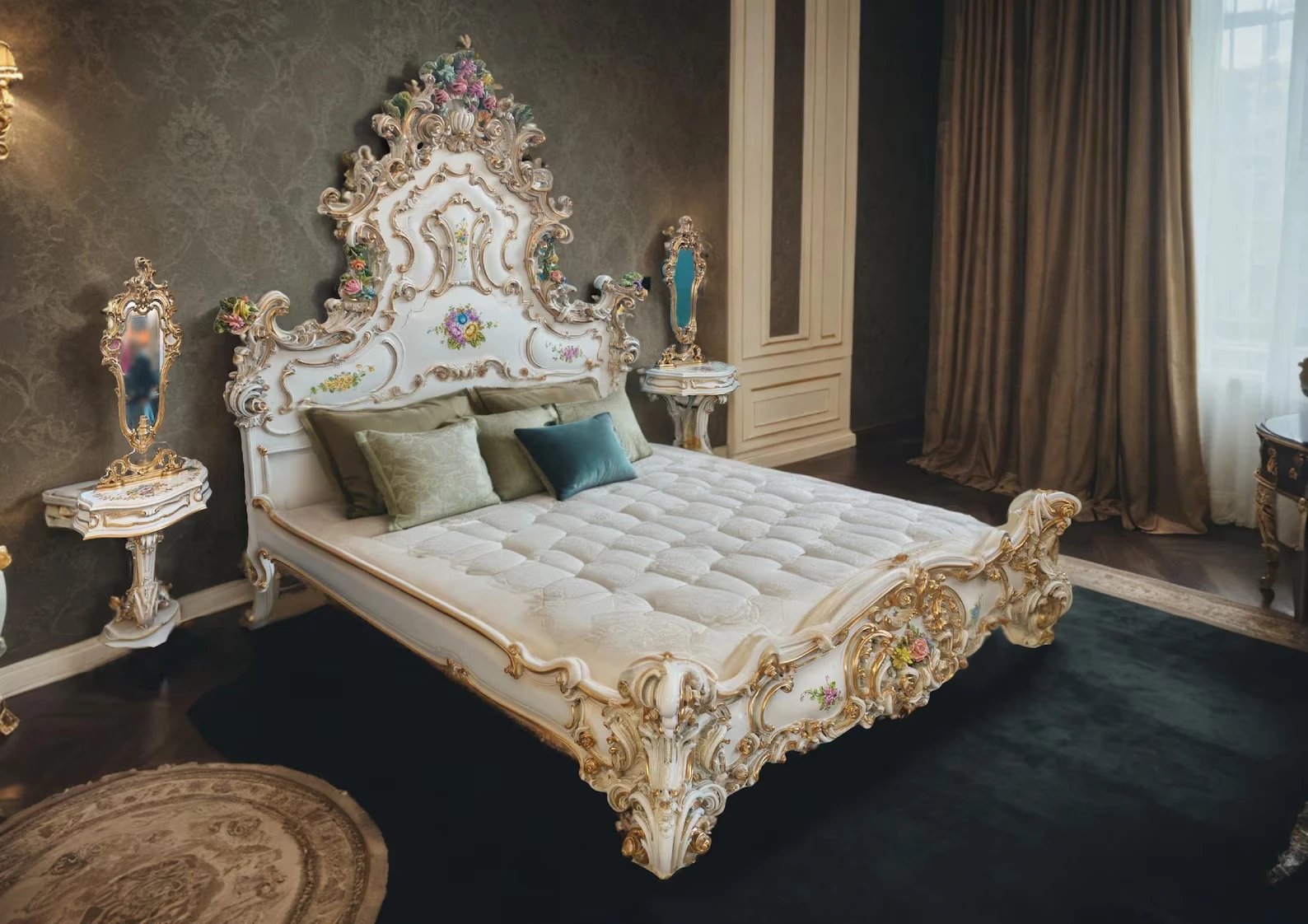
.jpg)
.jpg)
How Rococo Freed Furniture from Symmetry
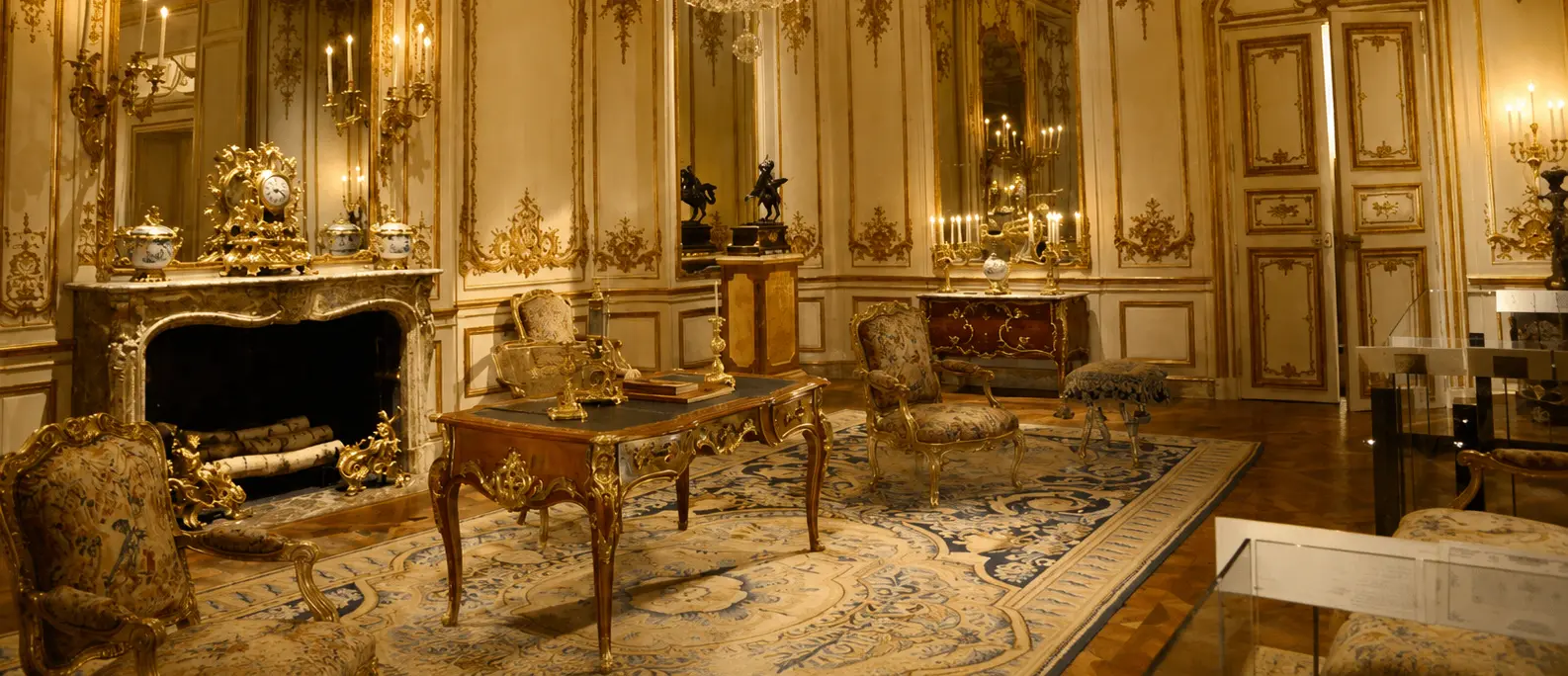
It began in Paris in the 1720s, quietly. The heavy grandeur of Louis XIV was fading, and a new generation of craftsmen—Nicolas Pineau and Juste-Aurele Meissonnier—started drawing curves instead of columns and shells instead of shields. Rococo was, at its heart, a refusal to be serious about everything all the time. Rooms became intimate. Furniture turned light, playful, and unapologetically decorative. In Saharanpur, our craftsmen met this tradition not through a museum but through the work itself—learning the scroll, the shell, and the asymmetric flourish that makes Rococo-style furniture so difficult to fake and so rewarding to make well.
The Regent style in France begins shifting court taste away from baroque formality. Craftsmen start using shells and irregular curves as primary motifs rather than ornamental afterthoughts.
By the 1730s, the full Rococo vocabulary had taken shape — C-scrolls, asymmetric frames, gilded surfaces, pastoral and floral themes. It became the language of comfort and intimacy at a time when French aristocracy wanted both.
Why Rococo Furniture Is Harder to Carve Than It Looks
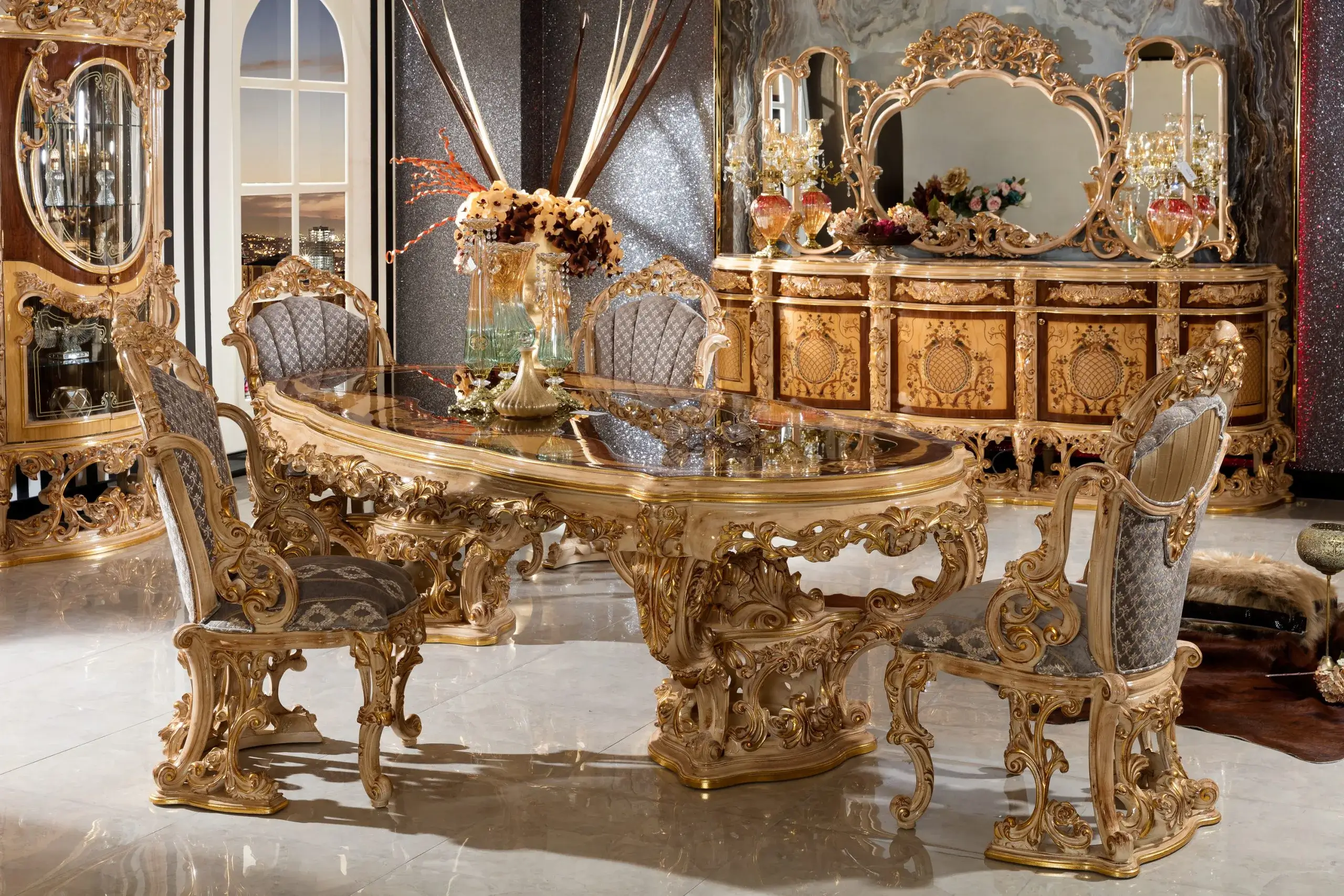
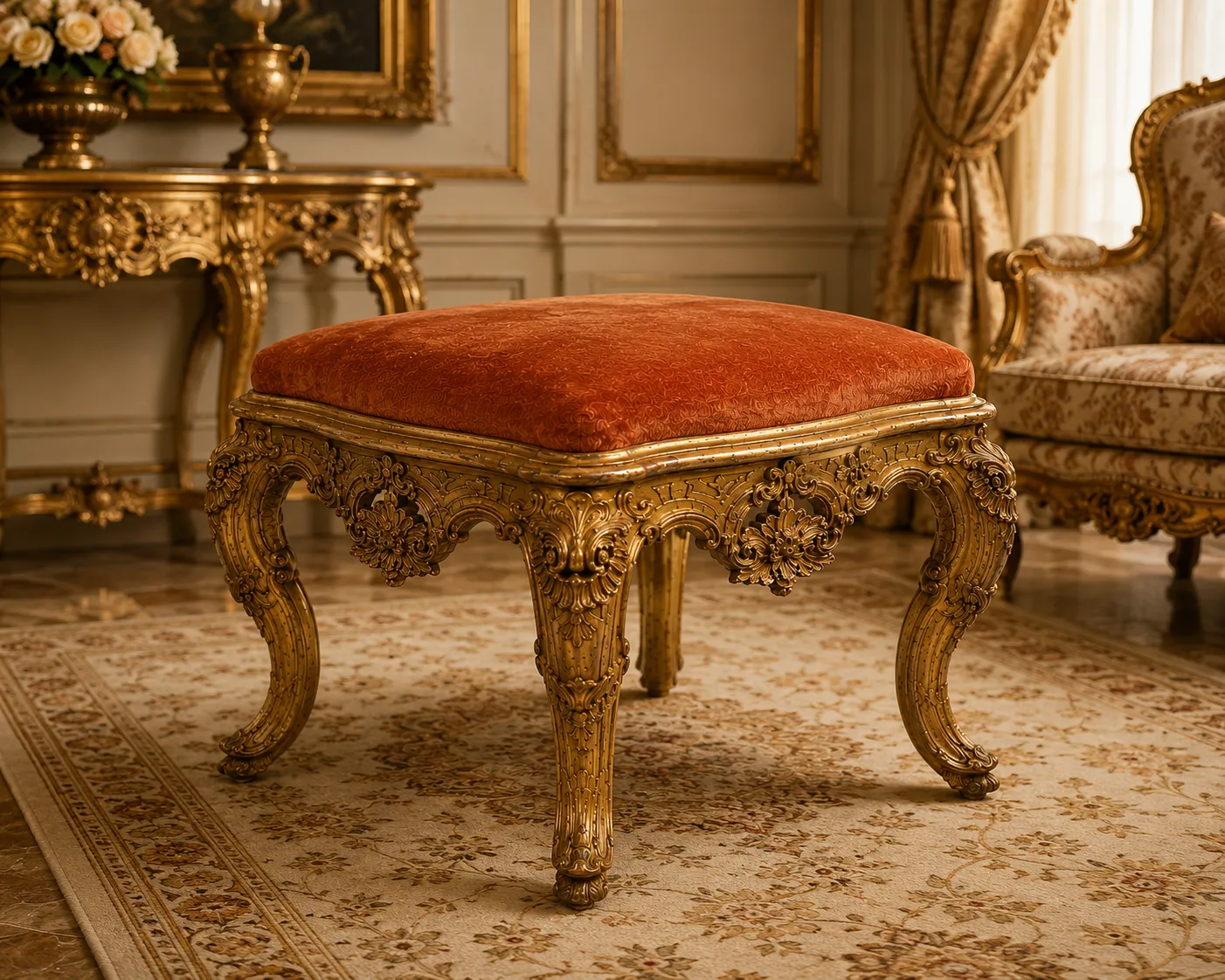
The paradox of Rococo is that the pieces look effortless, but making them is anything but. Symmetry is actually easier to carve—you repeat the same shape on both sides and check that they match. Rococo does not allow that. The C-scroll on the left side of a chair back curves one way; the one on the right turns differently. Both have to look natural, not like a mistake. Our craftsmen spend years learning where to let a curve breathe and where to pull it tight. A shell motif—the rocaille that gave the style its name—can take a full day on a single cabinet door. It sits there looking casual. That is the point entirely.
Five Motifs That Define Rococo Furniture
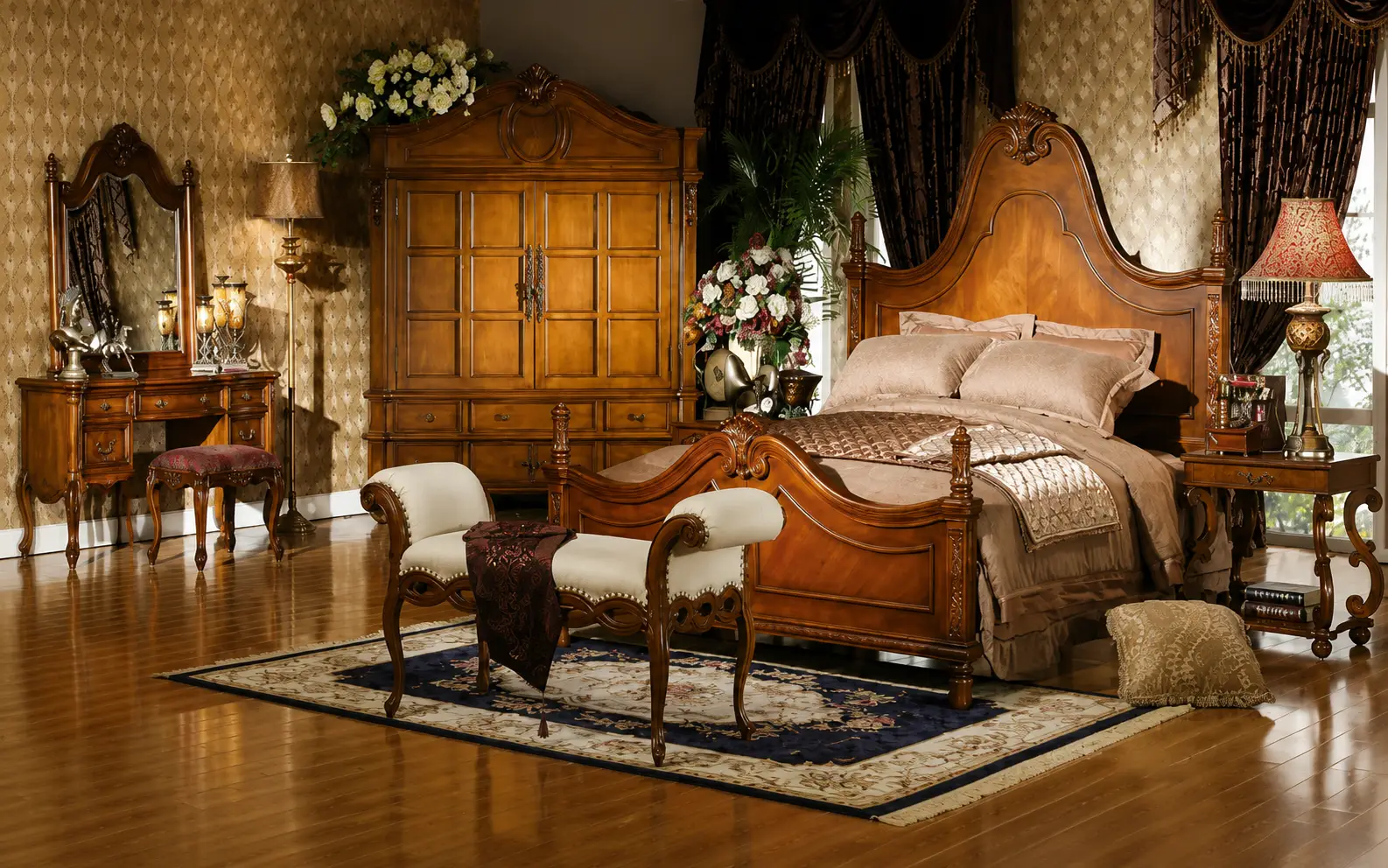
How Rococo Style Furniture Feels in a Real Room
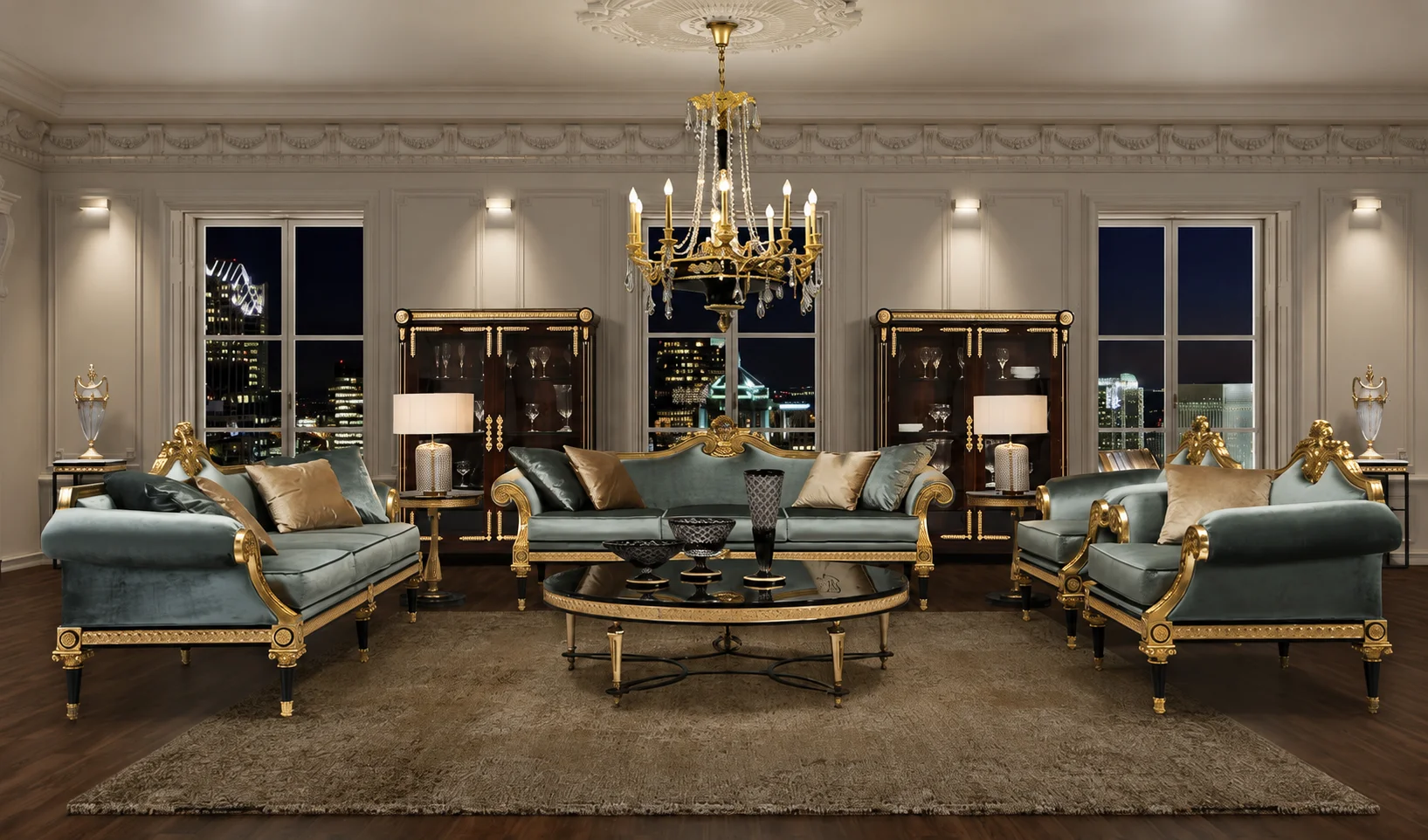
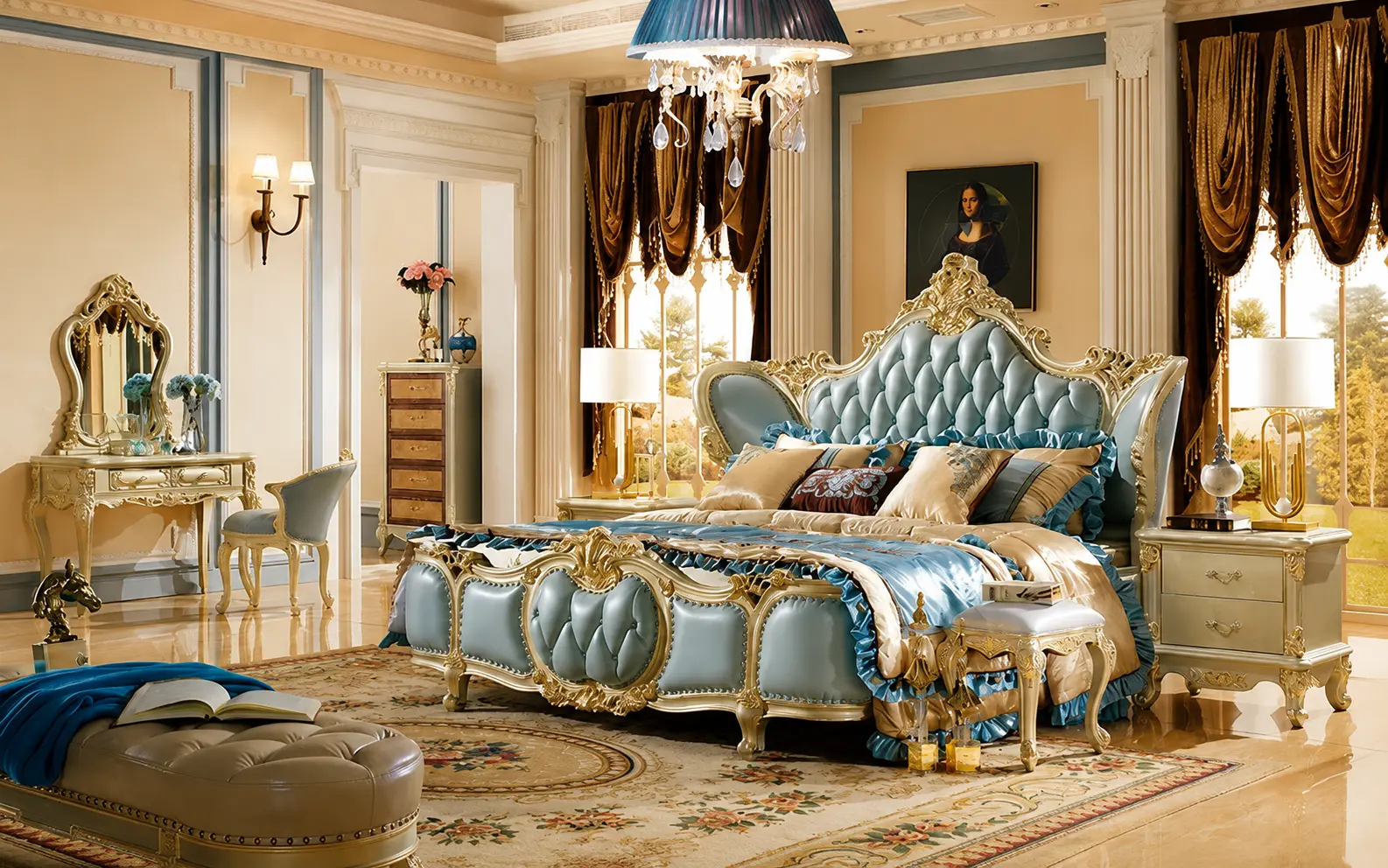
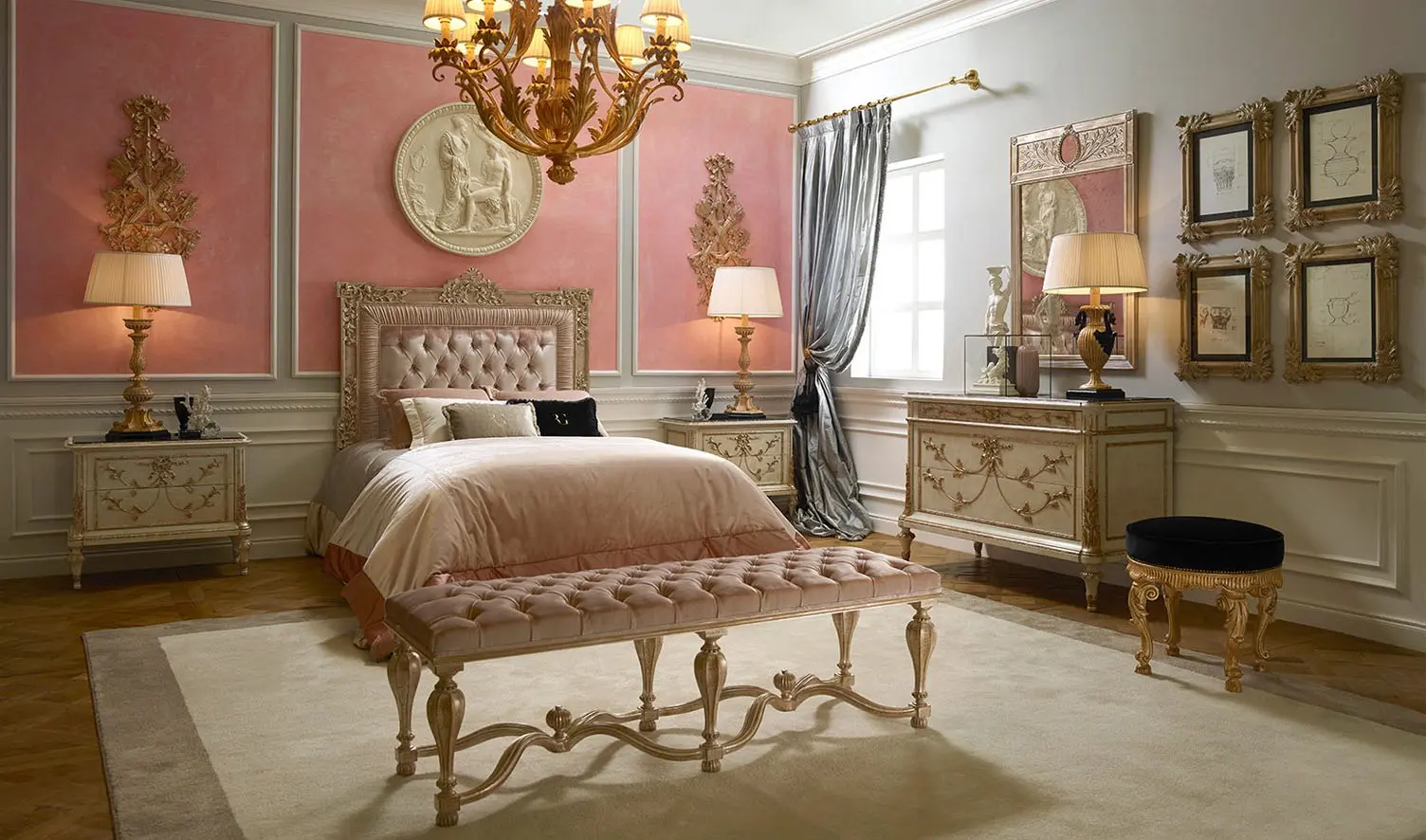
Most Rococo furniture is built on beech or lime wood frames—lighter woods that suit the scale and let the curves stay delicate without becoming fragile. We also work in walnut when a client wants a richer, more visible grain beneath the finish. The gilding is selective: gold leaf applied to the scroll tips, the shell centers, and the carved edges where light will catch it, not the entire frame. Over that, pale silk damask or velvet in dusty rose, sage green, or soft ivory. The result is a piece that feels genuinely gentle in a room—never imposing, always present, and rather difficult to stop looking at once you notice the detail.
"Rococo is not about excess. It is about ease — making something elaborate look as though it arrived that way naturally. Our craftsmen spend years learning the difference."The Royalzig Workshop, Saharanpur
Every Rococo Piece Is Made to Your Brief
Wood choice, gilding level, fabric, dimensions—nothing is standard here. We discuss it all before anything is drawn, let alone carved.
Start a ConversationShipping to Over 25 Countries
Our Rococo-style furniture has reached homes in the UK, UAE, US, and across Europe. Custom crating and white-glove delivery are arranged for every international order.
What People Ask Us About Rococo Furniture
-
What exactly is Rococo furniture, and where did the style come from?
+Rococo was an 18th-century French decorative style that emerged in the 1720s as a deliberate shift away from the heavy formality of the Baroque period. Where Baroque furniture was symmetrical, grand, and rather serious, Rococo leaned toward playfulness—asymmetric curves, shell motifs called rocaille (which is where the name comes from), floral carvings, gilded surfaces, and an overall feeling of lightness. It was the furniture of intimate French salons and boudoirs, not grand throne rooms. The style spread across Europe and became enormously influential in how decorative arts were made for the next century.
-
How is Rococo-style furniture different from Baroque and Louis XVI?
+Think of the three styles as a progression in French taste. Baroque is heavy, muscular, and deeply symmetrical—the furniture of absolute power.Rococo came next and rejected all of that in favor of curves, shells, asymmetry, and charm. Then Louis XVI arrived and rejected Rococo in turn, bringing back straight lines and neoclassical discipline. So if you put all three side by side, Baroque isa a column,Louis XVI is a fluted pilaster, and Rococo is a shell that curves in a direction it chose for itself. Each is beautiful, but they are fundamentally different in spirit.
-
What wood do you use for Rococo furniture, and can the frame be gilded?
+We work primarily in beech for Rococo pieces—it has been the traditional choice for this style in French workshops because it carves cleanly, takes paint and gesso well, and is light enough to suit the delicate proportions the style calls for. We also work in lime wood and walnut depending on the finish desired. For gilding, yes — gold leaf is applied by hand to carved detail areas: scroll tips, shell centres, carved edges along the apron and legs. We do not gild the entire frame; authentic Rococo gilding is considered and selective, not blanket.
-
How long does it take to make a Rococo-style furniture piece?
+It depends on the piece and its complexity. A single Rococo-style armchair — carved cabriole legs, shell back, gilded scroll detail—takes around five to seven weeks from confirmed order to completion. A full sofa or settee takes eight to ten weeks. Cabinet pieces with extensive carving across multiple panels run longer. We give every customer a production schedule before the order begins, and we do not compress timelines for the carving stages. There is no quick way to carve a C-scroll that looks right, and we have stopped trying to find one.
-
Where does Rococo furniture work well in a modern home?
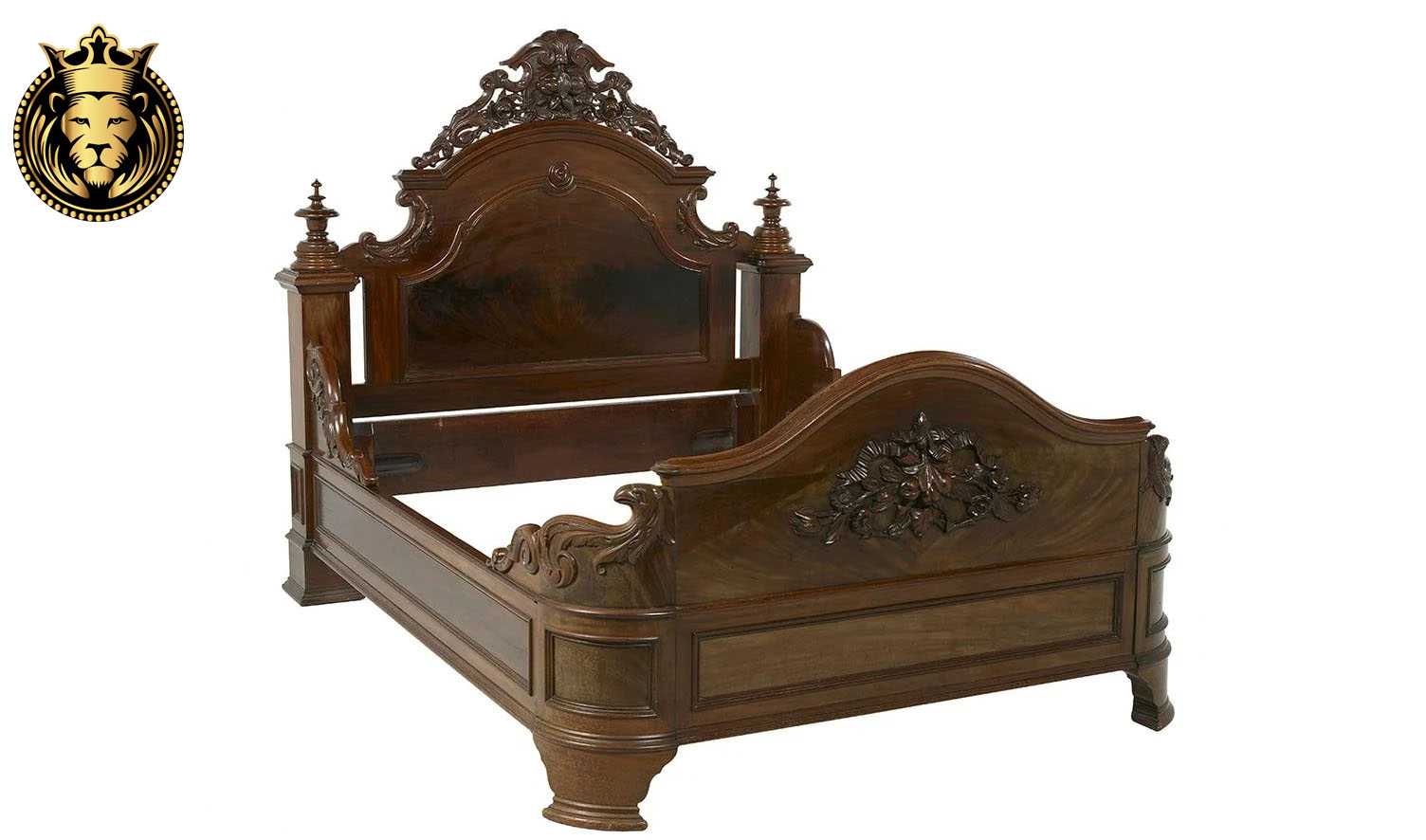
+Better in more places than people initially think. A pair of Rococo armchairs reads exceptionally well in a living room that is otherwise clean-lined — the contrast adds depth and the chairs become a conversation point without overwhelming the space. A Rococo console table in an entrance hall works similarly: one ornate piece in a neutral setting tends to look more considered than a room full of competing detail. Bedrooms with high ceilings suit Rococo beds and dressing tables particularly well. The one context where Rococo can feel crowded is a small room with dark walls — it generally needs light and space to breathe properly.
-
Can I customise the carving pattern or fabric on a Rococo piece?
+Yes, and we expect most customers to want to. Rococo carvings can be drawn to different levels of density — some clients want minimal scroll detail, others want every surface treated. We can adjust the weight of the gilding, the choice of fabric (silk, velvet, damask, or a fine linen blend), and the colour palette to suit your room. What we do not change is the craft approach: hand carving, hand gilding, and upholstery done by skilled hands, not machines. The design is yours; the execution is ours.