Top Luxury Villa Interior Trends in India 2026
The New Language of Indian Luxury Something profound is shifting inside India's most prestigious vi...

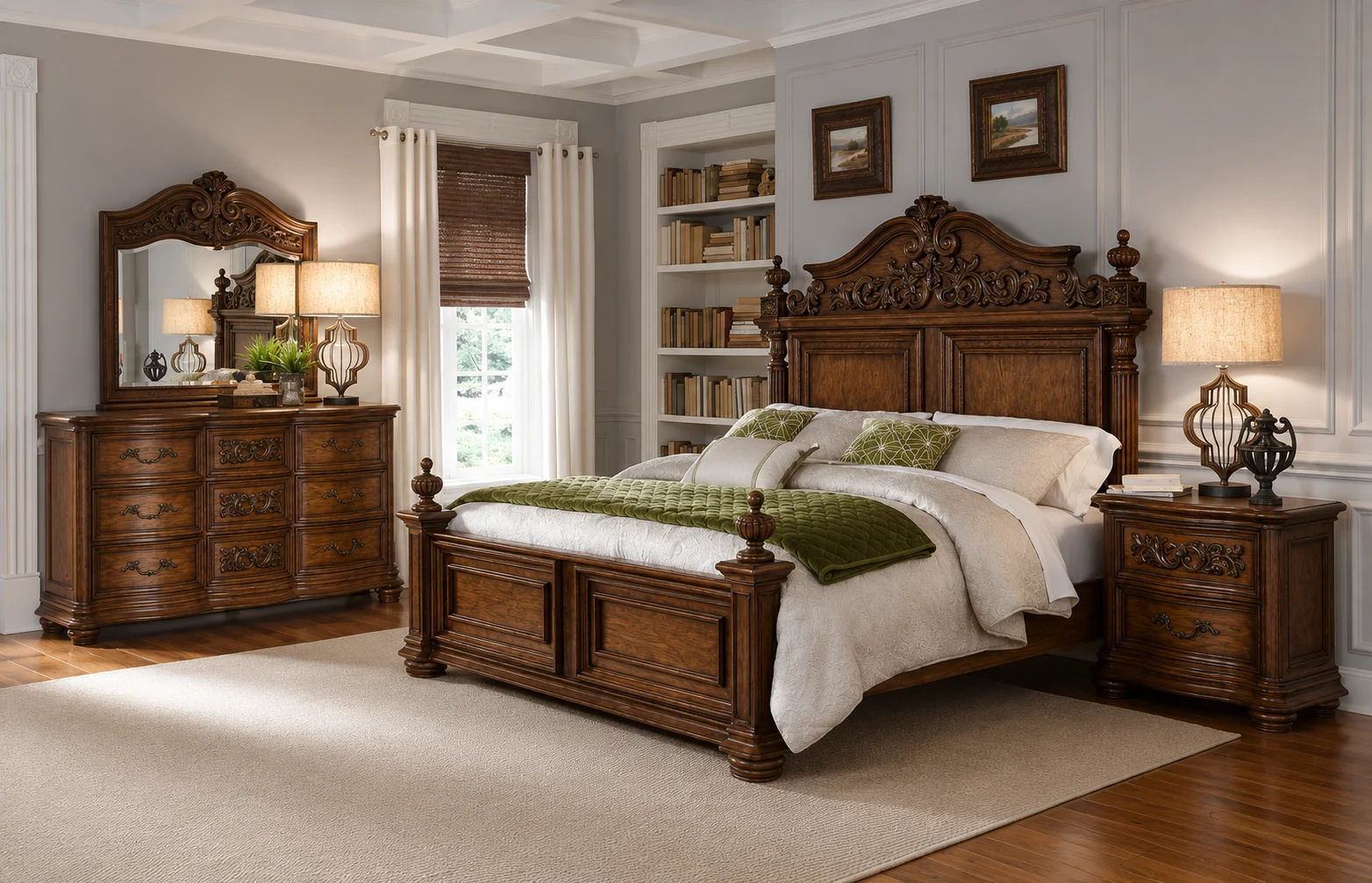
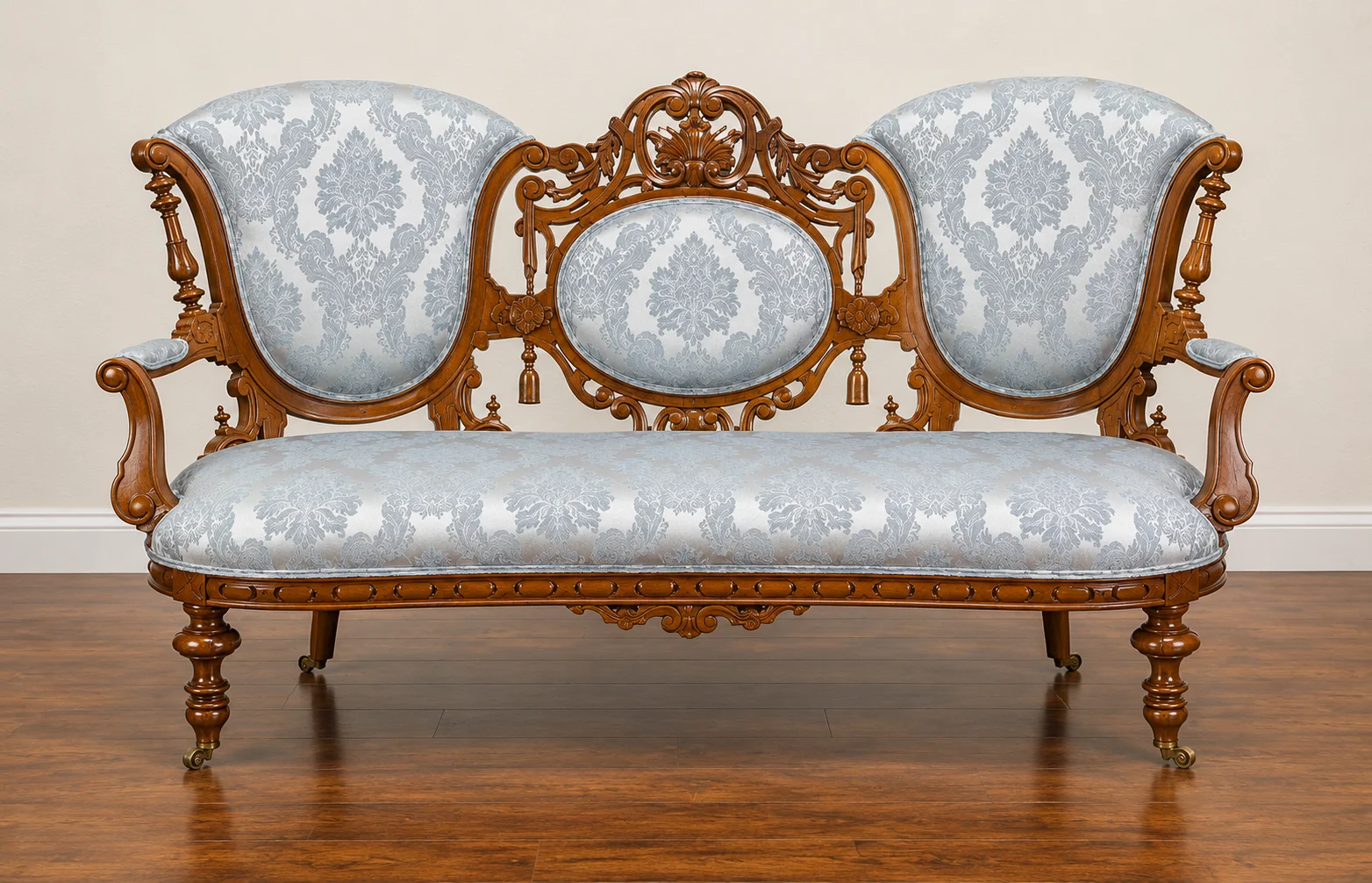
Walk into a house furnished entirely with new things, and it tells you almost nothing. Walk into a house with even one genuine antique piece — a carved chest with worn brass fittings, a settee whose upholstery has been redone twice but whose frame has outlived three owners — and the room starts telling a story before anyone says a word.
That is the peculiar power of old, well-made furniture. It does not need to explain itself. A hand-carved sideboard that has survived a hundred years of use carries a kind of authority that no amount of styling can fake. For collectors, architects, and homeowners building spaces meant to last generations, this is not nostalgia. It is a design strategy.
But the antique furniture market is also confusing, and honestly, a little murky. The words "antique," "vintage," "classic," and "reproduction" get used almost interchangeably by sellers who benefit from the ambiguity. This guide exists to clear that up, and to help you buy — whether an original 19th-century piece, a well-made vintage find, or a museum-quality hand-carved reproduction — with real confidence.
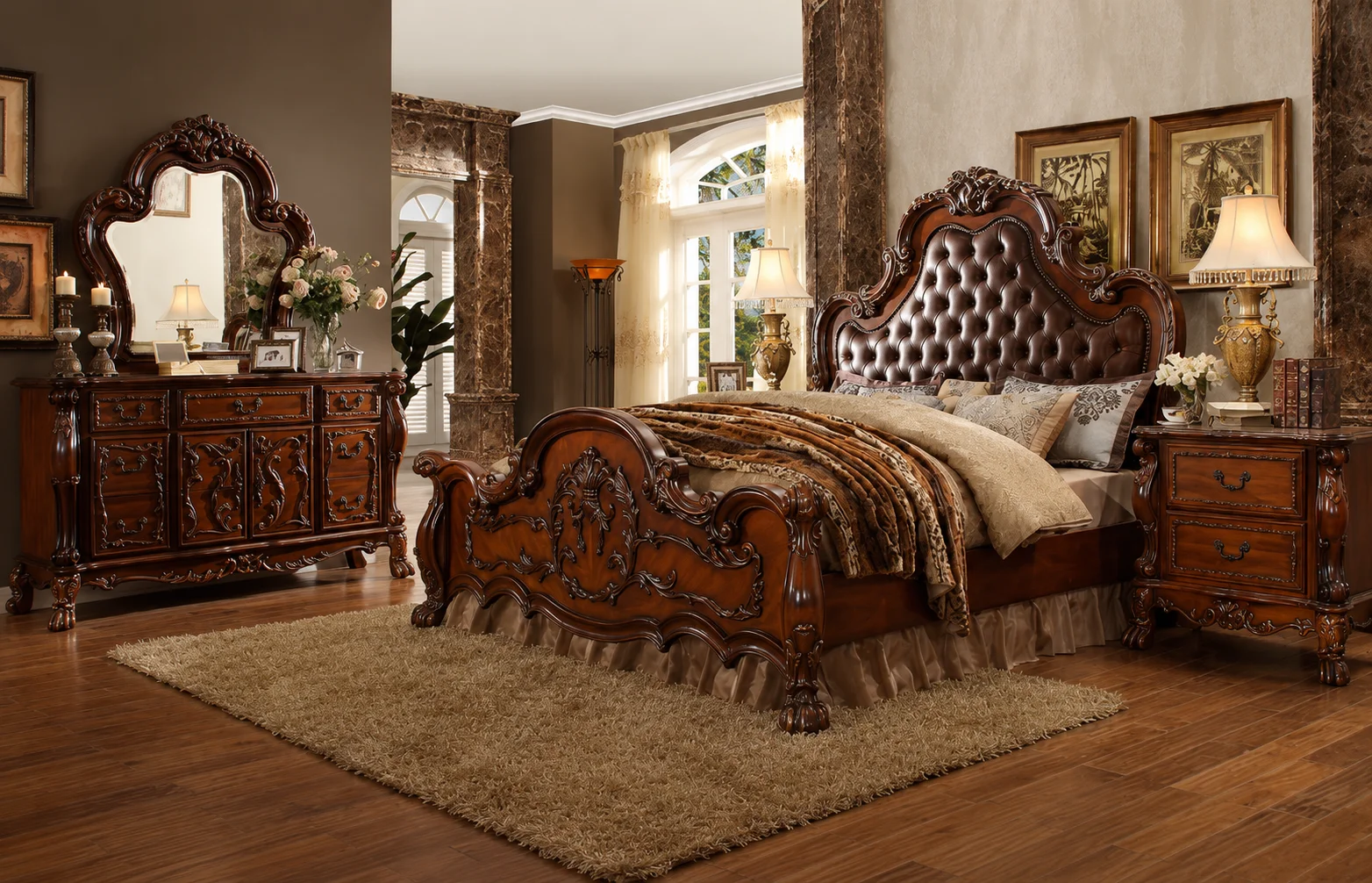
This is the single most common confusion in the furniture world, and it is worth settling early.
| Term | What It Actually Means | Typical Age |
|---|---|---|
| Antique | A genuine period piece, made and used in the era it represents | 100+ years old |
| Vintage | An older piece with real history, but not old enough to be classified antique | Roughly 20–99 years old |
| Classic/Reproduction | Newly made furniture, hand-carved in a historical style — French, Italian, Victorian, Colonial, or Indian royal | Made today, styled from centuries-old design language |
None of these categories is "better" than the others by default. A genuine antique carries irreplaceable provenance but often needs restoration and rarely comes in the exact size a modern room requires. A well-made classic reproduction, carved by hand in solid teak, gives you the same visual language, built to fit your room exactly, without the condition risk of a 150-year-old joint.
Design note: Most of the palace restorations and luxury villa projects we consult on end up mixing all three — a genuine antique as the room's anchor piece, supported by newly hand-carved furniture built to match its style and proportions. It is rarely an either/or decision.
There is a reason antique and classic furniture keeps returning to high-end interiors even as design trends cycle through minimalism, mid-century, and back again.
It was built before furniture became disposable. Pieces from earlier eras were made to be repaired, not replaced — thicker joints, solid timber construction, and hardware designed to be re-tightened rather than discarded.
The carving carries real skill you can see. Machine-made furniture has a kind of visual flatness once you have spent time around genuinely hand-carved work. The slight asymmetry in a hand-cut acanthus leaf is not a flaw — it is proof a person, not a program, made the decision.
It anchors a room instantly. A single strong antique or classic piece — a carved armoire, a Victorian bench, a French-style console — gives an interior designer something to build the rest of the room around, which is why architects and designers reach for one so often when a space feels unfinished.
It holds and often gains value. Unlike most furniture categories, which depreciate the moment they leave a showroom, genuine antiques and high-quality hand-carved classic pieces can appreciate, particularly if the maker's reputation and the timber quality are both strong.
Different rooms call for different weight, scale, and level of ornament. Here is how the major categories translate room by room.
This is usually where the boldest pieces live — carved sofas and settees, footstools, curio and display cabinets, coffee and game tables, and TV consoles built to disguise modern electronics behind a period-appropriate front. A living room can absorb more visual drama than almost any other space in the house, simply because it is built for gathering rather than quiet.
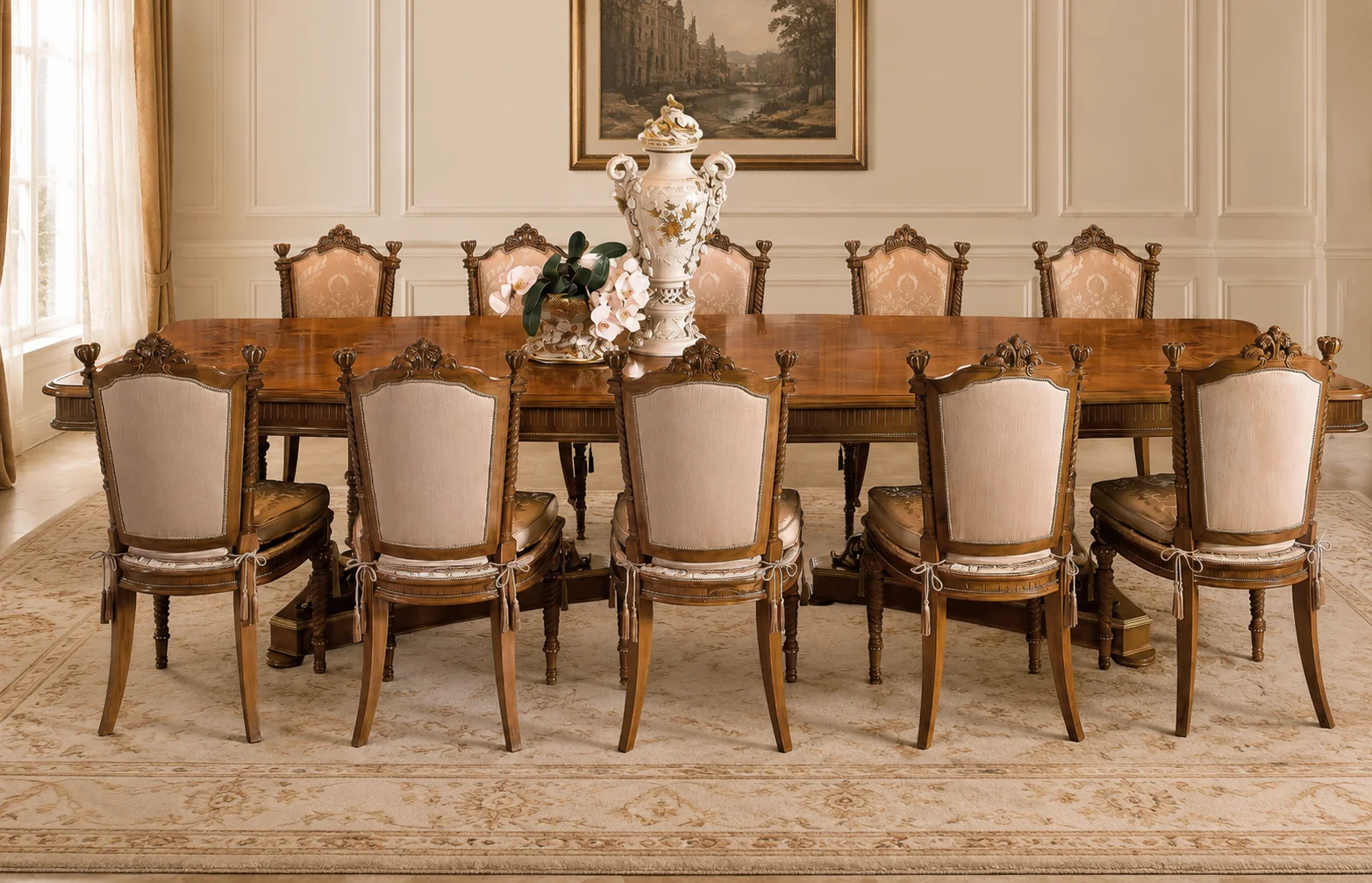
Antique and classic dining & kitchen furniture needs to survive real use — spills, heat, decades of chairs being pulled in and out. This is where wood selection matters enormously; a genuinely antique dining table in a softer wood may need protective treatment that a hand-carved teak reproduction simply does not.
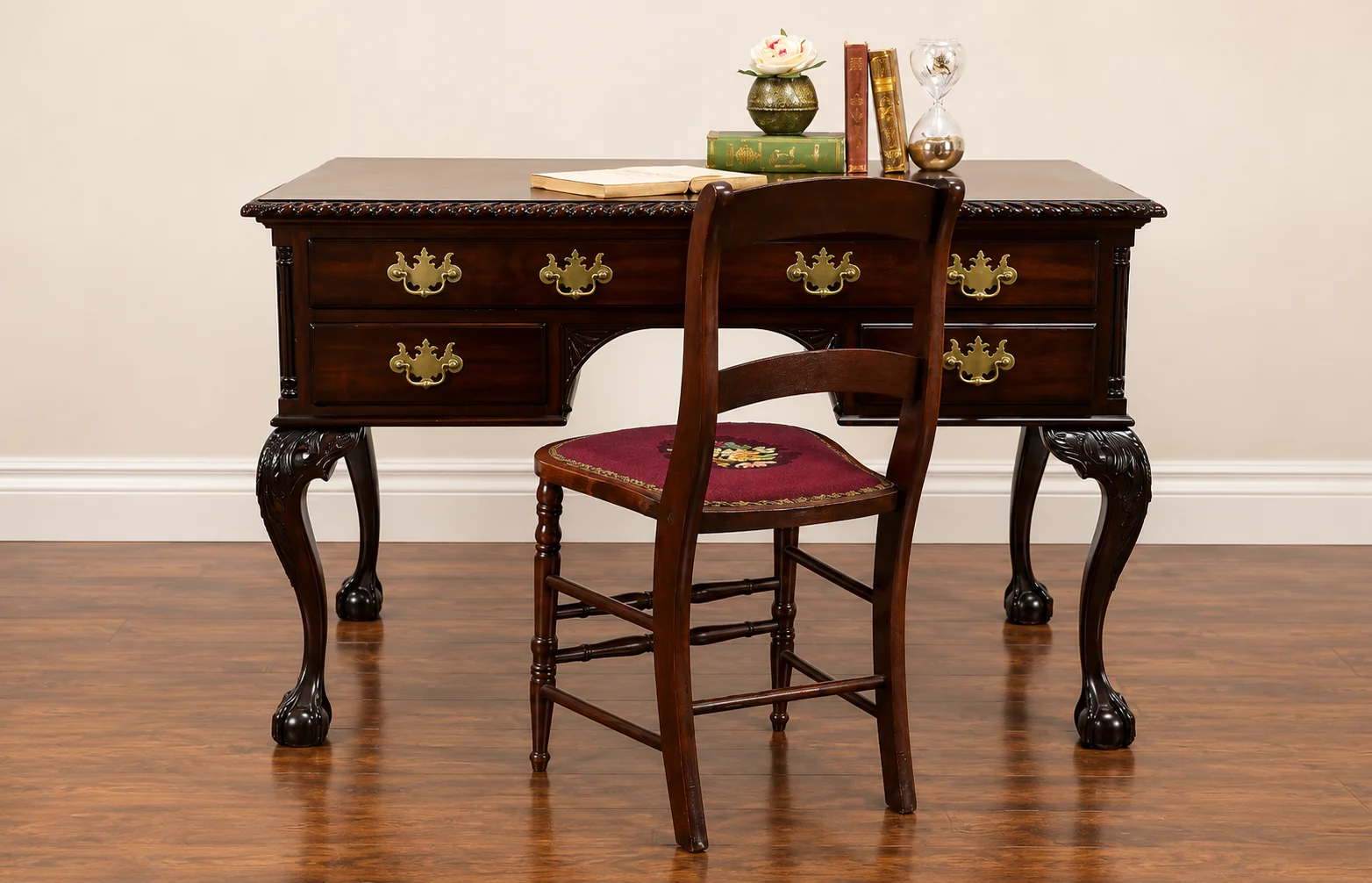
Executive desks, secretaries, bookcases, and library cabinets in this category tend to favor darker woods and more restrained carving — a study is usually meant to feel serious rather than theatrical. A well-proportioned antique or classic desk does more to establish authority in a home office than almost any other single object.
Here the priority shifts toward comfort and proportion — bedsteads, dressers, nightstands, wardrobes, and vanities that need to feel intimate rather than imposing, even when heavily carved. Bathroom vanities in particular benefit from classic reproduction over genuine antique, since real antique wood rarely tolerates humidity well.
The first impression of any home. A console or entry table, a well-chosen mirror frame, a coat stand, and — if the ceiling height allows — a grand clock do more collective work per square foot than almost any other zone in the house. This is a space where even a single well-chosen antique piece changes how a visitor reads the entire home.
Buyers who are new to this category often struggle to tell excellent work from merely decent work. A few things to check, whether you are buying an antique or a new hand-carved piece:
This question comes up constantly, particularly with clients working on palace or heritage-home restorations.
| Factor | Restoring an Existing Antique | Commissioning New Hand-Carved Furniture |
|---|---|---|
| Emotional and historical value | Irreplaceable — the piece has real family or provenance history | None initially, but can build history going forward |
| Cost predictability | Variable; hidden structural issues can raise costs mid-restoration | Fixed, agreed before production begins |
| Fit to your space | Limited — you restore the piece it already is | >Built exactly to your room's dimensions |
| Timeline | Often faster if damage is minor | Typically 6–12 weeks for complex custom carving |
| Long-term durability | Depends heavily on the quality of restoration work | Predictable, using seasoned timber and modern joinery techniques |
Neither path is wrong. A genuinely important family piece almost always deserves restoration over replacement. But when a room needs furniture in a size, finish, or quantity that simply does not exist in the antique market, hand-carved reproduction is not a compromise — it is often the more practical choice for building a coherent, functional room.
"The furniture that lasts is never the furniture that tried hardest to impress. It is the furniture built by someone who assumed it would still be standing in a hundred years — and built it that way on purpose."
Antique furniture is generally understood to be at least a hundred years old and made in the period style it represents. Vintage furniture is older and has genuine history, but falls short of that hundred-year mark — typically somewhere between twenty and ninety-nine years old.
Not necessarily. A genuine antique carries irreplaceable history, but a well-made hand-carved reproduction, built from seasoned solid timber by skilled artisans, holds its own value over time and comes without the structural uncertainty that older pieces sometimes carry.
Run your hand across the surface. Hand carving has varying depth and small natural irregularities in the pattern, since a person cut it by eye. Machine-routed carving tends to be uniform in depth with a slightly stamped, repetitive look.
It depends heavily on the wood and how well it was originally seasoned. Teak generally performs best in Indian conditions due to its natural resistance to humidity swings; furniture in softer or poorly seasoned woods is more vulnerable to warping and pest damage.
If the piece carries real family or historical significance, restoration is almost always worth pursuing, provided the structural damage is not severe. For furniture that is simply old rather than meaningful and does not fit your current room, a custom-built reproduction is often the more practical route.
Ask for documentation or provenance, request detailed photographs of joinery and wear patterns, and clarify the wood type directly. A seller unwilling to answer these questions plainly is a signal to look elsewhere.
Most custom orders take between six and twelve weeks depending on the complexity of the carving and the finish selected. Larger case pieces like wardrobes or dining sets with heavy relief carving sit toward the longer end of that range.
Yes, international shipping is available for clients furnishing homes outside India. Because of freight lead times, it is worth starting the conversation well before you need the pieces in place.
Every design trend eventually looks dated in photographs. A well-made antique or classic hand-carved piece does the opposite — it becomes more interesting to look at as the years pass, not less. The scratch on a drawer front stops being a flaw and starts being evidence that a room was actually lived in.
That is the real argument for furnishing with genuine antiques and hand-carved classic pieces rather than whatever is fashionable this season. You are not decorating for how the room photographs next year. You are building something your family, or your guests, will still be sitting in — and still talking about — decades from now.
