Top Luxury Villa Interior Trends in India 2026
The New Language of Indian Luxury Something profound is shifting inside India's most prestigious vi...

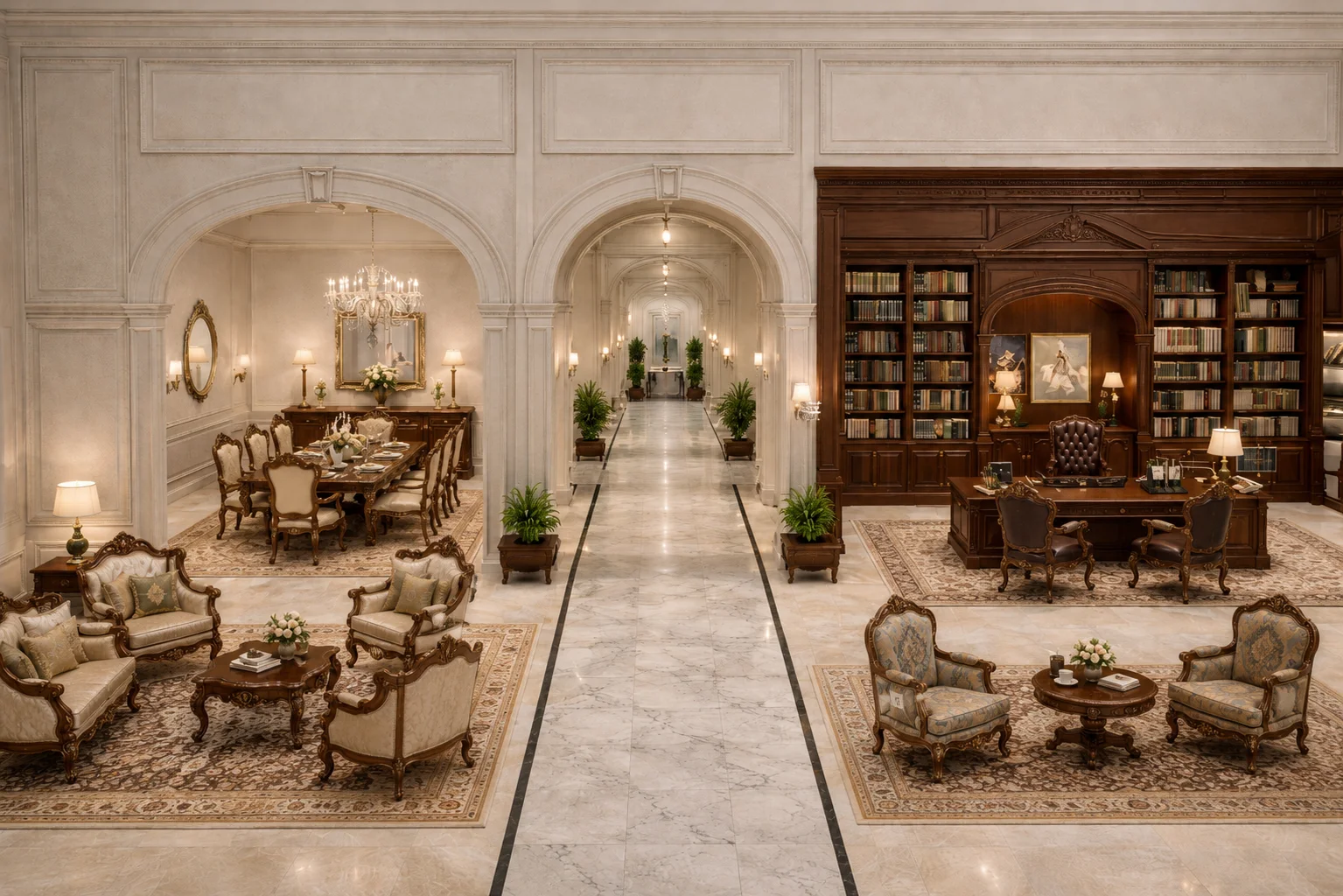
Something profound is shifting inside India's most prestigious villas. The era of importing a foreign aesthetic wholesale — filling sprawling spaces with catalog furniture and off-the-shelf finishes — is quietly giving way to something far more considered, far more personal, and far more enduring.
In 2026, India's most discerning homeowners are asking a different question. Not 'What is fashionable?' but 'What is timeless?' The aspiration is no longer to replicate a European manor or a Maldivian resort. It is to create something that could exist nowhere else — a home that speaks to its owner's identity, heritage, taste, and future.
Across Hyderabad's gated estates, Mumbai's sea-facing mansions, Bengaluru's verdant villa communities, and Delhi's diplomatic enclaves, a new visual language is emerging. It is defined by hand-carved furniture, curated art collections, grand proportions, materials sourced from quarries and forests rather than catalogues, and technology so elegantly concealed that it seems almost magical.
This is not luxury as excess. It is a luxury as an expression. And in India's most remarkable villas of 2026, that expression has never been more sophisticated.
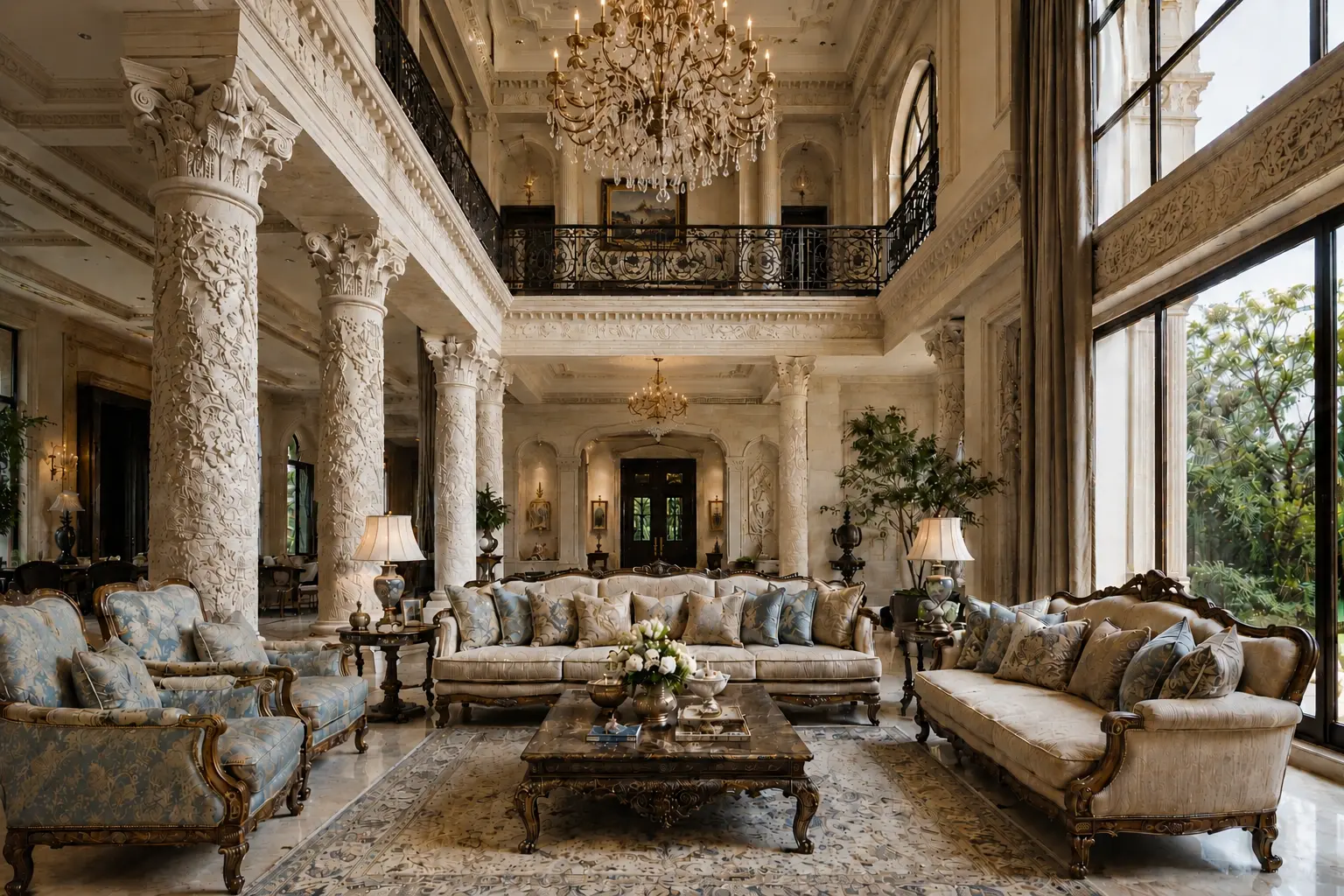
Walk into a new luxury villa in India today, and there is a good chance you will encounter something unexpected: symmetry. Deliberate, architectural, deeply satisfying symmetry. The kind that echoes the great estates of Europe — not in pastiche, but in spirit.
Neo-classical interiors are experiencing a remarkable renaissance among India's high-net-worth homeowners, and for good reason. In a world of ephemeral trends, this design tradition has endured for centuries. It communicates permanence, refinement, and cultural intelligence.
What distinguishes the neoclassical interiors of 2026 from their predecessors is their restraint. These are not rooms drowning in gilded ornament. They are spaces defined by architectural integrity—coffered ceilings with precise geometric paneling, hand-carved marble mantlepieces, fluted pilasters in natural stone, and door architraves of extraordinary craftsmanship.
Decorative moldings are making a particularly strong comeback. Plaster cornices, dado rails, and ceiling roses—executed with technical precision rather than mass-produced mediocrity—are becoming hallmarks of the serious luxury interior. Paired with a restrained palette of ivory, warm greige, and soft charcoal, these elements create rooms that feel both monumental and liveable.
The furniture in these spaces is equally considered. Carved solid-wood consoles with marble tops, upholstered settees in silk damask, and side chairs with cabriole legs are being commissioned from master craftsmen rather than purchased from showrooms. European influence remains strong, but it is filtered through an Indian sensibility that prizes warmth alongside formality.
There is a growing dissatisfaction among India's wealthiest homeowners with imported furniture that arrives in a container, is assembled from components, and is placed identically in 500 other homes around the world. The appeal of exclusivity, once satisfied by the European brand label, now demands something more—true singularity.
Bespoke furniture commissions are rising sharply across India's luxury villa market. Homeowners are working directly with master craftsmen, specialist ateliers, and luxury furniture designers to create pieces conceived specifically for their spaces—their proportions, materials, and aesthetic vision.
This shift carries practical wisdom alongside its symbolic appeal. A bespoke dining table can be designed to seat precisely fourteen guests in the owner's dining room, with legs positioned to avoid seating conflicts. A custom wardrobe can incorporate every storage requirement of its owner without sacrificing a centimeter of visual elegance. A handmade sofa can be upholstered in a fabric woven to commission, in a colorway that exists nowhere else.
The craftsmanship involved in these commissions is itself a source of pride. Many homeowners are beginning to document the making of their furniture—the selection of the timber, the carving of the legs, and the hand-stitching of the upholstery—as part of the story of their home. The piece becomes an heirloom before it is even delivered.
Skilled workshops in Rajasthan, Saharanpur, and increasingly in urban ateliers in Bengaluru and Mumbai are producing furniture of a quality that rivals the finest European makers. The intelligent homeowner of 2026 knows this and is commissioning accordingly.
The formal drawing room, long considered an anachronism in the era of open-plan living, is making a triumphant return to India's most ambitious villas. But this is not the stiff, untouchable parlor of earlier generations. This is a space designed with intent — for conversation, for entertainment, and for making an unforgettable impression.
Double-height living rooms are increasingly prevalent in new villa construction, and interior designers are rising to the challenge they present. The vertical drama of an eighteen-foot ceiling demands a response at human scale—achieved through generous, deeply cushioned sectional seating arrangements; large-format rugs that define conversation zones; and oversized art pieces or architectural features that anchor the eye.
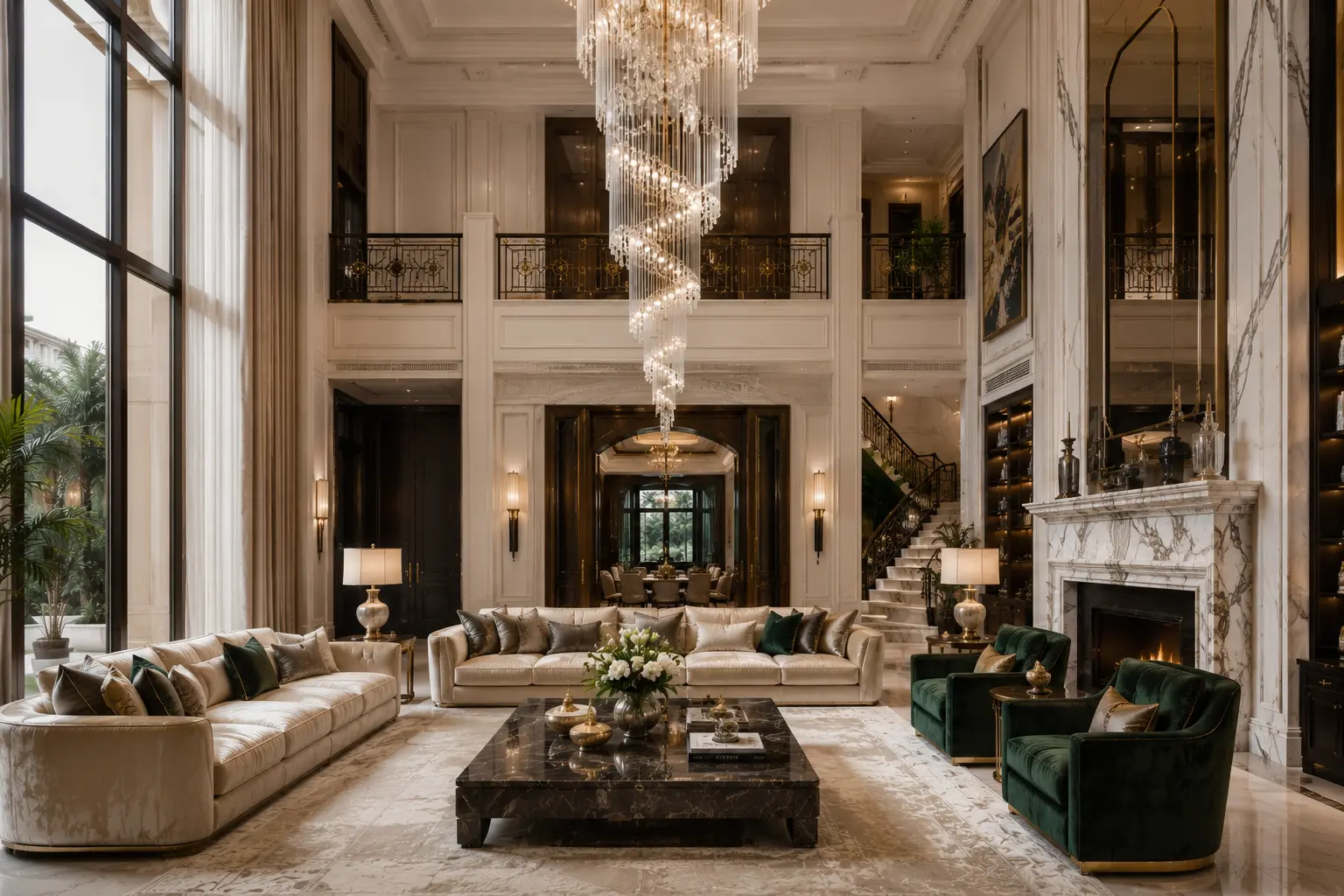
Chandeliers remain the defining moment of the luxury living room. In 2026, the trend is moving decisively towards sculptural, art-driven light fixtures—hand-blown ones. Murano glass arrangements, custom bronze and brass structures, and statement pieces commissioned from Indian and international lighting artists. These are not merely light sources. They are the centerpieces of the room's composition.
Furniture arrangements in grand living rooms are increasingly curated around conversational logic. Multiple seating clusters—a principal sofa grouping, a pair of armchairs by a window, and a games table with its own chairs—allow a room to function simultaneously for intimate dialogue and large gatherings. The best designers in India are approaching these arrangements with the same precision a stage director brings to a theatrical set.
The primary bedroom of a luxury villa in 2026 is no longer a room you sleep in. It is a world you retreat into. The finest villa bedrooms being designed across India this year share an ambition that might once have seemed extravagant: they aspire to the atmosphere of a private palace chamber.
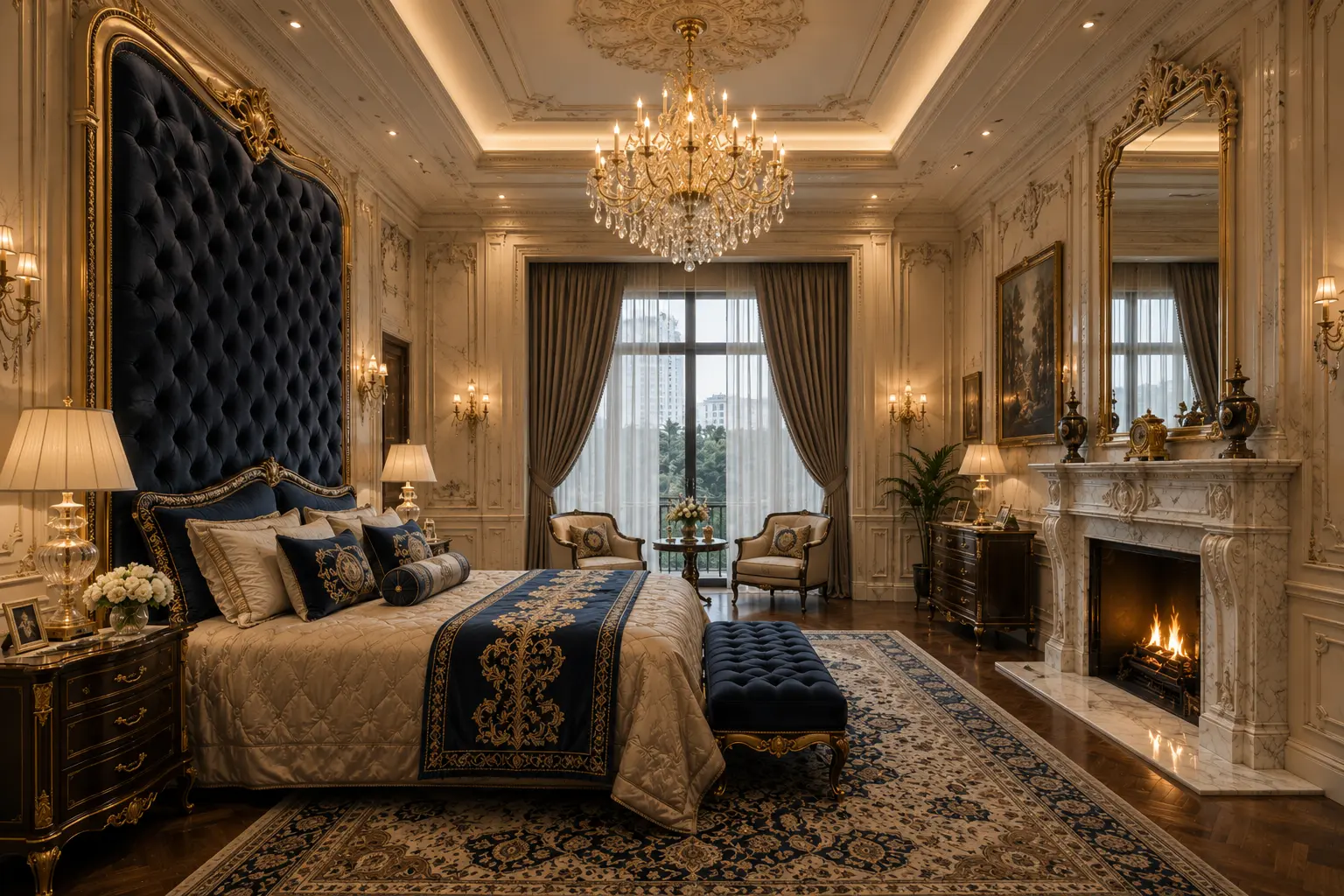
Upholstered headboards of extraordinary scale and craft — tufted in velvet, channel-stitched in linen, or wrapped in hand-embroidered silk — have become the defining architectural element of the luxury bedroom. These are not accessories purchased from a retailer. They are structural interventions, often custom-built to the full height of the wall and spanning five or six feet in width, creating a focal point of irresistible visual weight.
Wall paneling in the bedroom has become equally important. Fabric-upholstered panels, lacquered boiserie in muted tones, and carved plasterwork are replacing paint and wallpaper in the most ambitious interiors. The effect is one of enveloping warmth—a room that embraces rather than merely contains.
Lighting in the luxury bedroom is now conceived in multiple layers. Ambient light from concealed coves or architectural fixtures establishes the overall mood. Task lighting at the bedside is integrated into bespoke nightstands of marble and brass. Accent lighting highlights art, sculpture, or the texture of exceptional materials. The result is a room that transforms completely from morning to evening—cool and energizing at dawn, deeply intimate by night.
For a period, the formal dining room seemed to be disappearing from luxury homes, displaced by kitchen islands and casual breakfast areas. In 2026, it is returning with considerable conviction—and it is returning grander than before.
India's affluent homeowners are rediscovering the pleasure of the formal dining experience. Entertaining at home — rather than at restaurants — has become a marker of elevated social life, and the dining room is its stage. A beautifully set table of twelve, surrounded by exceptional chairs, beneath a chandelier of dramatic presence, within walls of architectural distinction: this is a room that makes every gathering feel like an occasion.
The dining table itself is receiving remarkable attention. Solid marble tops on brass-inlaid bases, hand-lacquered surfaces in rich jewel tones, and live-edge timber tables of exceptional dimension are being commissioned for spaces that demand them. The twelve-seater is the new standard for serious villa dining rooms—comfortable enough to seat a family gathering and grand enough to receive important guests.
Chair design in the luxury dining room has become its own area of expertise. Fully upholstered dining chairs with carved timber frames, leather-wrapped seats with nail-head detailing, and occasional armchairs at the head and foot of the table create a sense of ceremony without sacrificing comfort. The finest examples are custom-commissioned to complement the table and the room's architecture precisely.
There is a tactile revolution underway in Indian luxury interiors. After years of polished concrete, lacquered surfaces, and synthetic materials masquerading as natural ones, the most sophisticated designers and their clients are returning — with passion — to materials that come directly from the earth.
Solid timber is experiencing a particular renaissance. Not veneer, not engineered wood, but genuine solid timber in species of exceptional beauty and durability—teak, walnut, ash, and oak in forms that celebrate rather than conceal the natural grain. These timbers are appearing in panelled walls, carved furniture, flooring of extraordinary width, and architectural joinery of meticulous craft.
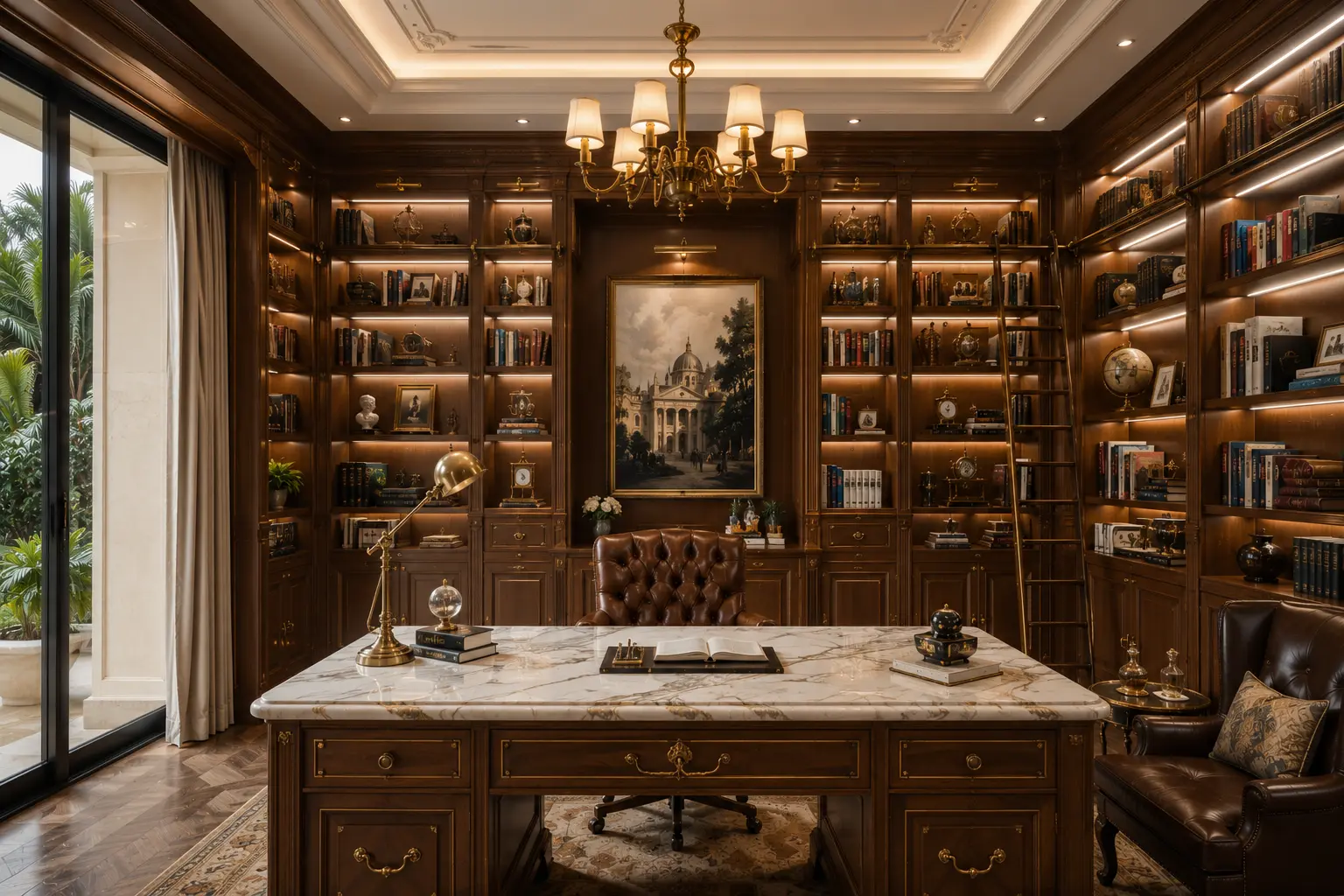
Marble is, if anything, becoming more rather than less important. But the choice of marble has grown more sophisticated. Beyond the familiar Carrara and Calacatta, designers and their clients are exploring Indian marbles — the green of Rajnagar, the rich veining of Makrana, the dramatic black of Karnataka — alongside rare Turkish, Iranian, and Spanish varieties that appear in flagship projects as statement walls, flooring medallions, and sculptural elements.
Brass and bronze have replaced chrome and nickel across much of the luxury market. The warmth of these metals—whether in unlacquered brass that develops a natural patina or in brushed bronze of satin depth—complements natural materials with an authenticity that cooler metals cannot achieve. Hardware, lighting, furniture legs, and architectural detailing: Brass is now the luxury metal of choice.
The hybrid work revolution, initially treated as a temporary disruption, has permanently altered how India's most successful professionals relate to their homes. The luxury home office — once a modest study tucked beside a spare bedroom — has become one of the most invested spaces in the modern villa.
These are not practical rooms dressed in luxury finishes. They are genuine executive environments, designed to project authority and enable focused work simultaneously. A principal desk of substantial proportions—in solid timber or marble, with integrated cable management and bespoke leather accessories—is surrounded by purpose-built shelving that doubles as a backdrop for video calls of distinction.
The private library is making a particularly compelling comeback. Floor-to-ceiling bookshelves filled with curated collections—not merely for display but genuinely read—create an atmosphere of intellectual seriousness that resonates strongly with India's new generation of wealth creators. A rolling library ladder, a deep leather reading chair, a globe of antique character: these are the elements of a room that speaks of a life seriously lived.
Acoustics, climate control, and lighting in the home office are receiving professional-grade attention. Specialist acoustic panels concealed within wall paneling, dedicated HVAC zones, and lighting designed to support concentration and video presence are now standard considerations in villa home office design.
The mark of truly sophisticated smart home integration in 2026 is its invisibility. The days of rooms visually dominated by screens, speaker grilles, and control panels are giving way to an approach where technology serves the inhabitant without asserting its own presence.
Lighting control, climate management, audio distribution, security monitoring, and entertainment systems are now being integrated at the architectural stage rather than retrofitted after completion. This allows speakers to disappear behind grilles that read as decorative moldings, motorized curtain tracks to be concealed within ceiling cavities, and control interfaces to be embedded in walls as barely visible touch surfaces.
Scene-based lighting — where a single command transforms the ambience of an entire floor from 'morning' to 'entertaining' to 'evening' — has moved from novelty to necessity in the luxury villa. The finest implementations are programmed with the same attention to detail that a cinematographer would bring to lighting a film set, with each scene calibrated to the natural light conditions and the activities it supports.
Energy management and sustainability monitoring are increasingly integrated into these systems, reflecting a growing awareness among India's luxury homeowners that the environmental credentials of their home are as important as its aesthetic ones. Technology, in the finest villas of 2026, is the silent servant of an exceptional life.
A luxury villa without art is simply an expensive house. This understanding — long established in the great homes of Europe and America — is now driving serious art collection and curation among India's affluent villa owners.
The distinction being made by the most sophisticated homeowners is between decoration and collection. Decoration fills space. Collection creates meaning. An original canvas by a significant Indian contemporary painter, positioned with precision above a marble console, does not merely fill a wall—it starts a conversation about taste, about cultural values, and about the owner's relationship with creativity.
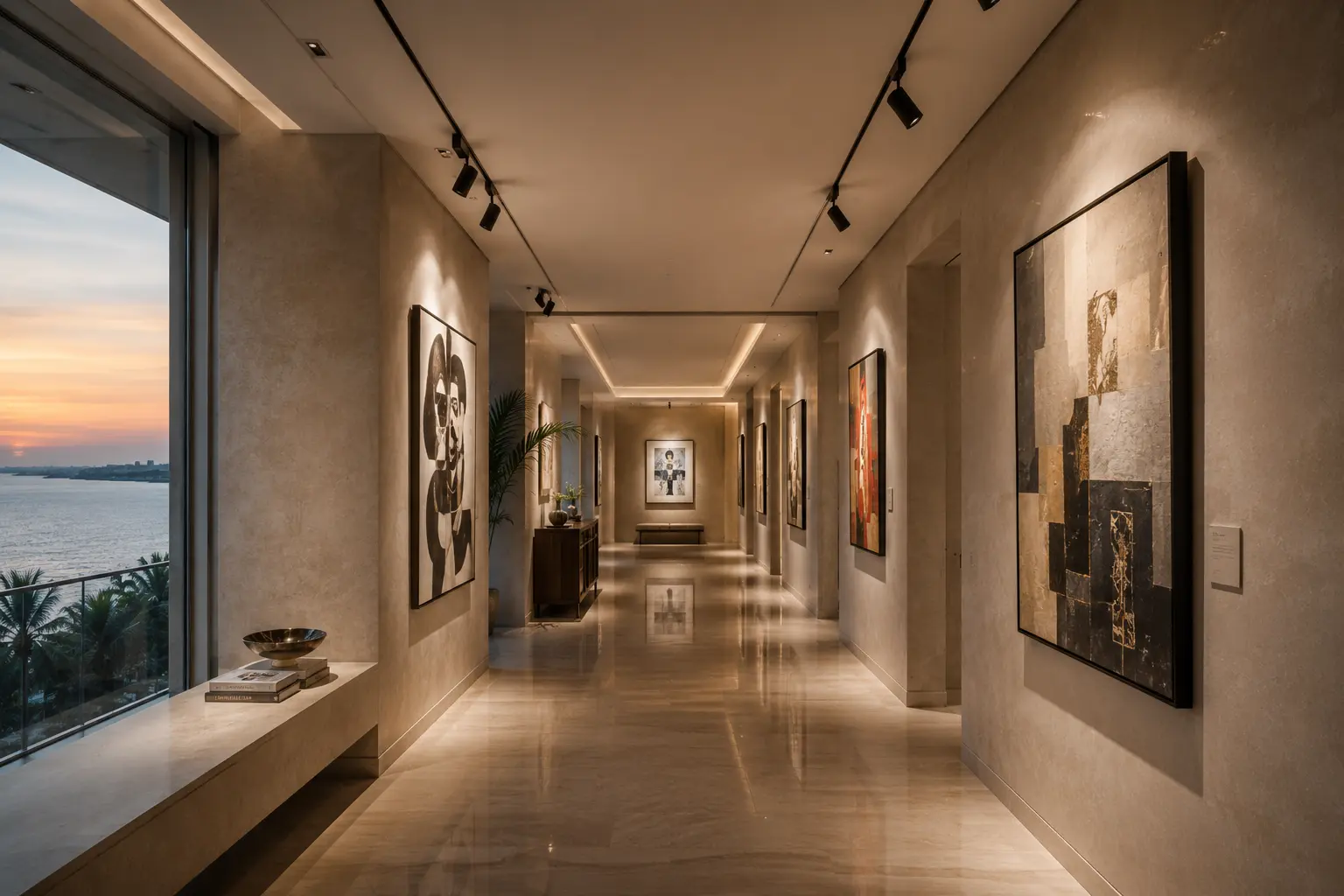
Sculpture is playing an increasingly important role in India's luxury interiors. Bronze figures on plinths of black granite, marble abstractions in alcoves lit with museum-quality precision, and ceramic works of exceptional craft placed on custom-designed stands: sculpture creates three-dimensionality and narrative in a room that no painting can fully achieve.
Heritage-inspired decorative objects are also gaining currency. Antique brass vessels, carved stone pieces of historical origin, hand-knotted rugs of provenance and age, and pieces of exceptional craft from India's extraordinary artisanal traditions are being incorporated into contemporary luxury interiors with growing confidence. The result is not nostalgia but depth — rooms that feel as though they have been assembled over a lifetime rather than installed in a week.
The boundary between interior and exterior in India's finest villas is dissolving—deliberately, beautifully, and with careful architectural intent. Outdoor spaces are no longer afterthoughts or maintenance obligations. They are conceived from the earliest design stage as integral extensions of the living area, receiving the same investment in furniture, lighting, landscaping, and material quality as any room within the house.
The covered terrace has become the most prized outdoor space in the luxury villa. Furnished with weather-resistant upholstered seating of interior quality, defined by outdoor rugs of exceptional texture, illuminated by decorative pendants and integrated architectural lighting, and serviced by outdoor bars and kitchens of professional specification, these spaces function as open-air drawing rooms for ten months of the year.
Poolside environments in luxury villas are being designed with resort-level ambition. Sun loungers of substantial comfort and visual elegance, shade structures of tensile fabric or teak pergola construction, and poolside daybeds large enough for a family to gather on—these are outdoor spaces that compete on equal terms with the finest hotel pools in Asia.
Garden entertainment zones—terraces for outdoor dining, fire-pit seating areas for evening gatherings, and landscaped gardens designed with as much horticultural sophistication as artistic intent—are completing the outdoor picture. The finest villa landscapes of 2026 are as carefully curated as the rooms within the walls.
For homeowners embarking on a luxury villa interior project, the following principles — distilled from the work of India's finest designers — provide a foundation for decisions that will endure.
Invest in craftsmanship before decoration
The investment hierarchy should always run: architecture first, materials second, craftsmanship third, and decorative accessories last. A room with extraordinary plasterwork and modest furnishings will always be more elegant than a room with cheap finishes and expensive accessories.
Commission bespoke before buying off-the-shelf
Before purchasing imported furniture, explore what a skilled Indian craftsman or specialist atelier can create for the same or lesser investment. The result will be singular, better suited to the space, and will carry a story that no catalog product can match.
Choose materials for their longevity, not their novelty
Solid timber, natural stone, hand-finished plaster, and quality metals age with beauty. Synthetic materials, trendy finishes, and fast-fashion furniture do not. The most economical choice in a luxury interior is always the highest-quality material available.
Prioritise cohesion over accumulation
A luxury interior is not defined by how many beautiful things it contains but by how beautifully they relate to one another. Engage a skilled interior designer to establish a cohesive vision from the outset—and resist the temptation to deviate from it in favor of individual impulse purchases.
Plan technology before construction
Smart home integration is infinitely more elegant — and vastly less expensive — when planned at the architectural stage. Retrofitting technology into a completed interior always compromises either the technology's effectiveness or the interior's appearance. The two must be designed together.
Looking ahead to the second half of this decade, several trajectories are already visible in the conversations between India's leading architects, interior designers, and their clients.
Personalization will deepen further. The aspiration to create a home that is uniquely and irreducibly one's own—not a version of something that exists elsewhere—will drive increasing investment in bespoke commissions, in art acquisition, and in design processes that begin with the homeowner's biography rather than a mood board.
Sustainable luxury will move from aspiration to expectation. India's new generation of affluent homeowners is educated, globally informed, and increasingly unwilling to accept environmental indifference as the price of visual beauty. Locally sourced materials, responsible forestry, energy-efficient systems, and the restoration of traditional craft skills — which are themselves a form of cultural sustainability — will all become baseline requirements rather than optional credentials.
Heritage will continue to assert its importance. India's extraordinarily rich tradition of architecture, craft, textile, and decorative art—across dozens of regional traditions—offers a depth of inspiration that designers are only beginning to explore seriously. The villas of the late 2020s will be more distinctly, more proudly Indian than any generation of luxury homes before them.
And throughout all of this, craftsmanship will remain the essential constant. In an age of mass production, digital reproduction, and artificial intelligence, the handmade object—the carved stone, the woven textile, the hand-stitched leather—will become more rather than less precious. The homes that endure, that become the great houses of their generation, will be built on the work of human hands guided by exceptional skill.
The trends shaping Indian luxury villa interiors in 2026 share a single underlying conviction: that genuine luxury has nothing to do with price tags and everything to do with intention. A neoclassical ceiling executed with precision. A dining table commissioned from a master craftsman. A bedroom that wraps its occupant in extraordinary materials and perfect light. A garden that rewards contemplation.
These are not fashion statements. They are positions — on what a home is for, on what beauty means, and on what endures. The villas being created by India's most thoughtful homeowners and skilled designers in 2026 will be as magnificent in twenty years as they are today. That, in the end, is the only test that matters.
True luxury, as the finest homes of every era have always demonstrated, is not what is fashionable. It is what is timeless.
Neo-classical design is currently the most sought-after style in India's luxury villa market. It combines European architectural grandeur—symmetrical layouts, decorative moldings, carved furniture, and classical proportions—with the warmth and material richness that suits India's climate and cultural sensibility. It offers the permanence and prestige that discerning homeowners seek.
Imported furniture from global luxury brands, while of high quality, is inherently non-exclusive — the same pieces appear in homes across the world. Bespoke furniture, commissioned from skilled craftsmen or specialist ateliers, is created specifically for a space and its owner. It offers true singularity, perfect proportions, and the satisfaction of ownership over something that exists nowhere else. For India's most discerning homeowners, this distinction has become central to their definition of luxury.
The golden rule is to plan technology integration at the architectural stage, before construction begins. This allows speakers, lighting controls, motorized systems, and climate management to be embedded within walls, ceilings, and floors rather than applied to their surfaces. The best smart home integrations in luxury villas are nearly invisible—their presence known only through the seamless control they provide over the home's environment.
Solid timber—particularly teak, walnut, and oak—is experiencing a strong revival alongside natural stone in marble varieties that include both international classics such as Calacatta and exceptional Indian stones from Rajasthan and Karnataka. Brass and bronze are the dominant metals, bringing warmth to hardware, fixtures, and furniture legs. Hand-finished plaster walls and natural fiber textiles complete the palette of materials that characterize the finest interiors of 2026.
Interior investments in India's luxury villas typically range from ₹3,000 to ₹10,000 per square foot for high-end projects, with ultra-luxury commissions—involving extensive bespoke furniture, rare materials, significant art acquisitions, and advanced home automation—exceeding this range considerably. The most important principle is to invest according to a clear hierarchy: architectural quality and craftsmanship first, bespoke furniture second, and decorative accessories last.
