Top Luxury Villa Interior Trends in India 2026
The New Language of Indian Luxury Something profound is shifting inside India's most prestigious vi...

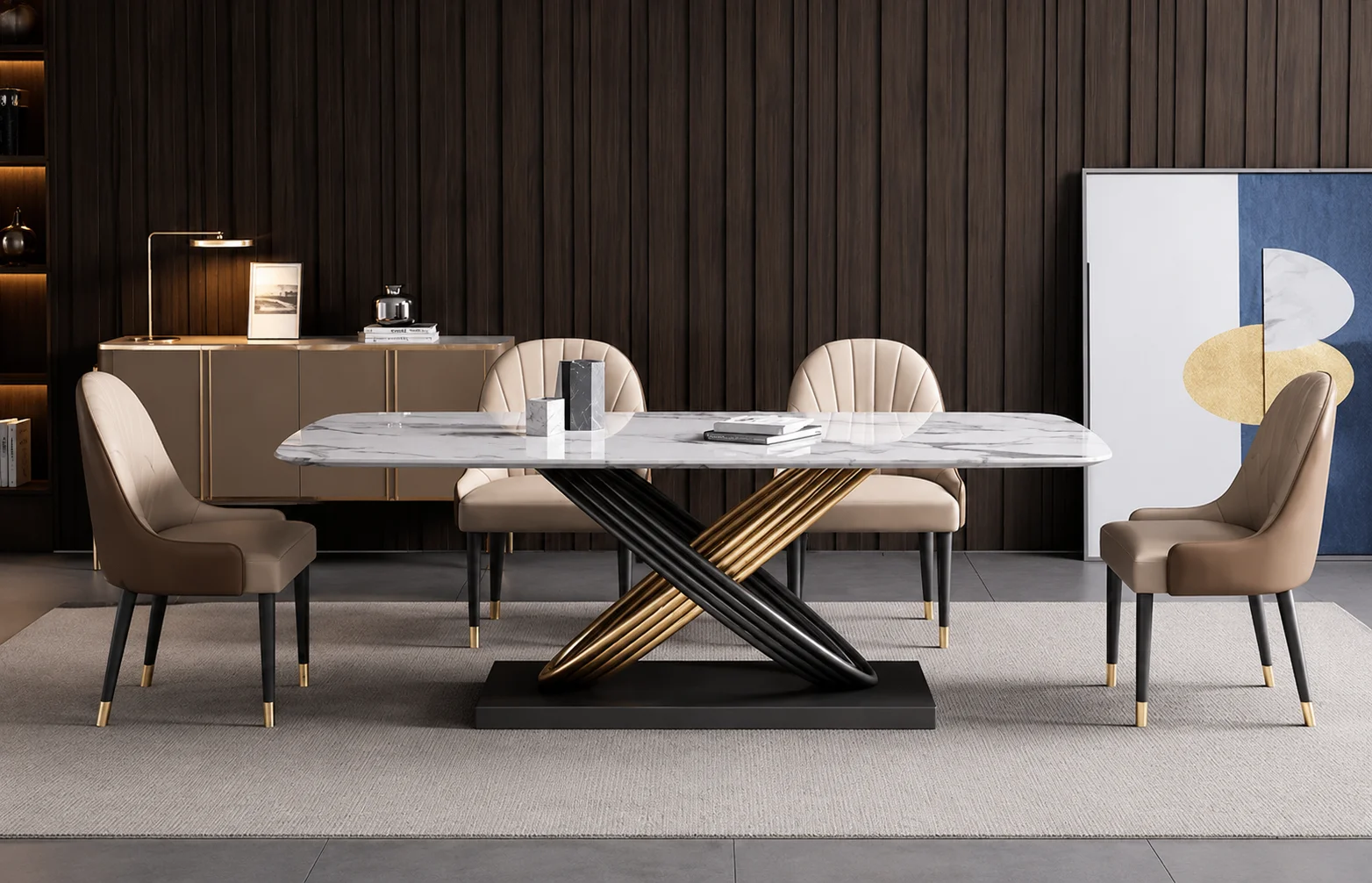
Ask any host who has thrown a dinner party in a room that felt wrong, and they will tell you the food had nothing to do with it. Guests bunched at one end of a table too long for the group. Someone's chair backed into a doorway every time they stood up. A marble top so cold and reflective that candlelight scattered instead of glowing. None of that gets fixed by better cooking.
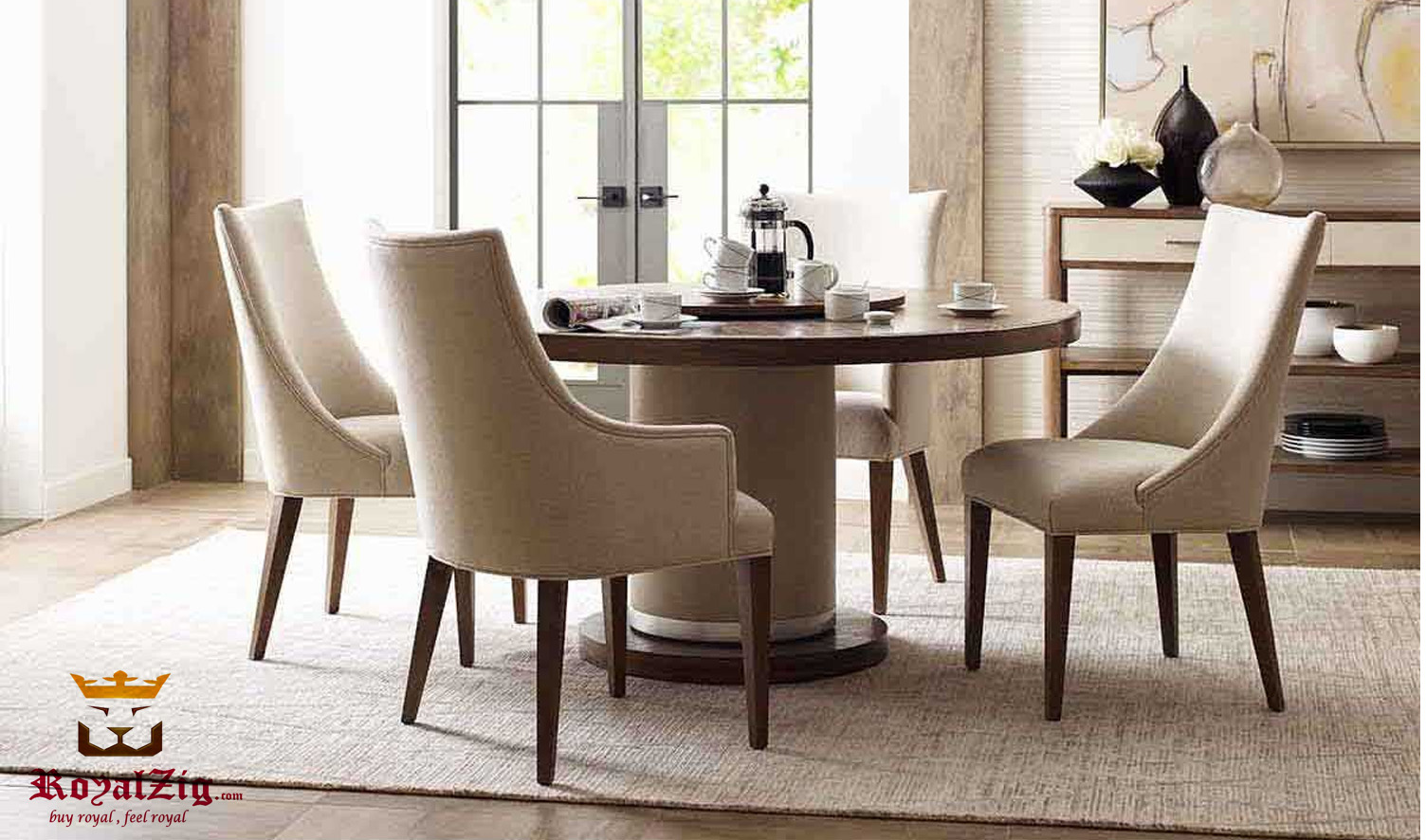
A dining table is furniture doing the work of an event planner. It decides how close people sit, how loudly they can talk to the person across from them, and whether the room feels like a boardroom or a gathering. Modern dining tables — built around cleaner geometry, mixed materials, and proportions suited to contemporary Indian homes — have become the default choice for exactly this reason. They flex. A round modern table in walnut and brushed brass reads completely differently at a family breakfast than it does dressed for twelve guests on Diwali night.
This guide walks through what actually separates a genuinely well-made modern dining table from one that simply looks the part in a catalog photo and how to size, shape, and material-match one correctly for an Indian home, villa, or hospitality project.
The material of the tabletop does more work than any other single decision in this piece.
Solid teak or walnut remains the standard for good reason in Indian homes. It handles humidity swings far better than most imported hardwoods, ages with a warmth that glass and marble cannot replicate, and takes a clean modern edge just as well as a carved traditional one. A book-matched grain pattern across a large teak top is, on its own, one of the most striking things a modern dining table can offer.
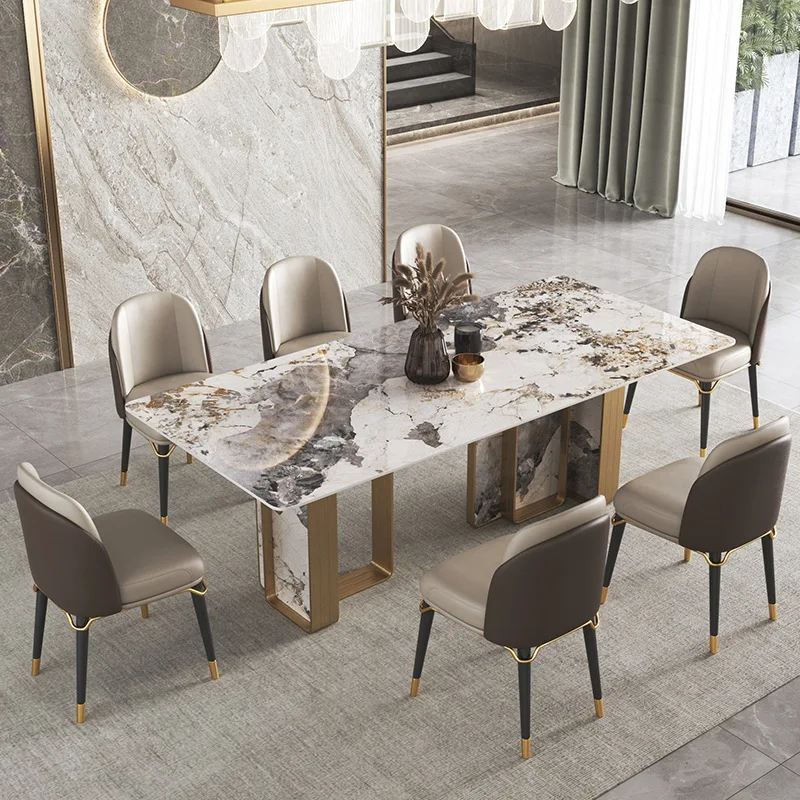
Italian marble brings a cool, reflective luxury that photographs beautifully and resists heat and staining better than most people expect, provided it is properly sealed. Its weight, however, is real — a large marble-top table generally needs a steel or reinforced wood base, and the floor beneath it should be checked for load capacity in upper-story installations.
Tempered glass opens up a room visually, which matters in smaller Indian apartments and dining nooks where a solid heavy top can make the space feel more closed in. It shows fingerprints constantly, which is worth knowing before committing to it for a household with young children.
Brushed steel and mixed-metal bases paired with a wood or stone top have become the signature look of the contemporary Indian dining table—golden or antique-bronze steel legs beneath an Italian marble or teak top is currently one of the most requested combinations we see from architects and interior designers alike.
Consultant's tip: if you are choosing between two finishes and cannot decide, choose based on your climate more than the photograph. A high-gloss lacquer top looks sensational in a showroom and shows every water ring within a week in a humid coastal home.
A table shape should answer to the room it sits in before it answers to what looks fashionable this year.
| Shape | Best Suited To | What It Does Well |
|---|---|---|
| Rectangular | Long, formal dining rooms | Seats the most people efficiently; strong sightlines down the table |
| Round | Square rooms, smaller dining nooks | Encourages conversation across the whole table; no "head" of the table hierarchy |
| Oval | Transitional spaces between formal and casual | Softens a room's corners and seats nearly as many as a rectangle |
| Extendable | Homes that entertain occasionally but dine small daily | Adapts from an intimate four-seat table to a twelve-seat gathering table |
| Square | Compact apartments, breakfast nooks | Efficient use of tight square footage; intimate for four |
Rooms with strong architectural symmetry—a chandelier centered on the ceiling and matching windows on either wall—almost always call for a rectangular or oval table that respects that axis. Rooms with awkward proportions or an off-center light fixture often look better with a round table, since it does not force a false sense of alignment the room does not actually have.
This is where most dining table purchases go wrong — not the style, but the math. A table bought purely by seat count, without checking the room, routinely ends up too large for comfortable circulation.
| Seating | Approx. Table Length | Minimum Room Width Needed |
|---|---|---|
| Modern Dining 4 Seater | 4.5 – 5 ft | 9 – 10 ft |
| Modern Dining 6 Seater | 6 – 6.5 ft | 11 – 12 ft |
| Modern Dining 8-Seater | 7.5 – 8 ft | 13 – 14 ft |
| Modern Dining 8+ Seater | 9 – 9.5 ft | 15 – 16 ft |
| Modern Dining 12+ Seater | 10.5 ft+ | 17 ft+ |
Leave at least 36 inches of clearance between the table's edge and the nearest wall or furniture and closer to 42–48 inches on the side where chairs need to be pulled out and walked past regularly. This single measurement is the one architects and interior designers check first and the one homeowners most often skip.
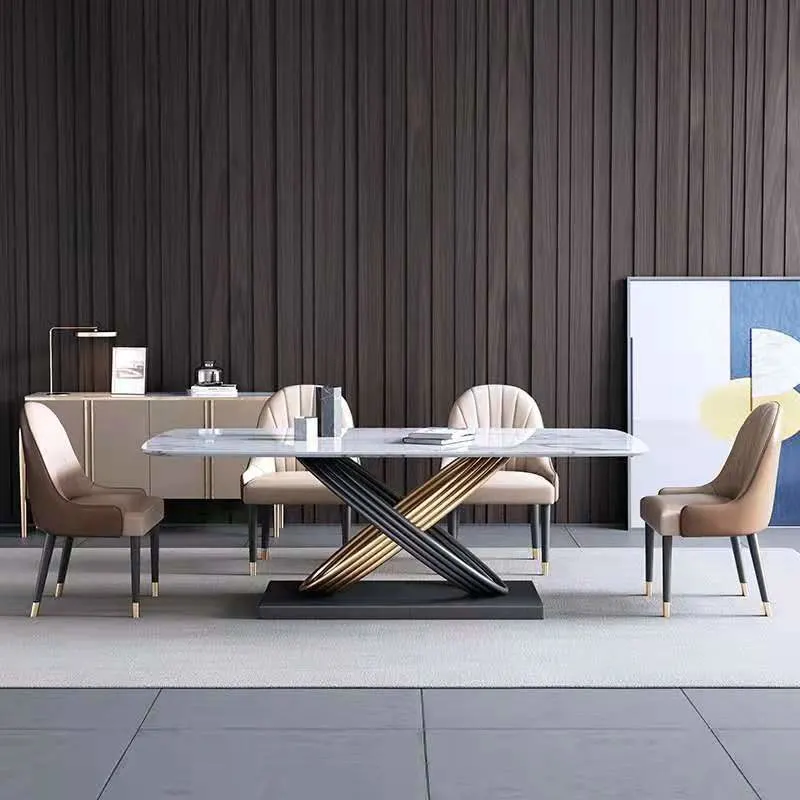
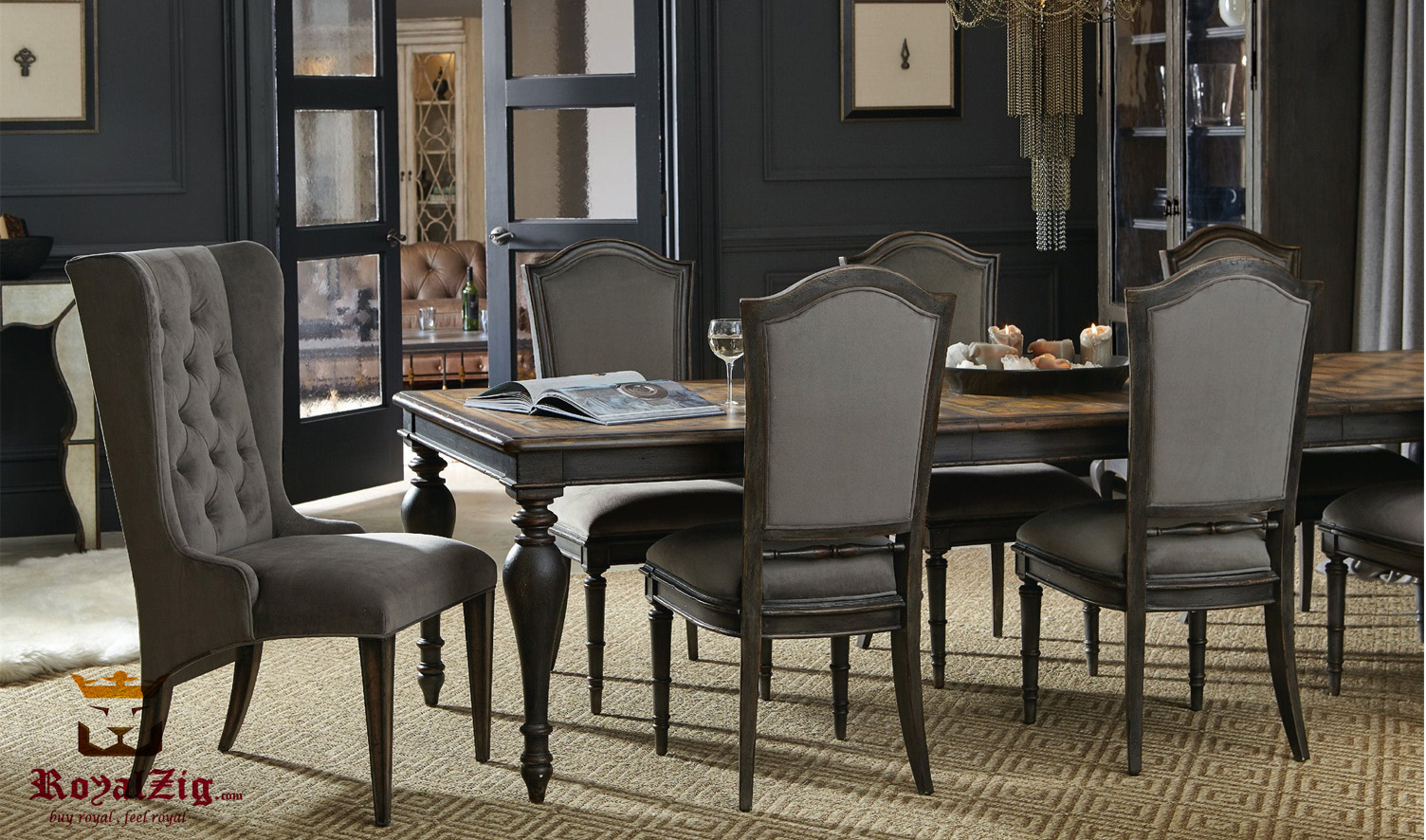
A striking table with mismatched or poorly chosen chairs undercuts the whole room. A few practical guidelines:
Standard table sizes are built around standard rooms, and very few luxury Indian homes are standard. Custom commissioning lets you specify:
For hospitality and restoration projects especially, custom sizing is close to mandatory—a heritage hotel's dining hall rarely matches any standard seater configuration on the market.
Every modern dining table we build starts from a conversation about the room, not a catalog number—its dimensions, its light, how the household actually uses it day to day versus for entertaining. Tops are built from solid, properly seasoned teak or sourced Italian marble, paired with steel or wood bases finished to match a client's existing interior rather than forced into a fixed set of options.
Because most of our dining tables are made to order rather than pulled from stock, sizing, seat count, base finish, and upholstery are all genuinely customizable—which matters enormously for villa dining rooms, open-plan spaces, and hospitality projects that rarely fit a standard seater configuration. We also manage delivery and on-site assembly for larger tables, so an eight-plus-seater arrives ready for its first dinner rather than left as a logistics problem for the household.
A room of that size comfortably fits a 6- to 7.5-foot rectangular or oval table seating six to eight people, provided at least 36 inches of clearance is left on all sides for chairs and movement.
Both work well if chosen correctly for the household. Solid teak handles humidity and daily wear more forgivingly and needs less specialized maintenance, while properly sealed Italian marble offers a cooler, more reflective luxury look but is heavier and needs more careful care against staining.
Round tables suit square rooms and encourage more even conversation across the group, while rectangular tables seat more people efficiently and suit longer, more formal dining rooms with a clear architectural axis.
Yes, extendable mechanisms can be custom-built into the table's frame, allowing it to expand from an everyday four-to-six-seat table to a much larger gathering table when needed.
Leave a minimum of 36 inches between the table's edge and the nearest wall or furniture, increasing to 42–48 inches on the side where chairs are pulled out from most frequently.
Yes, tempered glass tops show fingerprints and light scratching more readily than wood or marble, which is worth factoring in for households with young children or heavy daily use.
Yes. Base material, top finish, upholstery fabric and color, and overall dimensions can all be customized to match an existing room rather than be fitted from a fixed standard collection.
Custom orders typically take four to eight weeks depending on size, material sourcing for marble tops, and any extension mechanisms or bespoke finishing requested.
A dining table outlasts almost every other piece of furniture in a home, simply because of how often it gets used. Chosen well—the right shape for the room, a material suited to the climate, and sizing that actually accounts for how people move around it—it becomes the piece a family gathers around without thinking twice. Chosen poorly, it becomes the piece everyone quietly works around for years.
Give the decision the attention a piece used every single day actually deserves, and it will return the favor for a very long time.
