Top Luxury Villa Interior Trends in India 2026
The New Language of Indian Luxury Something profound is shifting inside India's most prestigious vi...

.jpg)
Long before the word "statement piece" existed in an interior designer's vocabulary, Indian royal courts already understood the idea perfectly. A Maharaja's seat was never just furniture. It was a public declaration — of lineage, of victory, of the animals and myths a ruler wanted associated with his name. Lions for courage. Elephants for strength and prosperity. Peacocks and swans for grace. Every carved creature on a royal seat was doing political work as much as decorative work.
The Maharaja sofa carries that same instinct into a modern home. It is, without question, the boldest piece a living room can hold — a hand-carved teak frame, a crowned backrest, winged armrests that curl outward like the prow of a royal barge, all of it wrapped in jacquard fabric heavy enough to hold its own against the carving surrounding it. Put one in a room, and every other piece of furniture becomes supporting cast.
This is not a sofa for a minimalist apartment or a quiet corner. It is for entrance halls in palace-style villas, for hotel lobbies that want guests to stop walking the moment they see it, and for restoration projects trying to recapture what a durbar hall actually felt like. Understanding what makes one genuinely well-made — rather than simply gilded and gold-colored — is the difference between owning a showpiece and owning a costume.
Strip away the ornamentation, and a genuine Maharaja sofa is built around a few non-negotiable design elements, each carrying its own history.
The crowned crest. Nearly every authentic Maharaja sofa carries a raised, carved crest at the center of the backrest—historically a symbol of sovereignty, now the piece's visual anchor. The quality of this single carving usually tells you everything about the skill of the workshop that made the rest of the piece.
The mythological or figurative base. Many Maharaja sofas rest visually on a carved figure—a deity, a mythological guardian, sometimes a stylized lion or elephant—bearing the piece's weight both structurally and symbolically. This is where a master carver's real skill shows, since the proportions have to read correctly from every angle in the room.
Winged, boat-shaped armrests. The curling armrests, often carved to resemble the prow of a ceremonial barge or boat, are functionally an armrest and visually a flourish—undraped leaf motifs, scrollwork, and sometimes small carved birds finished in gold frequently run along their length.
Deep relief animal carving. Lions, elephants, peacocks, and swans appear across the frame, each with its own traditional meaning in Indian royal iconography and each requiring a different carving technique to render convincingly—an elephant's weight reads very differently in wood than a peacock's feather detail does.
Jacquard or brocade upholstery. The fabric has to hold its own visual weight against this much carving. Thin or flat upholstery makes an otherwise excellent frame look unfinished; a proper Maharaja sofa uses a fabric with its own texture and pattern depth—jacquard, brocade, or a heavy velvet in royal tones.
Experience the regal allure of Royalzig's maharaja-style Indian classical sofa set, a testament to traditional elegance and impeccable craftsmanship. Crafted from premium wood, each design embodies royal sophistication. The royal jacquard fabric features intricate patterns and complex motifs, showcasing the artisans' mastery and attention to detail. The crown, adorned with exquisite wood carvings, reflects the essence of royal grandeur, courage, bravery, and beauty.
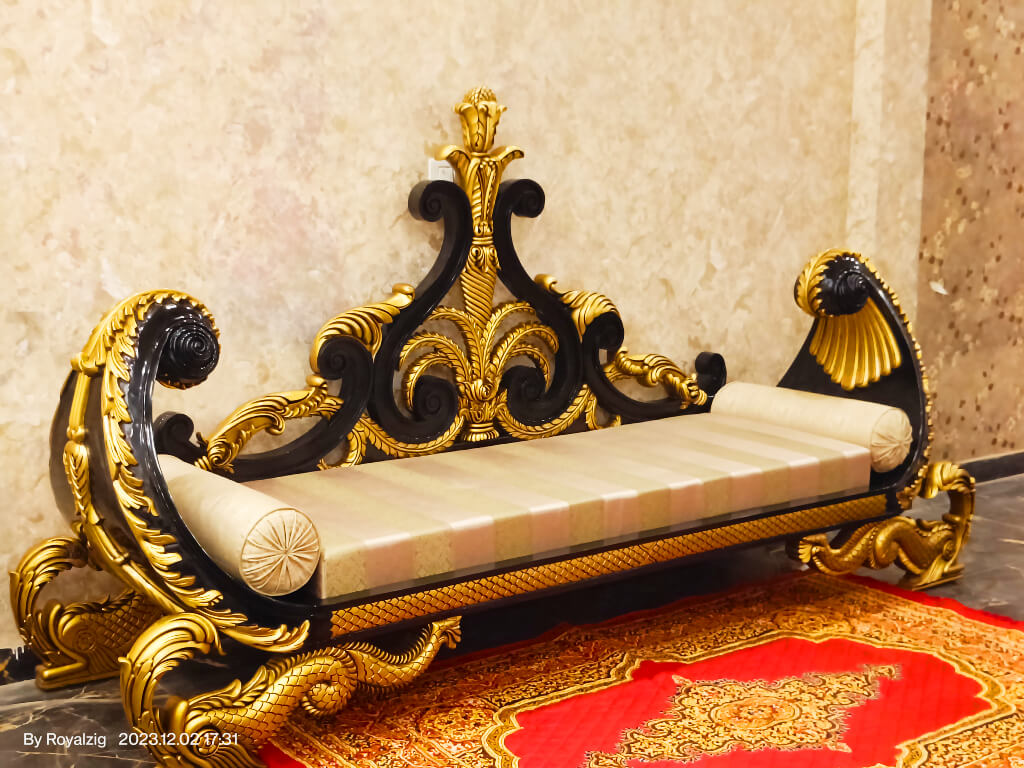
A piece this commanding needs the right stage, or it fights every other object around it.
Grand entrance halls and durbar-style living rooms are the natural home—spaces already built around a single focal point, where the sofa can be approached from a distance and admired before anyone sits down.
Palace restoration and heritage hotel projects use Maharaja sofas almost as functional art, often placed where they will be seen rather than sat in daily, with lighting designed specifically to catch the gold detailing.
Hotel and resort lobbies in the luxury and heritage segment increasingly commission custom Maharaja seating as a signature guest-facing piece—something photographed at check-in more often than it's actually used.
Where it does not belong is a small, low-ceilinged room, or anywhere it will be crowded by other ornate furniture. This piece needs negative space around it—a plain wall behind, a clear sightline from the entrance—to actually be seen rather than just present.
Design note: We generally advise clients to build the room's lighting plan around the sofa's crest and armrest carving specifically. A single well-placed accent light across the crown does more to make the piece feel regal after dark than any amount of surrounding decor.
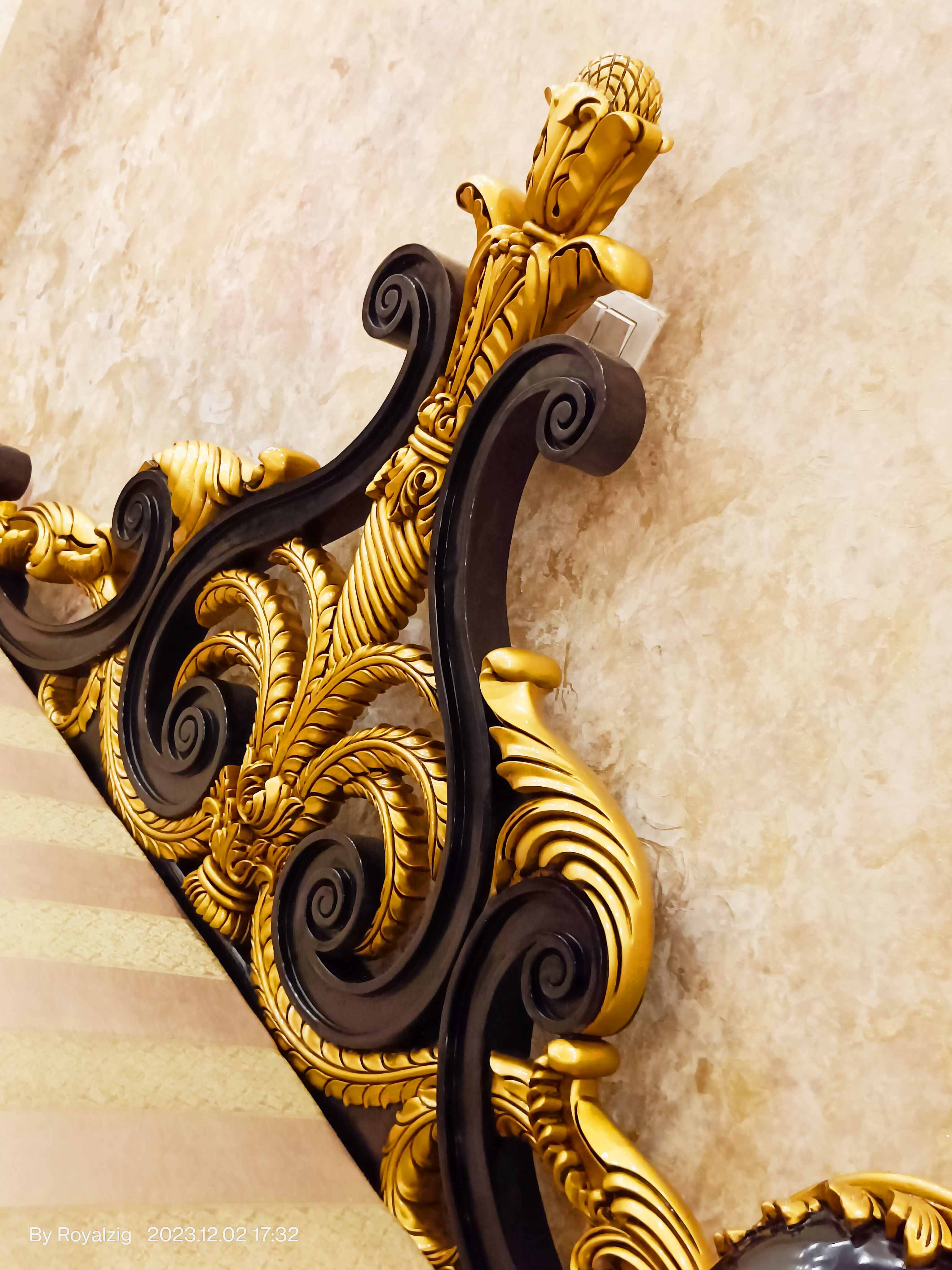
A Maharaja sofa is, structurally, one of the most demanding pieces a workshop can produce. The figurative base alone—carving a mythological figure or animal form that has to bear real structural load while still reading correctly as art—can take a senior artisan several weeks on its own, before the crest, armrests, and frame detailing even begin.
This is not a piece that tolerates shortcuts. A CNC router can rough out repetitive scrollwork reasonably well. Still, it cannot carve a lion's musculature or a peacock's feather layering with the organic variation that makes the animal look alive rather than stamped. Every genuinely fine Maharaja sofa we have seen or made carries small asymmetries between its left and right carved sides — not flaws, but proof that a human hand, working by eye, made both sides independently.
| Consideration | What to Look For |
|---|---|
| Wood | Solid seasoned teak, not veneer over composite — check weight and grain at the base |
| Crest carving | Distinct raised relief with clean, deep undercuts, not a flat stamped pattern |
| Figurative base | Proportional to the frame; details in the face, mane, or feathers should be legible, not blurred |
| Upholstery | Jacquard, brocade, or heavy velvet — thin fabric under-serves the carving |
| Gold detailing | Gold leaf or high-quality gilt paint applied selectively to raised areas, not flooded across the whole piece |
| Finish | Even sheen across carved and flat surfaces, no visible tool marks in unintended places |
Because a Maharaja sofa is almost always a commissioned rather than off-the-shelf purchase, customization is the norm rather than the exception. Buyers typically work through a handful of decisions with the workshop:
A genuine workshop conversation about a Maharaja sofa usually starts with the room itself — its scale, its light, and what else will surround the piece — rather than with a catalog photo, since so much of the impact depends on how the sofa is set into its space.
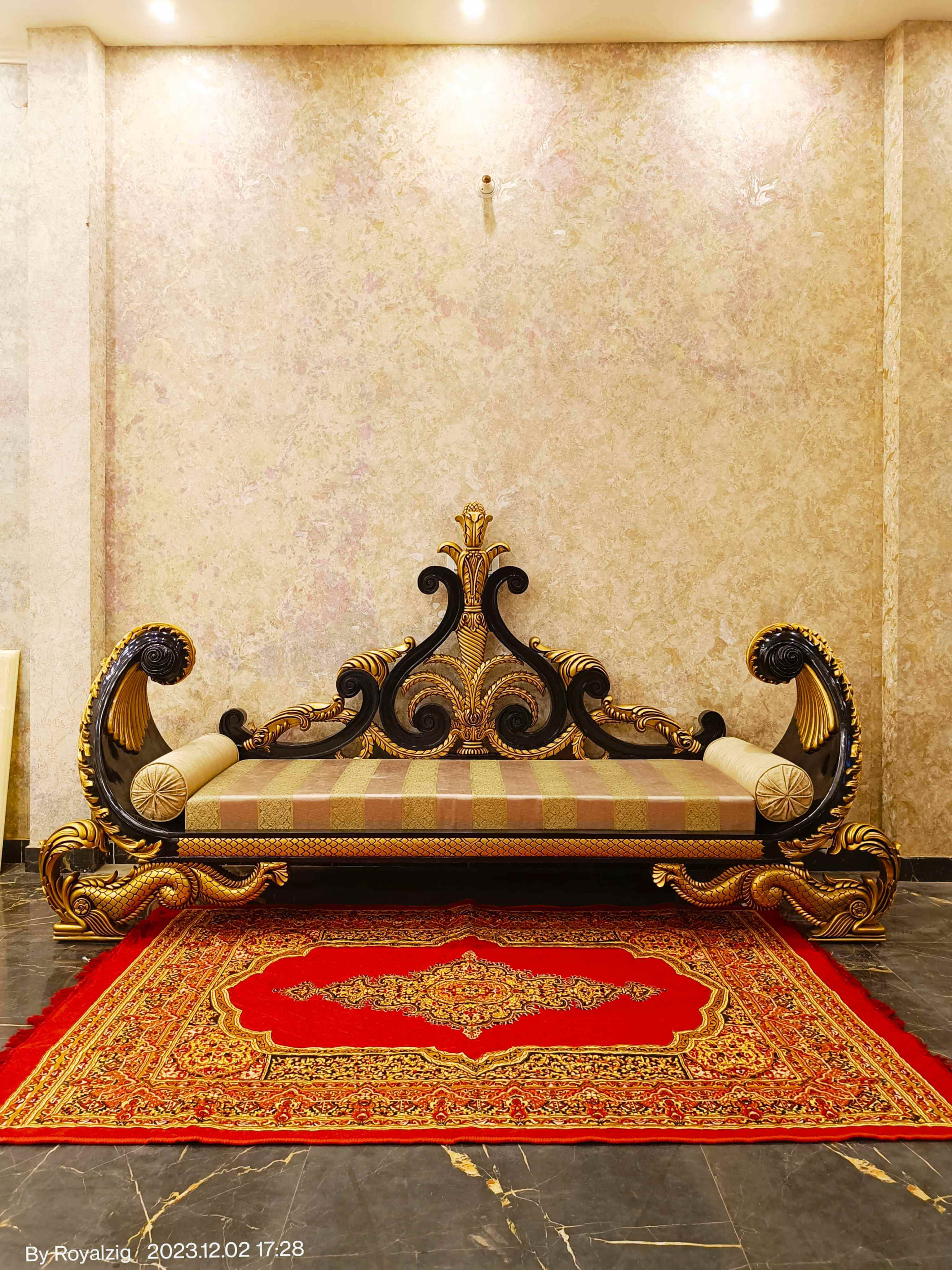
Because these pieces combine deep carving, gilding, and heavy upholstery, they ask for slightly more attentive care than simpler furniture.
Properly cared for, a hand-carved Maharaja sofa in solid teak is built to remain a centerpiece for generations, not a piece that needs replacing as trends shift.
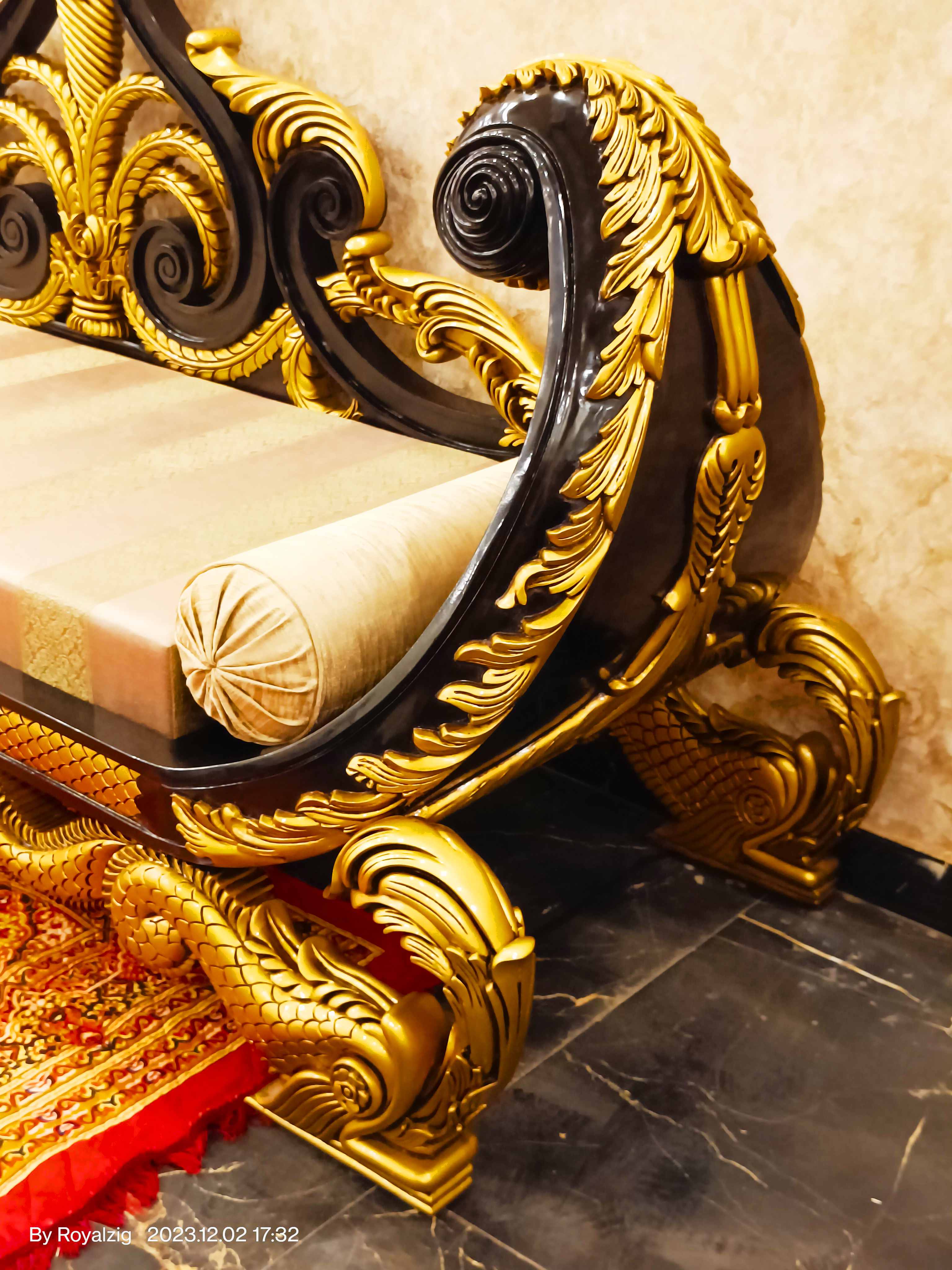
Trends in furniture design move quickly, and most of what feels current today will feel dated within a decade. A Maharaja sofa was never trying to feel current in the first place. It draws from a design language centuries old, built specifically to project permanence—which is exactly why it still works in the most serious, considered interiors being built in India and abroad today.
Commissioning one is not a small decision, and it should not be treated like one. Done properly, with real hand-carving, honest materials, and a fabric worthy of the frame beneath it, a Maharaja sofa becomes the piece a home is remembered for—the one guests photograph, the one a family passes down, the one that still looks like it belongs to royalty a hundred years from now.
This majestic sofa can be customized in size, color, fabric, and finishing to gold-leaf gilding.
For more information & to discuss customization, contact us.
A Maharaja sofa follows a specific design vocabulary rooted in Indian royal courts — a crowned crest, winged boat-shaped armrests, a carved figurative base, and deep relief animal motifs like lions, elephants, peacocks, and swans. typically finished with gold detailing and rich jacquard or brocade upholstery.
Given the complexity of the figurative carving and crest work, a genuine hand-carved Maharaja sofa typically takes several weeks to a few months, depending on size, the depth of carving requested, and the level of gilding involved.
Yes. Size, seating capacity, fabric choice and color, gilding level, and specific carved motifs can all be customized to the buyer's room and preferences, which is standard practice for a commissioned piece like this.
Well-built examples are genuinely functional seating, not just display pieces, though most owners position them as a statement piece in an entrance hall or formal living space rather than for daily lounging.
Each animal carries traditional symbolism in Indian royal iconography—lions represent courage, elephants represent strength and prosperity, and peacocks and swans represent grace and beauty—together forming a visual language once used to communicate a ruler's virtues.
Avoid direct handling of gilded areas, since oils from skin contact dull gold leaf gradually, and keep the piece out of direct sunlight, which fades both the gilding and the upholstery unevenly over time.
Grand entrance halls, formal or durbar-style living rooms, and hotel or heritage-property lobbies suit it best—spaces with enough scale and negative space around the piece for its carving and crest to actually be seen.
Yes, international shipping is available for clients furnishing homes or properties outside India, though lead times run longer to account for the custom carving process and freight scheduling.
