Top Luxury Villa Interior Trends in India 2026
The New Language of Indian Luxury Something profound is shifting inside India's most prestigious vi...

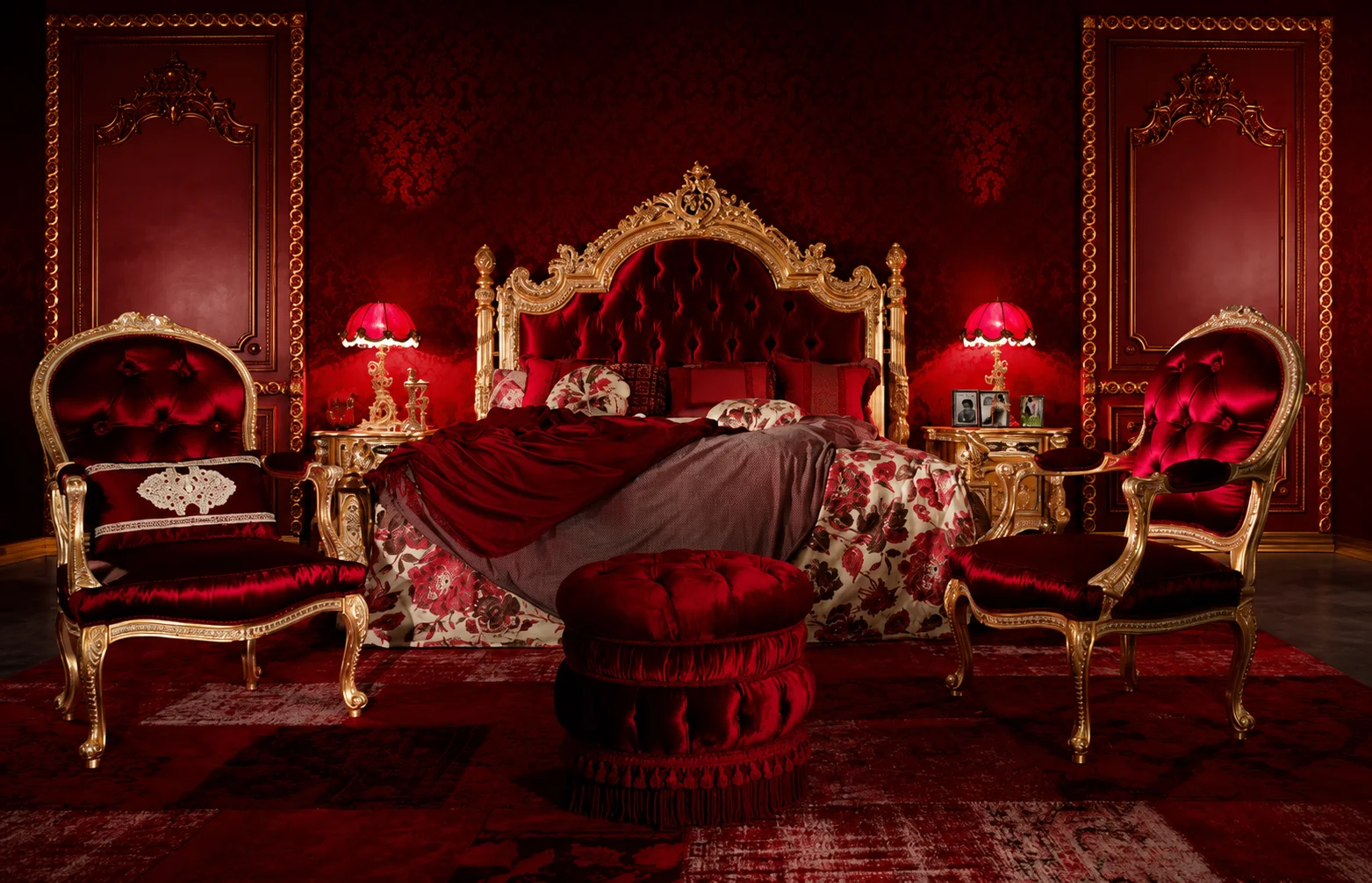
This guide is written for people who take that seriously: villa owners furnishing a home meant to outlast them; architects specifying furniture for a heritage restoration; hoteliers building suites guests will remember; and anyone who has simply decided that their bedroom deserves better than what a catalog can offer.
The word gets used loosely, so it is worth being precise. A classic bedroom set is not defined by age or by a single country of origin — it is defined by a handful of design principles that have survived because they work.
Symmetry. Classic rooms are built around a visual axis, usually the bed. Nightstands mirror each other. Wall sconces or lamps balance left to right. The eye settles because nothing pulls it unevenly in one direction.
Proportion over ornament. The best carved headboard in the world looks wrong if it overwhelms the wardrobe beside it. Skilled designers scale every piece — bed height, footboard depth, wardrobe width — against the room and against each other before a single chisel touches wood.
Solid timber construction. Classic furniture is not veneered plywood dressed up with a carved edge. It is built from solid hardwood, usually teak, so that the carving is cut into the actual structure of the piece rather than applied as decoration.
Hand-executed detail. Fluted bedposts, egg-and-dart molding, rosettes on a footboard, scrollwork on a mirror frame — these details exist because a craftsman shaped them by eye and hand, not because a program plotted them.
A sense of lineage. Even a brand-new classic bedroom set should feel like it belongs to a longer story — European court furniture, colonial-era Indian craftsmanship, or the palace workshops of Rajasthan — rather than a passing decorating trend.
Put these together and you get furniture that photographs beautifully but, more importantly, feels right to live with for decades.
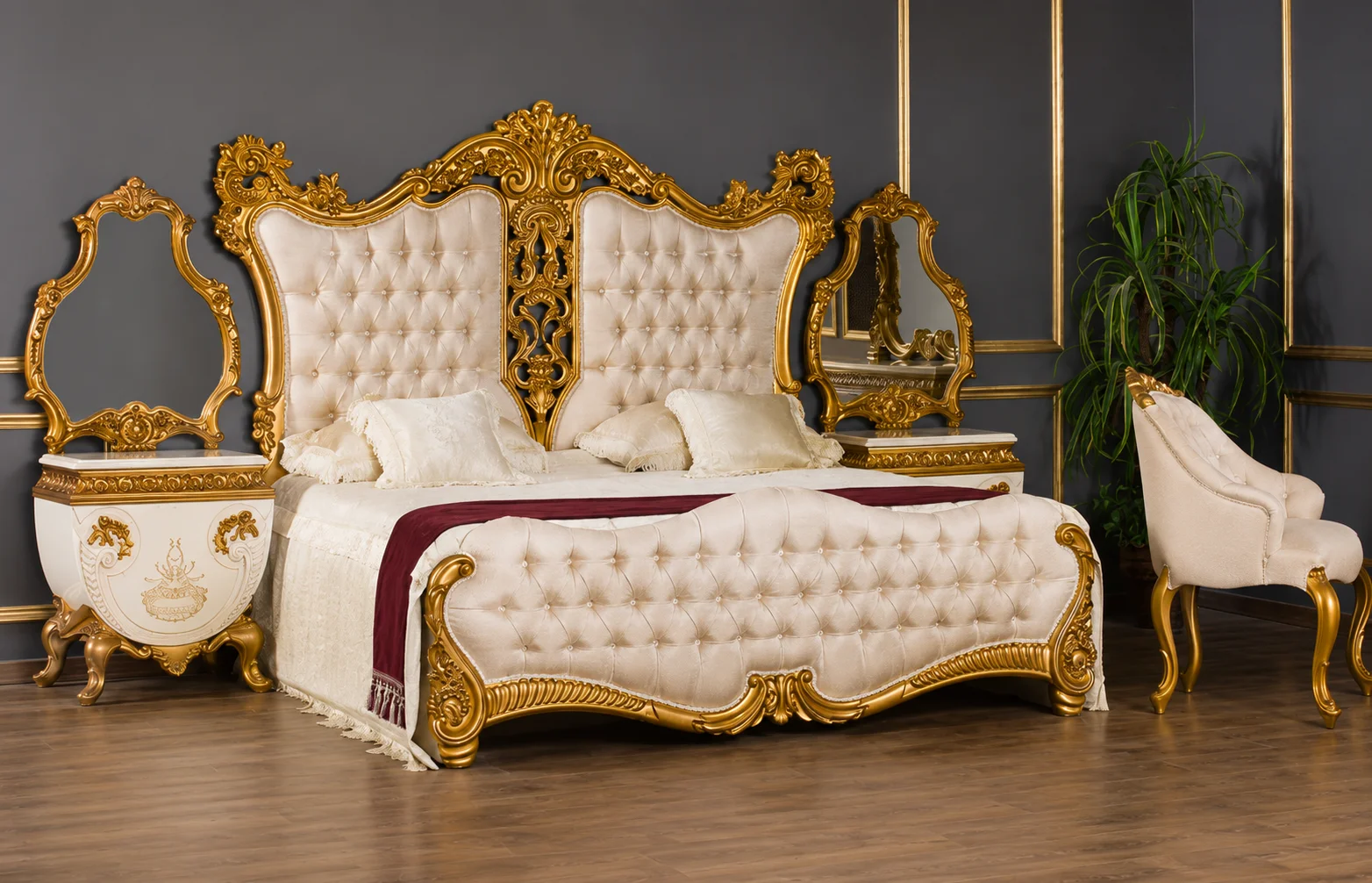
Understanding where classic bedroom furniture originates helps explain why certain shapes and details persist today.
French influence gave us the curved cabriole leg, the delicate shell and floral carving of Louis XV interiors, and later the straighter, more disciplined lines of Louis XVI neoclassicism — a style that borrowed heavily from ancient Roman and Greek proportion.
Italian craftsmanship brought richer, more theatrical carving — deep relief work, gilded accents, and a willingness to let ornament breathe across large surfaces. Italian bedroom furniture tends to feel more sculptural than its French counterpart.
Victorian England contributed heavier, darker woods, tufted upholstery, and an appetite for elaborate detail across every surface — a reflection of the era's love of visible craftsmanship as a status marker.
Colonial India fused these European vocabularies with local timber, local carving traditions, and a climate that demanded different proportions and finishes. What emerged — sometimes called Anglo-Indian furniture — is genuinely its own style, not a copy of anything European.
The Maharaja aesthetic pushed further still, drawing on Mughal and Rajput ornamentation, inlay work, and a scale built for palace rooms rather than domestic ones.
Art Deco and Neoclassical revival styles, arriving later, stripped some of the ornament back in favor of cleaner geometry while keeping the underlying symmetry and solid-wood construction intact.
Modern Indian workshops like ours draw from all of these traditions simultaneously, which is why a single collection can include a French-inspired bed frame alongside more restrained neoclassical furniture like a wardrobe and still feel coherent.
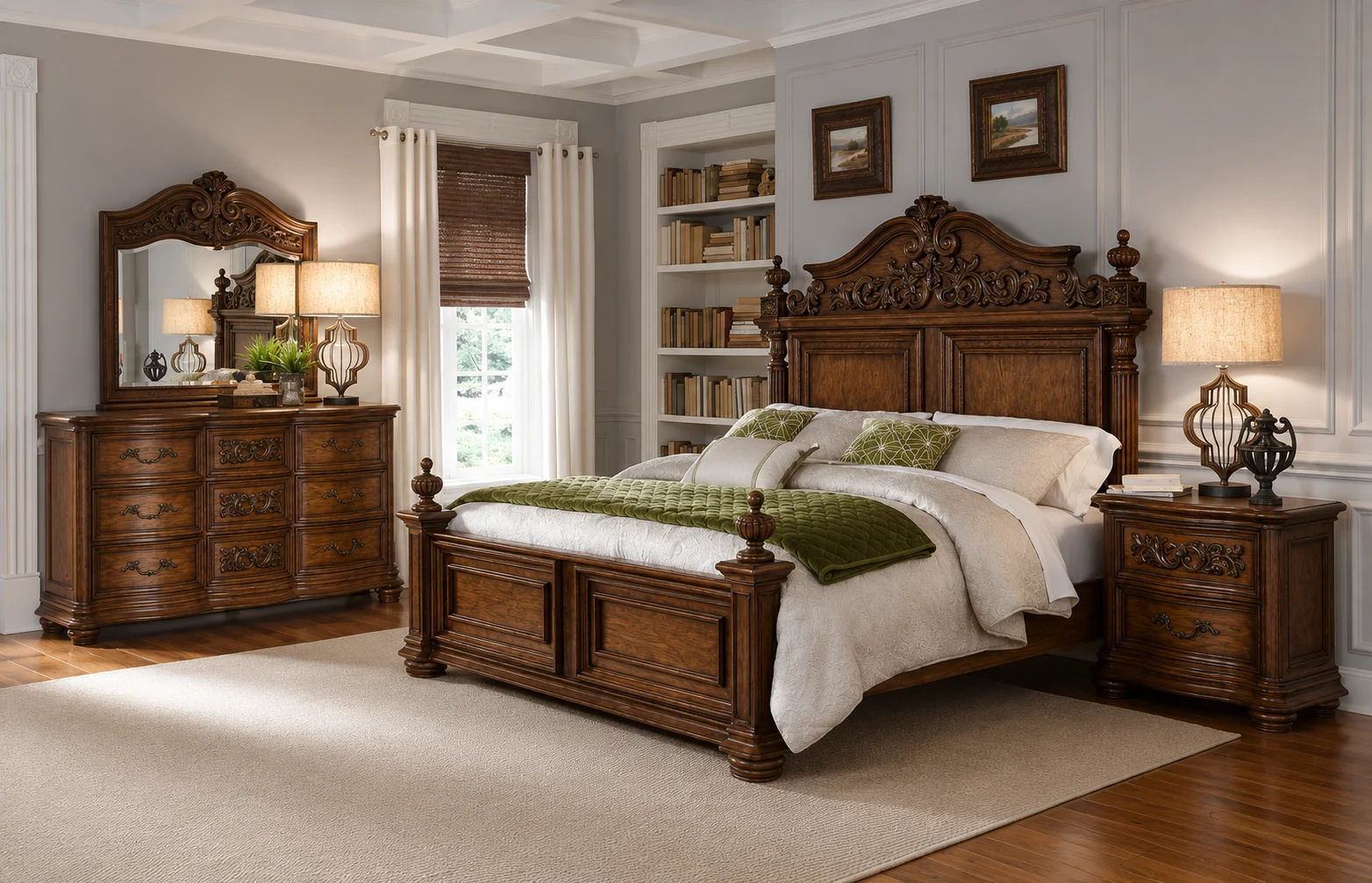
Antique bedroom sets recreate the weight and warmth of old-world furniture — deeper carving, aged patina finishes, and sometimes deliberately distressed surfaces. These suit heritage homes, restored havelis, and anyone who wants a room that looks like it has always been there.
Luxury bedroom sets (in the modern retail sense) blend classic proportions with contemporary comfort — better mattresses, softer edges, more refined upholstery — while keeping the carved, solid-wood identity. This is the most versatile category for new-build luxury homes.
Italian bedroom furniture favours dramatic scale, high-gloss or gold-leaf finishes, and bolder carving. It works best in larger rooms with high ceilings, where the furniture has room to make its statement.
French bedroom furniture leans toward curved silhouettes, softer palettes, and a more feminine, romantic sensibility — ideal for owners who want opulence without heaviness.
Victorian bedroom furniture brings darker wood tones, tufted headboards, and a formal, layered look — well suited to traditional interiors and colder climates where richness feels natural.
Colonial bedroom furniture offers a lighter, more tropical-appropriate take on classic design, often in teak with cleaner carving — a strong fit for Indian coastal homes and bungalows.
Contemporary luxury bedroom sets keep the solid-wood, hand-finished quality but simplify the carving into cleaner lines — a good bridge for buyers who love craftsmanship but live in a more modern shell.
Royal Indian bedroom sets draw directly from Rajasthani and Mughal palace furniture — heavier carving, sometimes inlay, built for grand, high-ceilinged rooms and statement suites.
Four-poster beds anchor a room instantly and suit bedrooms with height to spare — anything under roughly ten feet of ceiling will make a four-poster feel cramped rather than commanding.
Canopy beds offer the same drama with the option of drapery, which works especially well in warmer regions where a light canopy also has practical value against dust and insects.
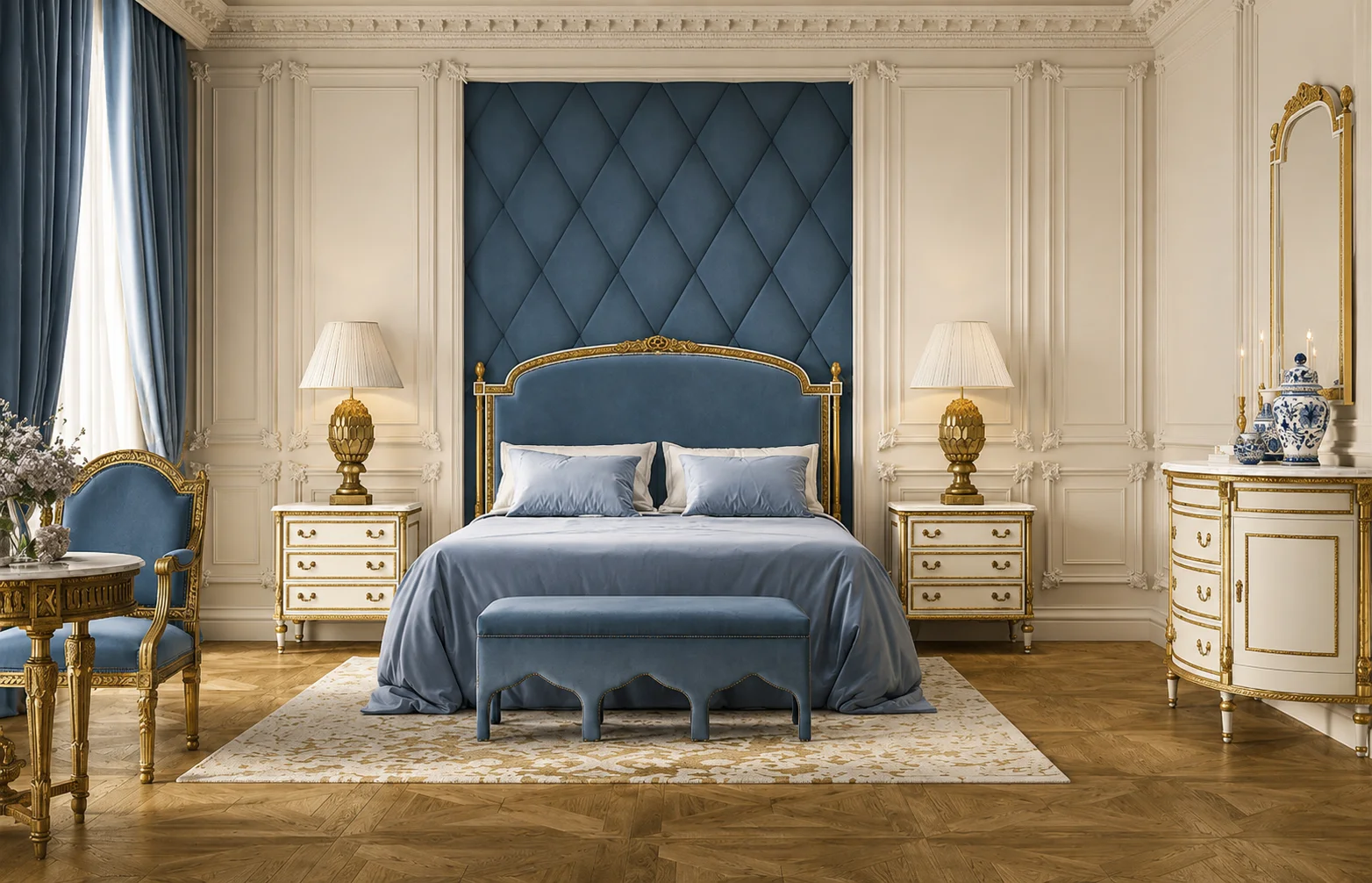
A true bedroom set is a coordinated family of pieces, not a bed with accessories bolted on. Here is what belongs in a complete, well-planned set and how to think about each one.
You do not need every piece to have a complete room. But every piece you do include should share wood tone, carving language, and hardware finish — this is where many bedrooms go visually wrong, mixing styles that were never meant to sit together.
Bed sizing in India often gets confused because both Indian and international naming conventions are used loosely. Here is a clear reference.
| Size | Dimensions (inches) | Dimensions (mm) | Best For |
|---|---|---|---|
| Queen | 60" x 80" | 1524 x 2032 mm | Standard master bedrooms, couples |
| King | 76" x 80" | 1930 x 2032 mm | Larger master suites |
| California King | 72" x 84" | 1829 x 2134 mm | Taller occupants, narrower rooms |
| Super King | 78" x 80" (varies) | 1981 x 2032 mm | Statement suites, hospitality projects |
| Custom | As specified | As specified | Palace restorations, unusual room dimensions |
For carved four-poster and canopy beds, always add clearance for the posts and canopy frame — these can extend the footprint by 6 to 10 inches beyond the mattress size on each side, which changes how much walking space remains around the bed. This is a detail our design team checks against your room plan before any custom order goes into production.
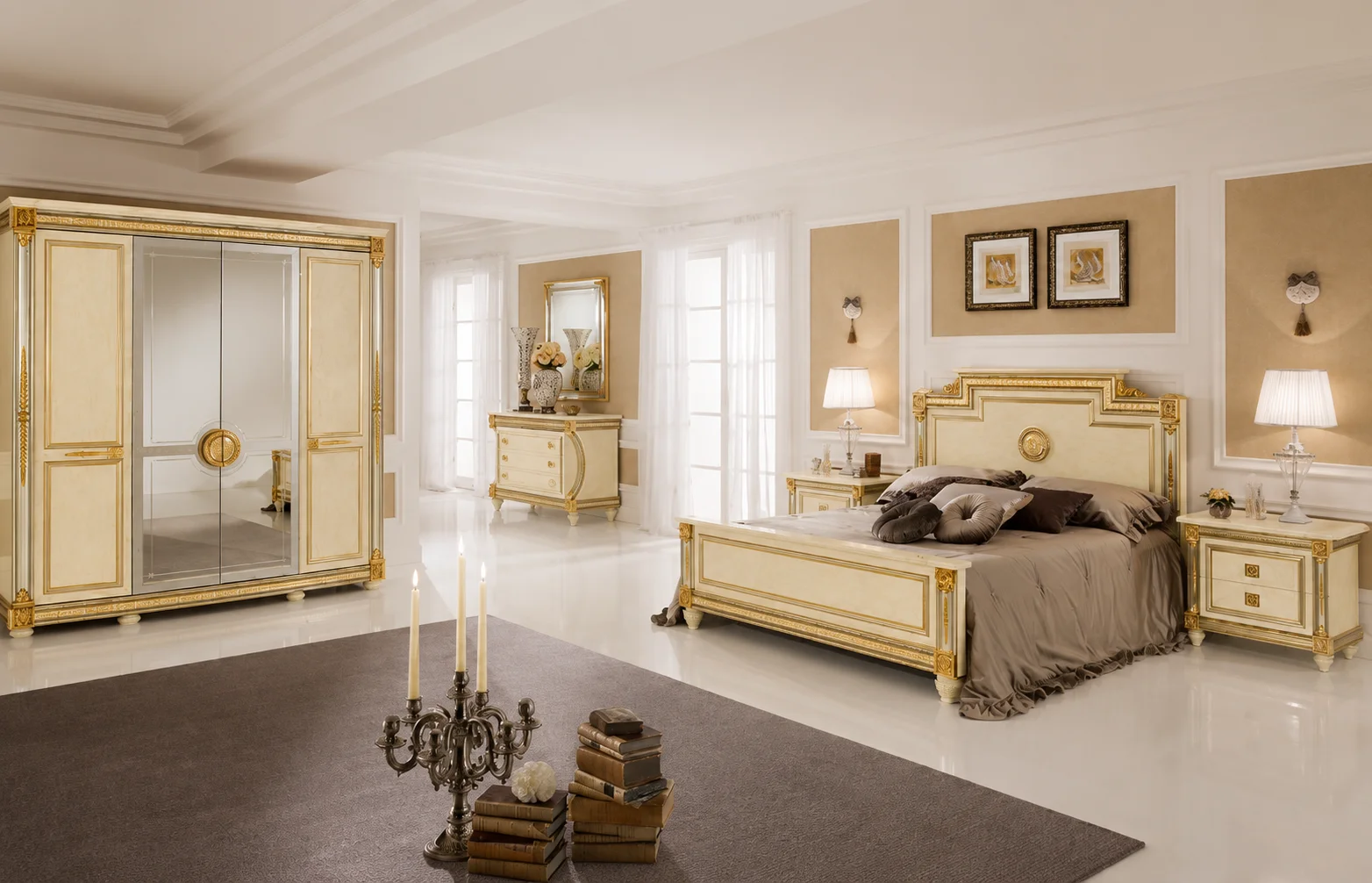
Wood choice affects everything downstream — how deep the carving can go, how the piece ages, and how much upkeep it will realistically need.
| Wood | Carving Quality | Durability | Maintenance | Luxury Appearance |
|---|---|---|---|---|
| Teak | Excellent — holds fine detail, resists splitting | Very high; naturally resists moisture and pests | Low; occasional polishing | Warm golden-brown, ages beautifully |
| Oak | Good, but grain can fight fine detail | High | Moderate | Pale, contemporary, less "classic" without staining |
| Walnut | Very good — takes deep relief carving well | High | Moderate; sensitive to humidity swings | Rich dark tone, premium feel |
| Mahogany | Excellent — a traditional carving wood | High | Low to moderate | Reddish-brown, classic European look |
| Rosewood | Exceptional detail retention | Very high, very dense | Low | Deep, dramatic grain; increasingly rare and expensive |
For the Indian climate specifically, seasoned teak remains the standard choice for a reason — it handles humidity swings between monsoon and dry season without warping, which matters enormously for large flat surfaces like wardrobe doors and headboards.
This is the question we get asked most often, and buyers deserve a straight answer rather than a sales pitch.
| Factor | Hand Carved | CNC / Machine-Carved |
|---|---|---|
| Uniqueness | Every piece has minor natural variation — no two are identical | Perfectly repeatable, identical across units |
| Depth of detail | Can achieve undercuts, varying depth, organic flow | Limited to what the router bit and program allow |
| Production time | Weeks per piece, depending on complexity | Hours per piece |
| Cost | Higher, reflecting artisan hours | Lower |
| Investment value | Tends to hold and often appreciate as a craft object | Depreciates like standard furniture |
| Longevity of appeal | Ages as a piece of craftsmanship, rarely looks dated | Can look like a "style copy" over time |
Neither is dishonest — CNC furniture has a real place for buyers who want consistency at a lower price point. But if you are buying something meant to become a family heirloom, the artisan hours in hand carving are exactly what you are paying for, and it is worth knowing that upfront rather than discovering it later.
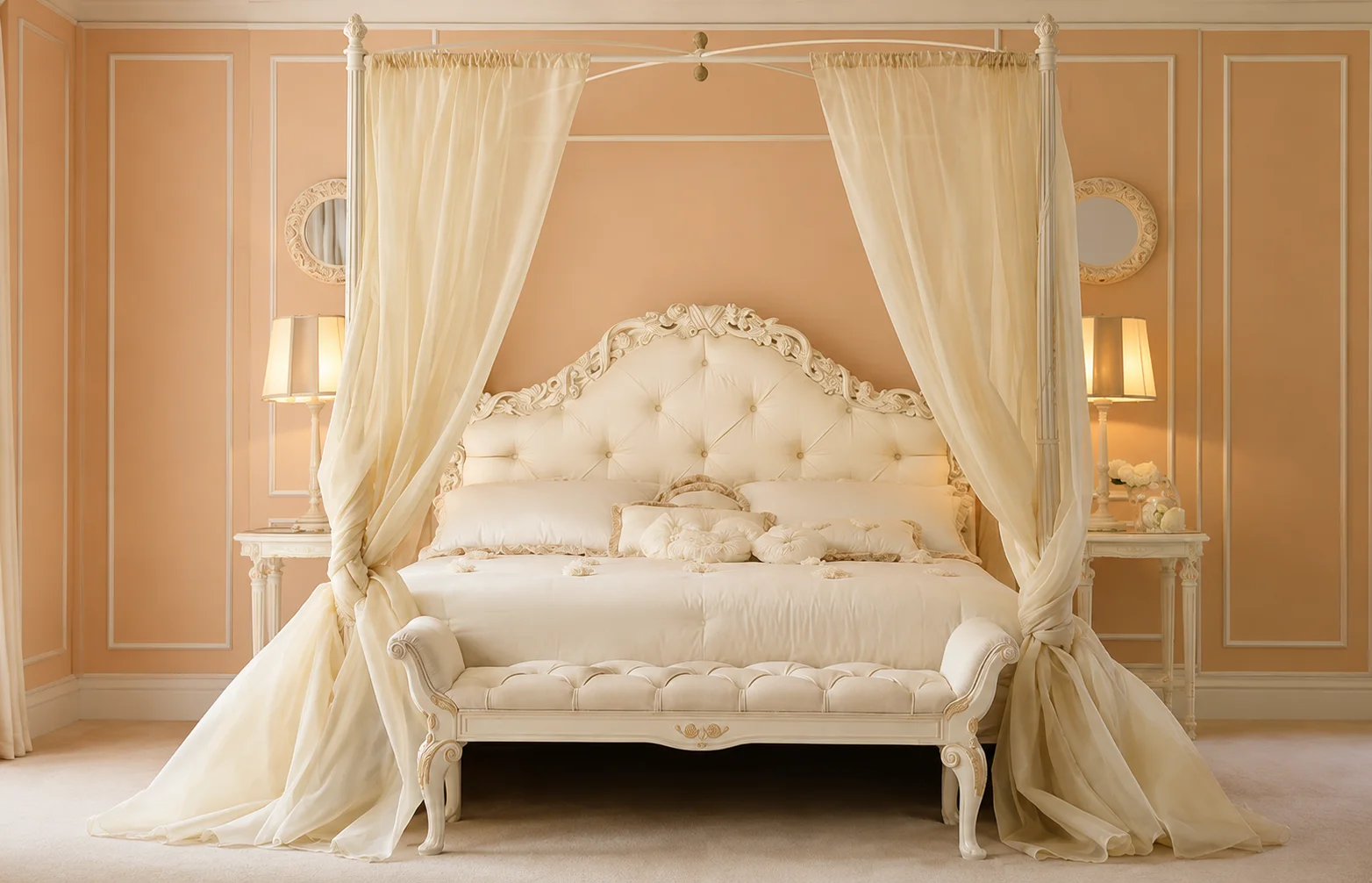
Some combinations have simply proven themselves over decades of interior design practice:
In apartments, the priority is circulation. Leave at least 24 inches of clearance on each side of the bed for movement, and consider a lower-profile headboard rather than a full four-poster, which can visually shrink a smaller room.
In villas, you generally have room to build a full set — bed, bench, lounge chair, and a proper dressing area — without crowding. This is where symmetry really pays off, since the room is large enough for the eye to register the balance.
In palace suites and restoration projects, scale becomes the governing factor. Furniture proportioned for a standard home will look lost in a room with 14-foot ceilings. This is almost always custom-order territory, built to the room's actual measurements rather than fitted from a standard catalog.
Across all three, the underlying rule stays the same: heavier, more ornate pieces belong farther from the doorway, and sightlines from the entrance should lead the eye toward the bed as the room's natural focal point.
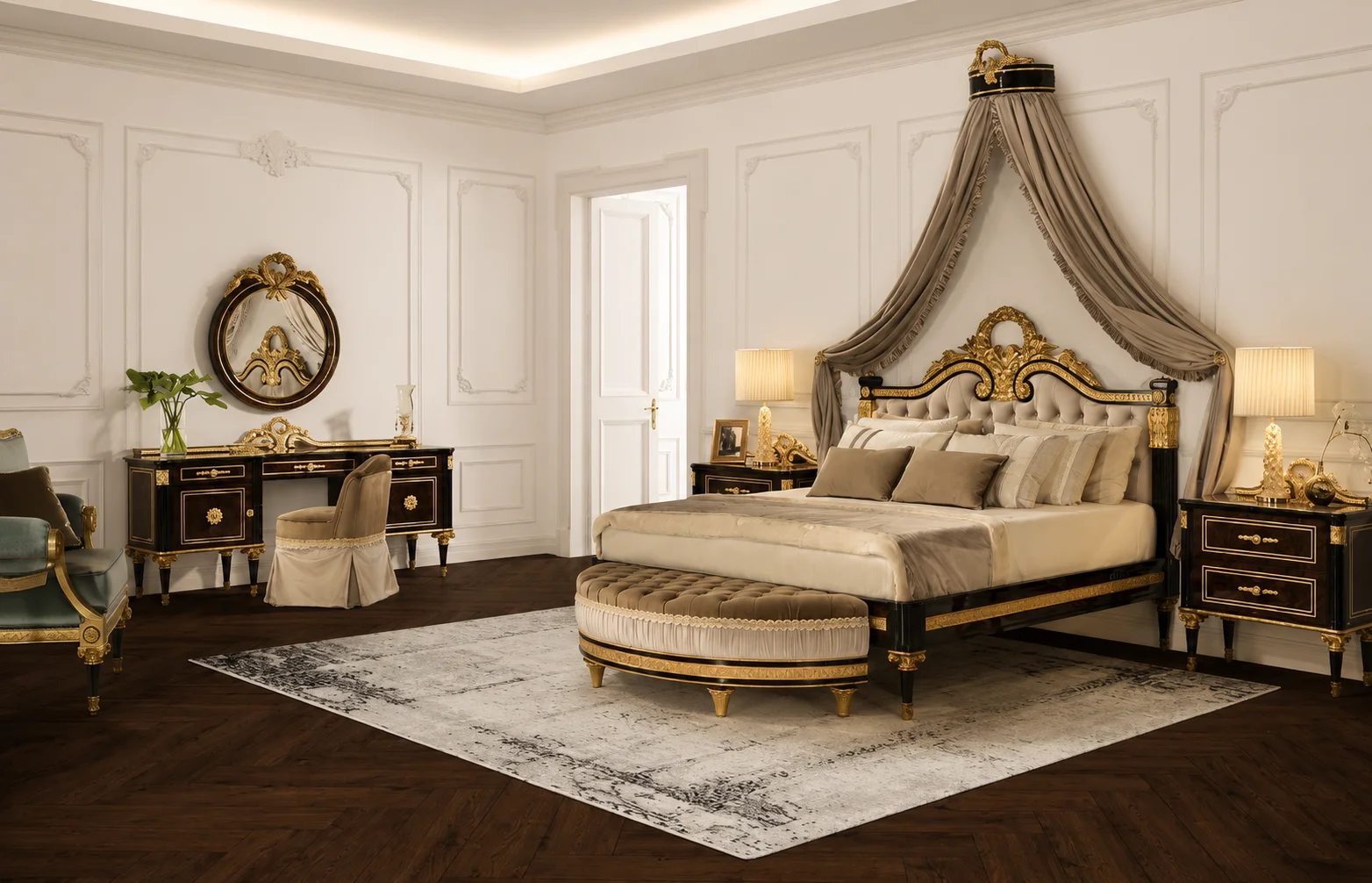
Standard sizing does not always suit Indian homes, especially older bungalows, restored havelis, or villas with non-standard room proportions. Custom orders let you specify:
Custom work takes longer and costs more, but for a heirloom purchase, it is usually the difference between furniture that fits your home and furniture your home has to accommodate.
This is worth explaining honestly because the price gap between handcrafted and factory furniture is real and buyers deserve to understand where it goes.
A single carved headboard can take an artisan anywhere from one to four weeks, depending on the complexity of the motif. That time is not a decoration on top of the furniture-making process — it is the furniture-making process. Add to that the cost of properly seasoned timber (which itself takes months to dry correctly before it can be worked), multiple rounds of hand-sanding, and a finishing process that may involve several coats applied and cured over days rather than hours.
None of this scales the way machine production does. A CNC router does not get tired, does not need to be trained for a decade, and does not stop to reconsider a curve halfway through. An artisan does all three, and that judgment is exactly what produces the small, human variations that make hand-carved furniture feel alive rather than printed. You are paying for skilled hours, seasoned material, and a finished object built to be repaired and passed down rather than replaced.
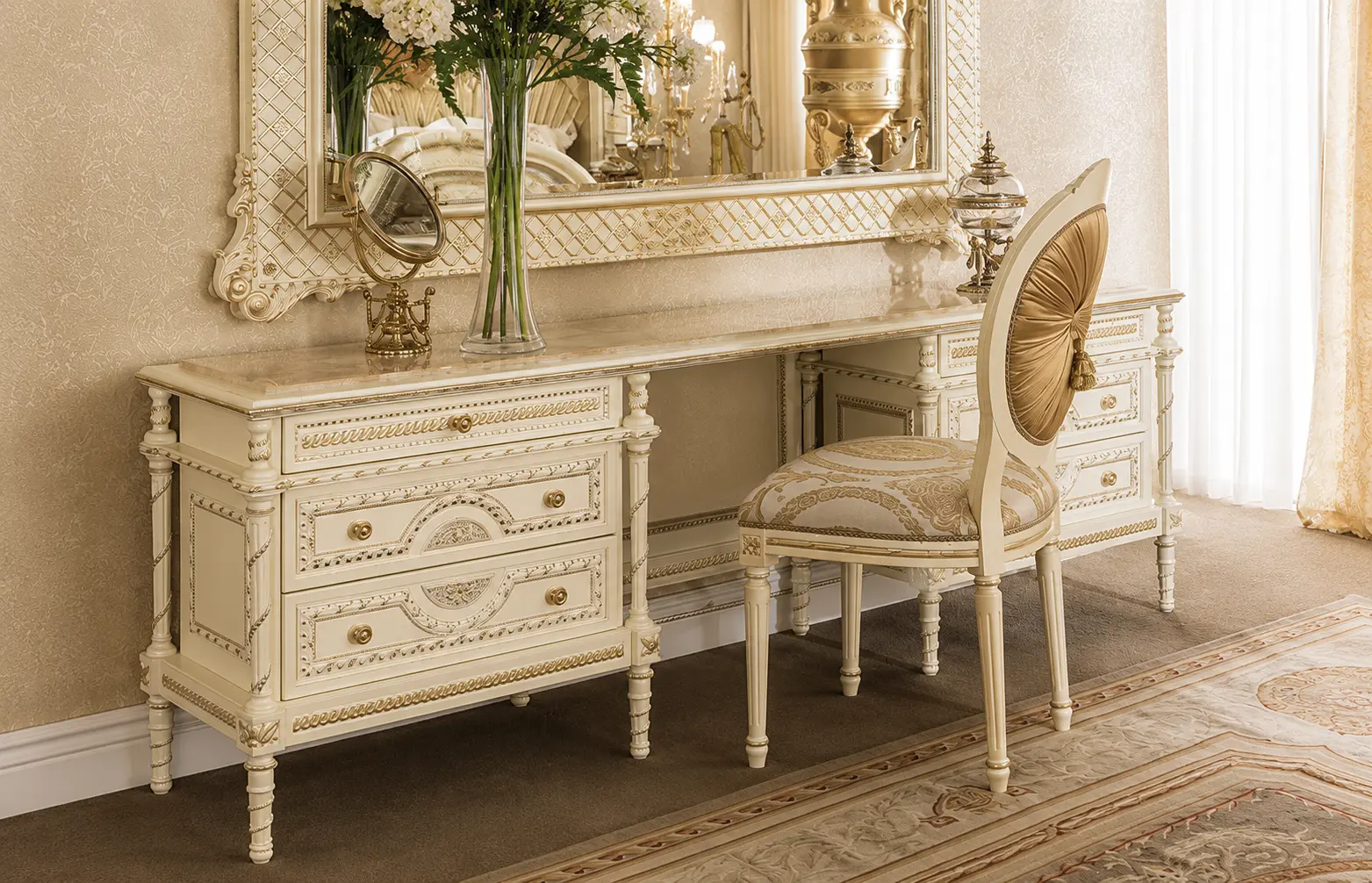
Before committing to a bedroom set, it helps to check:
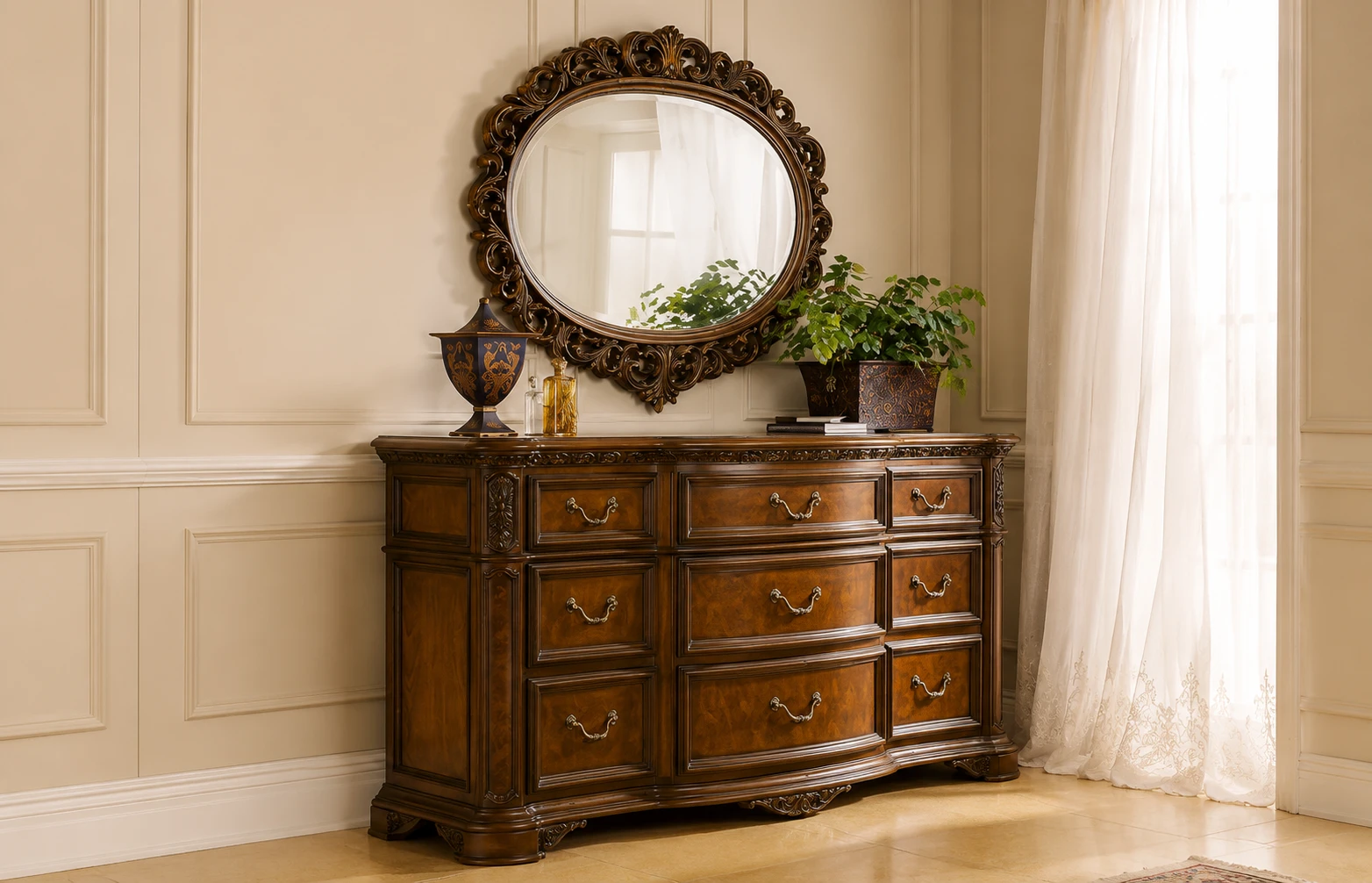
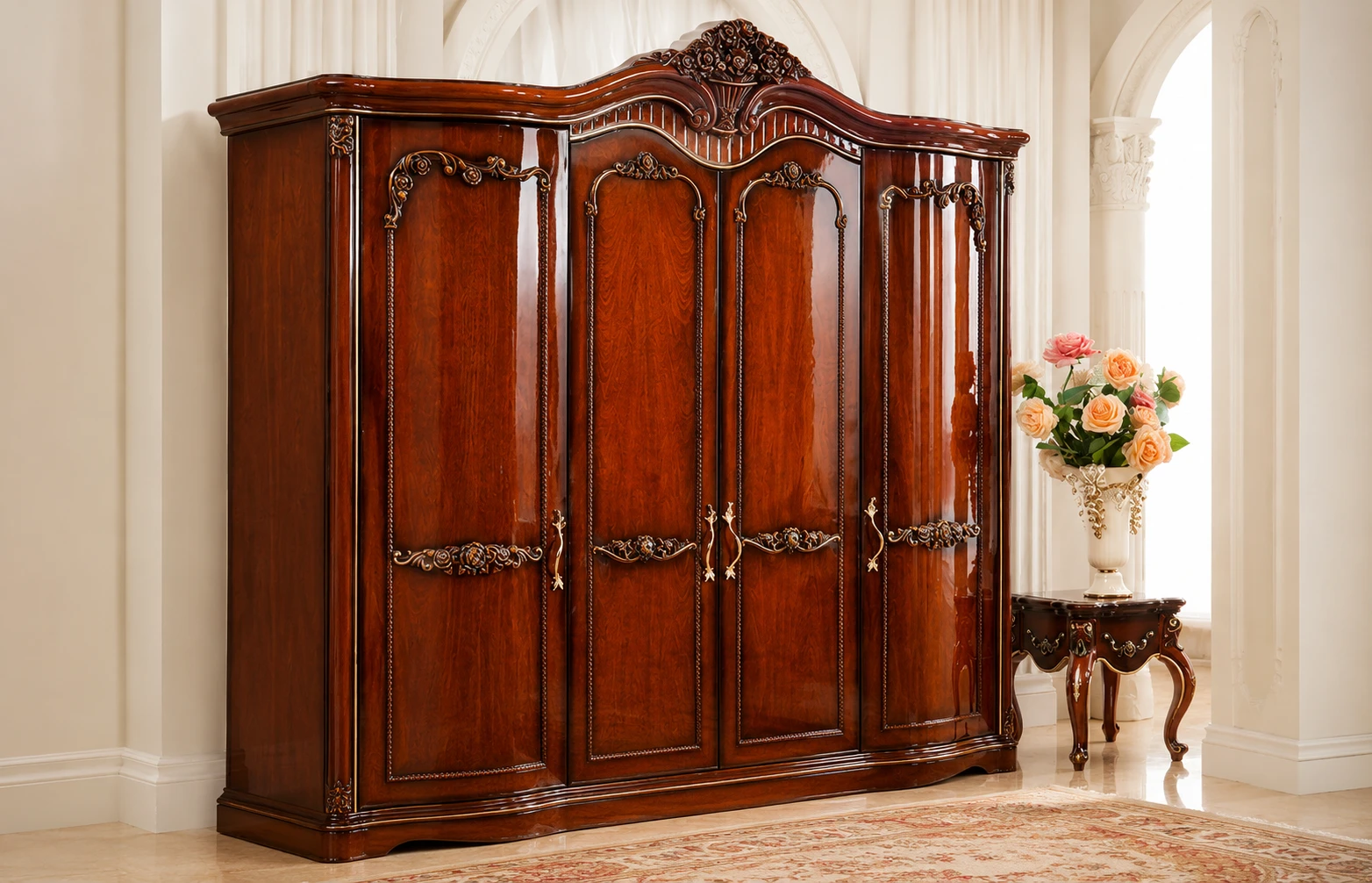
Every piece we build starts as seasoned teak wood, carved by artisans working from Saharanpur — a region with a carving tradition that goes back generations. We do not run pieces through a catalog-only process; almost every bedroom set we deliver involves some conversation about sizing, finish, or carving detail specific to the buyer's room.
That customization extends to upholstery, hardware finish, and, for larger or more complex orders, on-site installation support so a wardrobe or four-poster bed arrives assembled correctly rather than left as a problem for the buyer's household staff to solve. We also ship internationally for clients building homes outside India who still want furniture carved by hand rather than assembled from a container of flat-pack parts.
None of this makes us the fastest or the cheapest option, and we would rather be honest about that than pretend otherwise. It makes us a reasonable choice for anyone who wants a bedroom built to be lived in for decades, not redecorated in five years.
Most custom orders take between six and twelve weeks, depending on the complexity of the carving, the finish selected, and whether upholstery needs to be sourced separately. Simpler pieces with lighter carving can move faster; full four-poster beds with deep relief work take longer.
For Indian conditions specifically, yes — teak's natural resistance to humidity swings and pests makes it more forgiving across monsoon and dry seasons than oak, which can be more sensitive to moisture changes without careful climate control.
You can, but it takes a practiced eye to make it work. The safer approach is matching wood tone and carving language even if the specific historical style differs slightly — that consistency reads as intentional rather than mismatched.
Hand carving allows for varying depth, undercuts, and small natural variation between pieces, produced over days or weeks by a trained artisan. Machine carving is faster and cheaper but limited to what a router bit can achieve, and every unit comes out identical.
For large pieces, ask the maker whether the item can be built in sections for on-site assembly. Most reputable workshops, including ours, design large wardrobes and four-poster beds to be assembled after delivery for exactly this reason.
A PU matte or satin finish is the most forgiving option — it resists fingerprints and minor wear better than high gloss and does not require the careful handling that gold leaf or delicate antique patina finishes need.
Yes, international shipping is available for clients furnishing homes abroad. Lead times are longer to account for freight, so it is worth starting the conversation well ahead of your move-in date.
A queen-size (60" x 80") suits most standard master bedrooms comfortably. King-size furniture generally needs a room of at least 13 x 13 feet to maintain proper circulation space around the bed.
Often, yes. Solid wood pieces with structural integrity can usually be re-carved, re-finished, or reupholstered rather than discarded, which is often more cost-effective than a full replacement for heritage or antique pieces.
Dust gently with a dry, soft cloth and avoid any liquid cleaners or polish directly on gilded areas, since moisture and chemical polish can lift or dull the leaf over time. Position away from direct sunlight, which accelerates fading on gilded surfaces.
Trends move through a bedroom every few years — a color falls out of fashion, and a silhouette starts to look dated in photographs. Solid, hand-carved furniture does not really participate in that cycle. It ages instead of expiring, and thirty years from now, a well-made headboard will still be a well-made headboard, regardless of what happened to matter for a season somewhere on the internet.
That is really the case for investing in classic furniture over anything trend-driven: you are not buying what is popular right now. You are buying the room your grandchildren will still recognize as beautifully made.
